


Ukraine faces its most challenging winter in years as Russian forces continuously target its energy infrastructure, leaving many citizens without heating in temperatures as low as -15 degrees Celsius.
Kyiv, the capital, has been a primary target for Russian missile and unmanned aerial vehicle (UAV) attacks, with strikes mainly aimed at power plants, substations, and pumping stations. On 26/1, Ukrainian President Volodymyr Zelensky stated that heating systems in over 1,200 apartment buildings in the city remained non-operational following Russia's latest large-scale attack on the city.
Previous strikes on 9/1 and 20/1 also left hundreds of thousands enduring bitter cold as numerous apartments lost their heating. Rita, a Kyiv resident, described life in the Ukrainian capital as "a gamble."
"Households with heating and gas lose both electricity and water. If there's electricity and water, there's no heating," she said. "Every day returning home is a guessing game: Will I be able to shower or have hot tea, or even nothing at all? Of course, there are also UAVs and missiles."
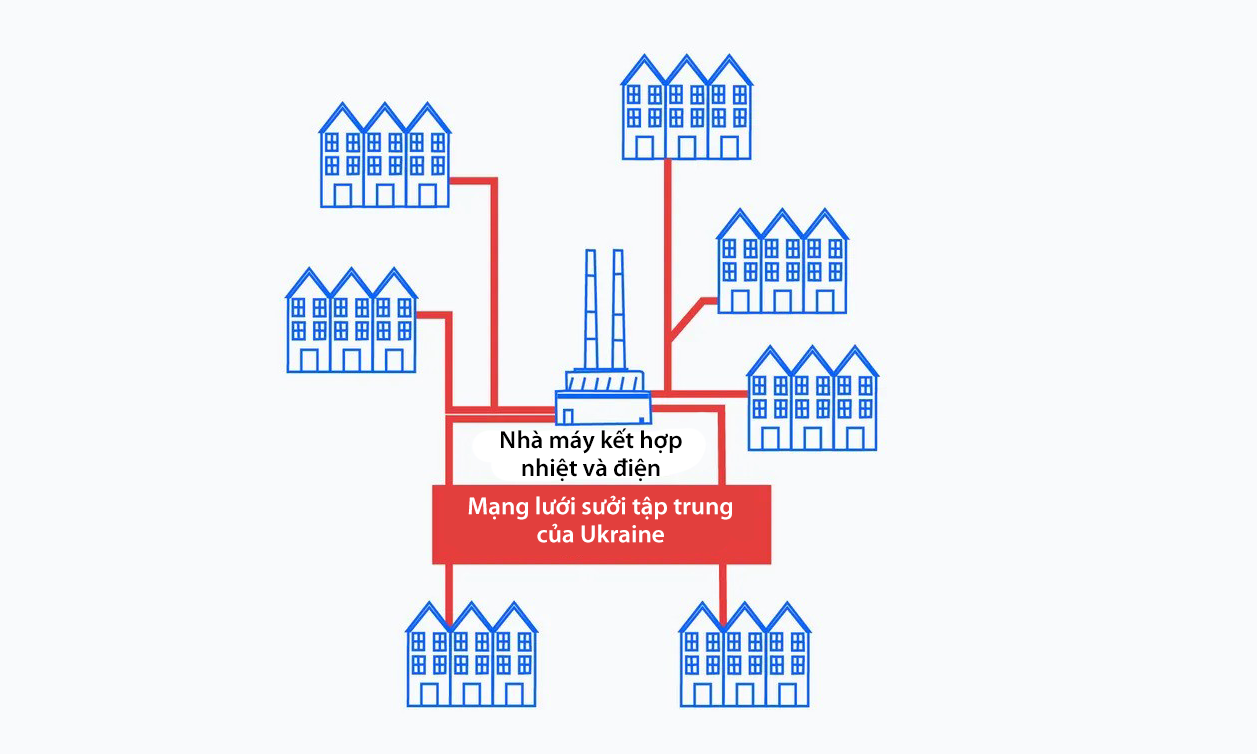 |
Ukraine's centralized heating system. *Graphic: Kyiv Independent* |
This situation is partly due to Ukrainian cities' heavy reliance on centralized heating systems. Under this system, hot water from a thermal power plant is transported via pipelines to a pumping station in each area, then distributed to apartment buildings. The hot water flowing through radiators warms the rooms.
The proportion of households using centralized heating varies between rural and urban areas, but it is particularly high in densely populated cities like Kyiv. This is because, in the 1950s, the Soviet Union launched a program to construct numerous affordable homes in many Ukrainian cities.
These buildings lacked independent heating systems, instead relying on large plants called TETs, an acronym for "thermal and electric center" in Ukrainian, which supplied both heat and electricity.
Single-family homes, which typically have independent heating systems, are predominantly found in rural areas and are rare in large cities.
Before the conflict with Russia escalated in early 2022, approximately 11 million Ukrainian households used centralized heating, significantly more than the approximately 7 million households with independent heating, according to Ukrainian energy expert Yuriy Korolchuk.
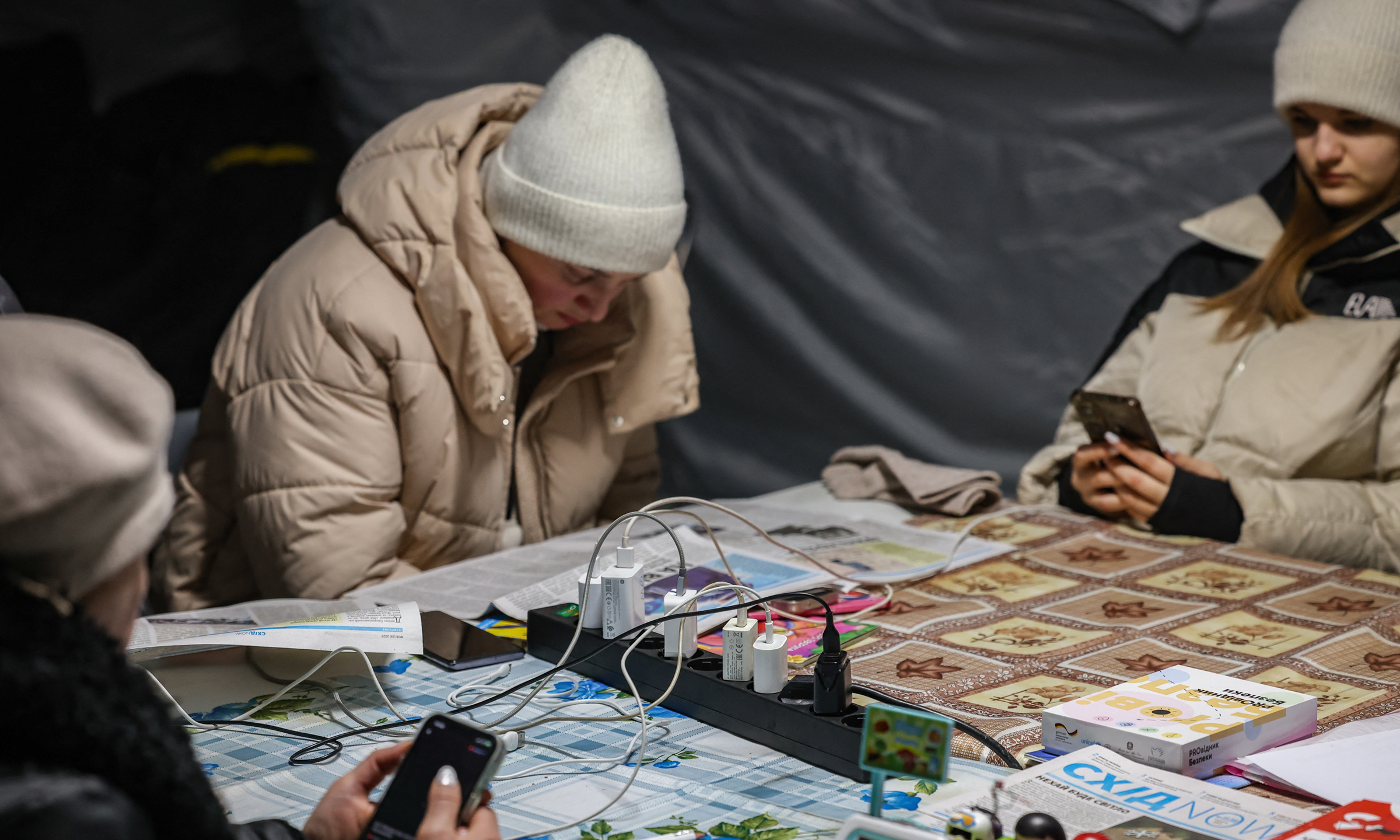 |
Ukrainians take shelter inside a mobile heating point in Chernihiv on 24/1. *Photo: AFP* |
Kyivteploenergo, the sole provider of heating and hot water in Kyiv, stated that the vast majority of households in the Ukrainian capital use their services but did not disclose detailed figures for security reasons.
Each district heating system can serve tens of thousands of people. When powered by renewable energy, these systems are efficient, cost-effective, and emit less CO2 compared to individual boilers.
However, if a critical component of the system, such as a heat supply plant, pipeline, or pumping station, is attacked and disabled, many residential areas will lose their entire heating supply.
"Ukraine inherited its heating system from the Soviet Union, and it has largely remained unchanged, primarily a centralized system," stated expert Korolchuk. "Heat supply plants were not designed to withstand missiles or UAVs, and this vulnerability has become evident during wartime."
Korolchuk noted that in previous winters, Ukraine's heating system was rarely attacked, and if so, strikes did not directly target heat supply plants. However, Russia recently altered its attack tactics as peace negotiations with Ukraine stalled.
The Ukrainian expert suggested this change stems from Russia's desire to increase pressure while negotiation efforts are being advanced. Last week, the United States, Russia, and Ukraine held their first direct meeting since the conflict began to discuss a peace plan proposed by Washington, but no agreement was reached.
An advantage for Russia in employing this tactic is its extensive knowledge of Ukraine's centralized heating system, as both countries were once part of the Soviet Union. For decades, Ukraine's energy system was connected to Russia and Belarus within a centralized network, particularly intertwined with Moscow's energy infrastructure.
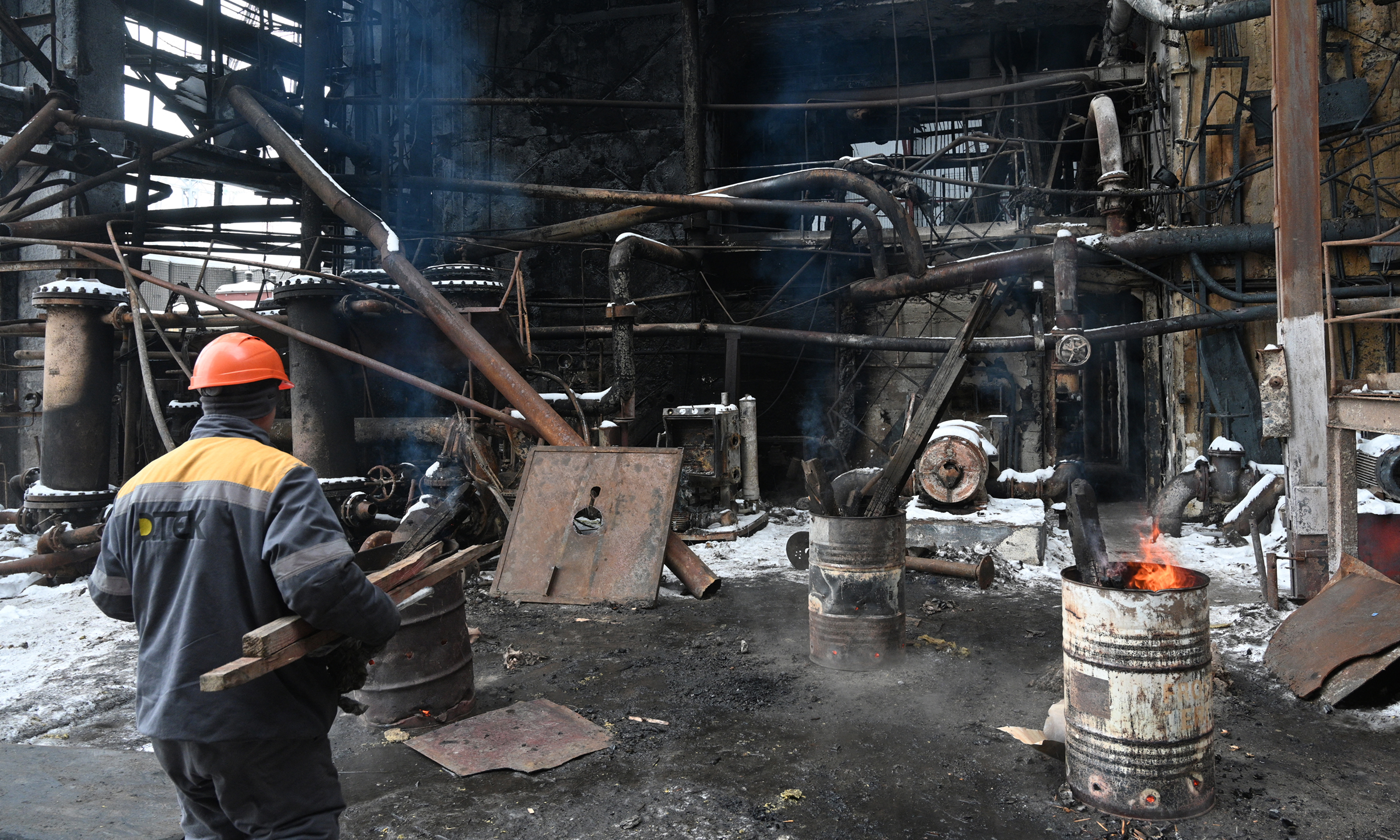 |
A DTEK Ukraine power plant was severely damaged after a Russian attack on 23/1. *Photo: AFP* |
"While this did not mean Ukraine was dependent on Russia for energy supply, Moscow still played a pivotal role in coordinating frequency and balancing supply and demand across the entire network," The Conversation reported.
Some Ukrainian officials believe Russia's knowledge of the Soviet-era energy system has helped Moscow effectively target the country's energy centers.
The Ukrainian government is aware of this drawback and plans to address it by requiring the installation of local heating stations in each apartment building. However, dismantling decades-old urban planning is not an easy or quick undertaking.


