In the race for AI leadership with China, the US holds a dominant advantage due to its access to advanced semiconductor technologies. However, when it comes to the power supply for the massive data centers that run AI chips, China appears to have a significant edge. This is because data centers, enormous computing facilities used to train and operate AI models, consume a tremendous amount of electricity.
According to the International Energy Agency (IEA), a typical data center can consume as much electricity as 100,000 households, while new-generation hyperscale facilities can consume an amount equivalent to two million homes.
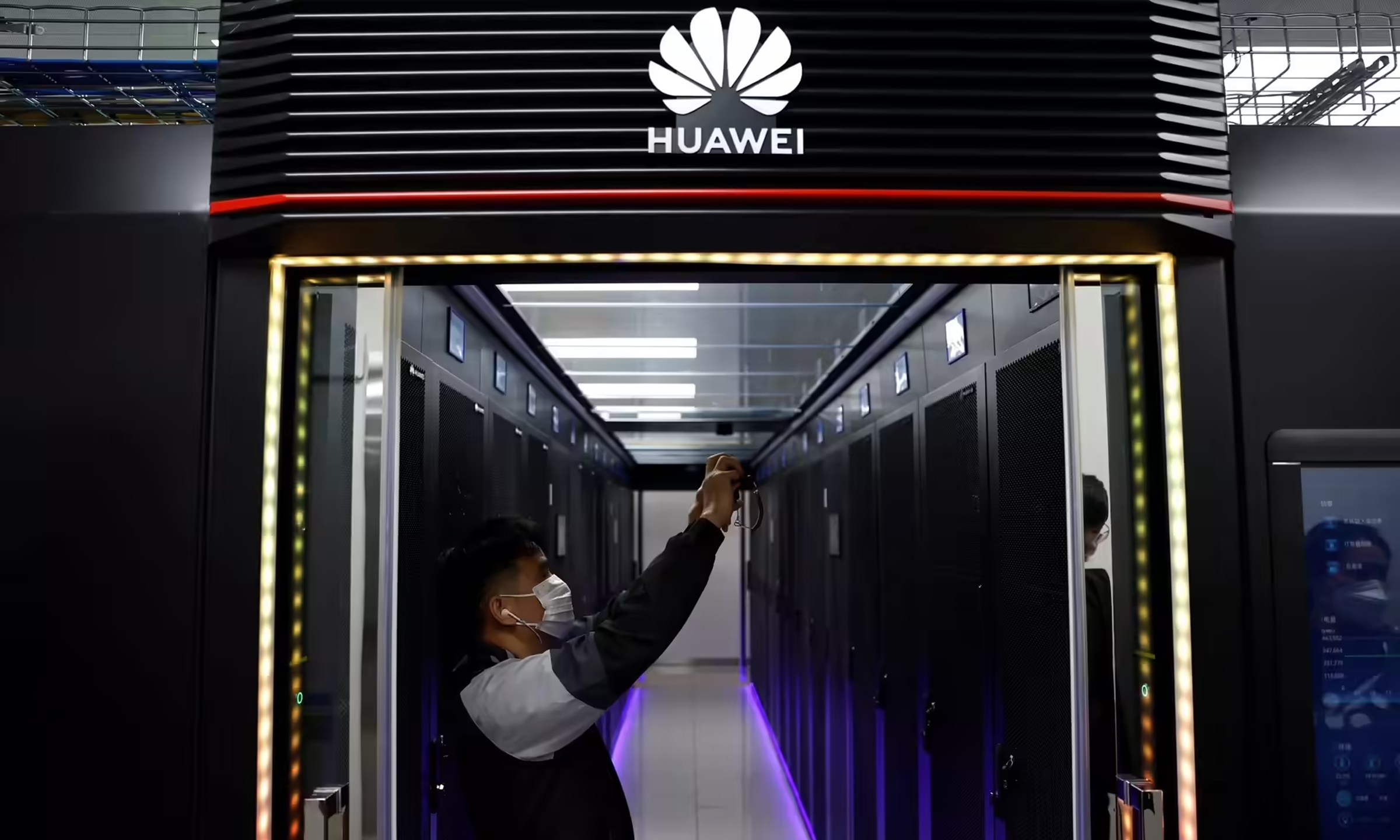 |
A Huawei-supported data center in Yulin city, Shaanxi province, China, in 2023. Photo: Reuters
An abundant and inexpensive power supply positions China ideally to meet such enormous energy demands.
China's current electricity output is double that of the US, and this gap is expected to widen further due to robust investment in its national grid system.
BloombergNEF, a research organization, estimates that China's additional power generation capacity will be more than 6 times higher than that of the US over the next five years. The majority of this increase will come from renewable energy sources such as solar and wind power.
In 2025 alone, China increased its wind and solar power capacity by more than 430 gigawatts, accounting for over 50% of the total global renewable energy capacity added that year.
A key element in China's AI strategy is integrating data centers into its rapidly expanding renewable energy sector.
Under the "East Data, West Computing" initiative, the Chinese government is focusing on building new data centers in the sparsely populated western regions, which offer far more land and abundant renewable energy resources than the eastern coastal plains.
Earlier this month, China announced the operation of the country's first large-scale renewable energy project directly connected to a data center.
The 500-megawatt wind and solar power project, located in the Ningxia region in the northwest, will supply electricity to a cloud data center operated by China Datang Corporation via a "dedicated transmission line", the Chinese state-owned enterprises regulator stated on 12/5.
"In the long term, any country that can provide cheap, stable, and low-carbon electricity will have a significant advantage in developing AI infrastructure", said Qiyang Xiong, a doctoral researcher specializing in energy policy and AI at Renmin University of China.
"China leads the world in solar power, wind power, and ultra-high voltage power transmission", he added. "This gives China an advantage in supplying clean, low-cost electricity to data center clusters in the west".
Narrowing the gap
Currently, the US remains the largest data center market in the world, with a considerable lead over other countries.
According to Stanford University's AI Index, the US possessed 5,427 data centers in 2025 compared to China's 449.
The IEA reported that global data centers consumed 415 terawatt-hours of electricity in 2024, with the US accounting for 45%, followed by China and Europe at 25% and 15% respectively.
Morgan Stanley forecasts that in 2026 alone, Silicon Valley corporations such as Amazon, Microsoft, Meta, and Alphabet will spend USD 630 billion on data centers and other AI-related investments, significantly surpassing Chinese technology giants like Alibaba, Tencent, and ByteDance.
However, China is building data centers at a rapid pace. The number of data center racks in the country increased by 30% annually between 2016 and 2023, according to the China Academy of Information and Communications Technology. This rapid expansion is quickly narrowing the gap between Beijing and Washington.
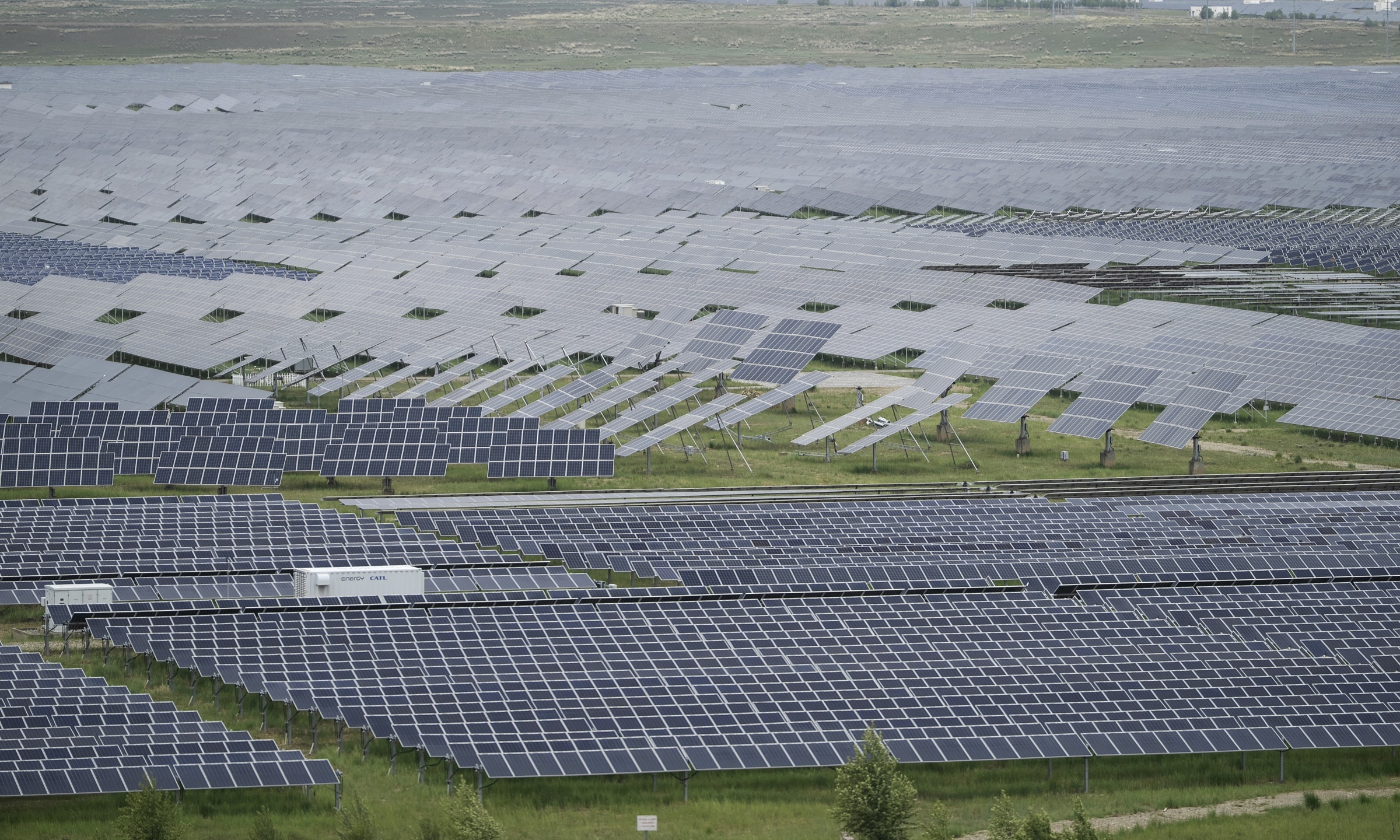 |
A solar power farm in Hainan prefecture, Qinghai province, western China, in 7/2025. Photo: AP
Following US export controls on advanced chips manufactured by TSMC for Nvidia, China has turned to using chips designed by domestic companies like Huawei and produced by semiconductor foundry SMIC.
According to an analysis by energy consulting firm Rystad Energy, China's data center capacity is projected to reach 60 gigawatts by 2030, nearly double its current level and accounting for 2,3% of the country's total electricity demand.
"A large manufacturing base and a less stringent regulatory environment allow China to build data centers and auxiliary energy infrastructure much faster than the US", commented Leah Fahy, a senior economist specializing in China at macroeconomic analysis firm Capital Economics. "Huawei's modular data centers can now be completed in six months, while similar models in the US take at least one year".
Challenges for the US
There are indications that AI deployment in the US faces energy supply obstacles.
Earlier this year, energy consulting firm Wood Mackenzie reported that limitations of the US power grid led to a 50% decrease in new data center projects compared to the previous quarter by the end of 2025.
Technological constraints are compounded by a growing wave of opposition to data centers from communities across the US, partly due to the strain these facilities place on local power grids. This issue is not prevalent in China.
According to Data Center Watch, a research project by AI security company 10a Labs, at least 36 data center projects were blocked or delayed in the US between 5/2024 and 6/2025.
US technology leaders, including Elon Musk of Tesla, Jensen Huang of Nvidia, and Sam Altman of OpenAI, have publicly acknowledged China's advantage in the energy sector.
"The core limiting factor for AI deployment is ultimately electricity", Musk stated in an interview at the World Economic Forum earlier this year. "Very soon, perhaps by the end of this year, the world will produce more chips than there is electricity to run them, except for China. China's electricity growth rate is truly tremendous".
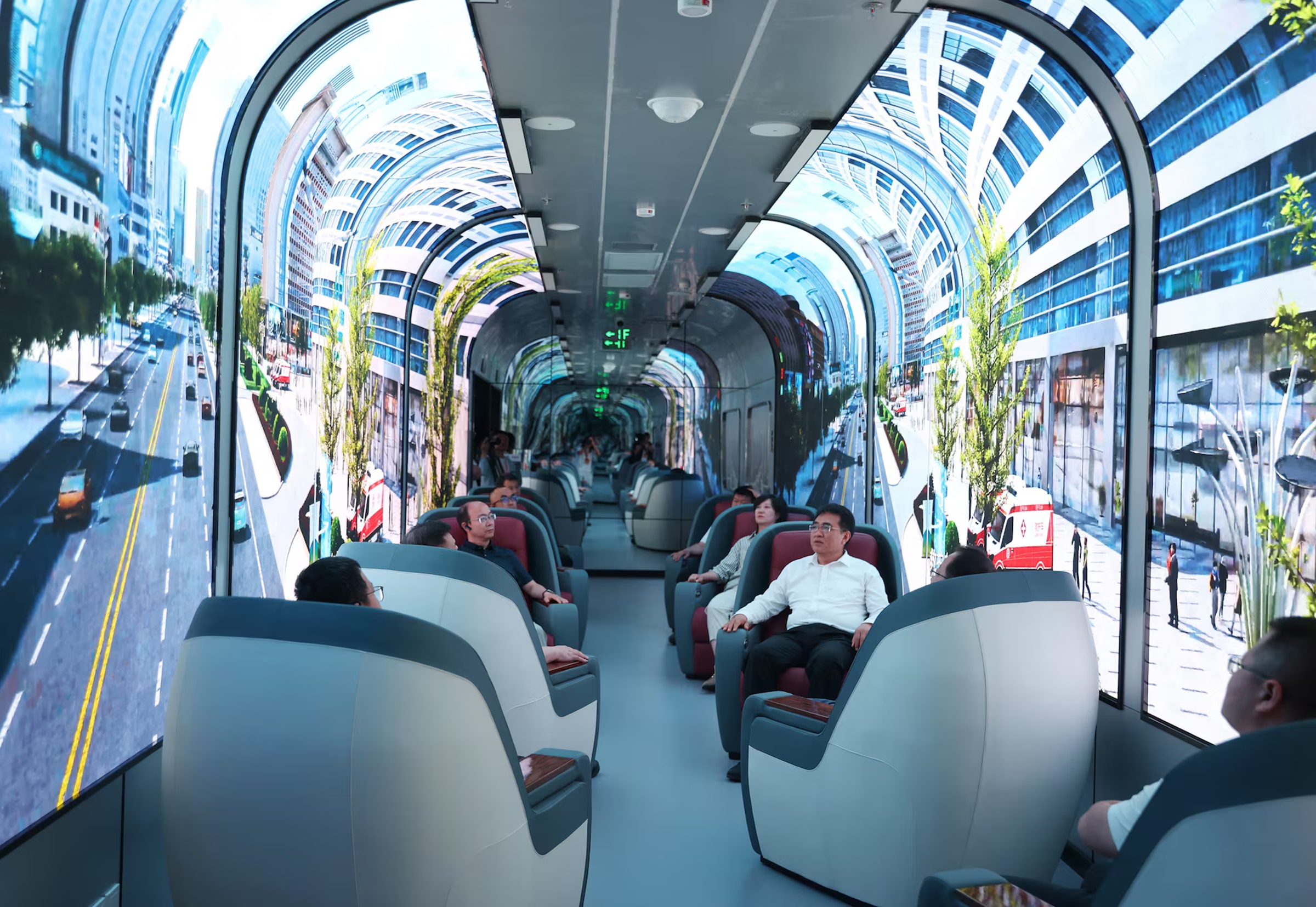 |
Visitors sit in the exhibition hall of a data center cluster in Yinchuan, Ningxia Hui Autonomous Region, China, in 7/2025. Photo: Reuters
"AI development is now both a chip problem and an electricity problem", noted Howard Yu, director of the Center for Future Readiness at IMD Business School in Lausanne, Switzerland.
Challenges for China
However, China's energy advantage also has its own limitations. While the country is pushing its AI ambitions with wind and solar resources in remote western regions, most data centers are still located in and around eastern megacities such as Beijing, Tianjin, Shanghai, Guangzhou, and Shenzhen.
"These areas also face electricity supply difficulties and have imposed restrictions on new data centers", said Anders Hove, a senior research fellow at the Oxford Institute for Energy Studies, adding that China's power grid is also severely fragmented, hindering the smooth flow of electricity between regions.
"China's power system is primarily organized and coordinated at the provincial level, with transmission lines operating mainly in one-way mechanisms", he explained. "Although the central government has called for the establishment of regional wholesale markets and shorter electricity trading cycles, this process has been very slow".
Despite its rapid development, China's data center deployment also faces quality issues, according to Kyle Chan, a researcher at the Brookings Institution specializing in Chinese industrial and technology policy.
"They are attempting to build heterogeneous chip clusters, combining various hardware systems, and using multiple types of domestic chips. This complicates the operation of AI tasks", he said.
According to the global data center construction risk report by the consulting firm Allianz, some real estate developers have shifted to building data centers to benefit from government subsidies under the "East Data, West Computing" strategy.
However, these developers often lack practical experience with high-tech projects, which demand sophisticated cooling systems, backup power, and network architecture. This deficiency leads to design and construction errors, reducing the lifespan and safety of the facilities.
"Some of China's data centers have encountered construction quality problems, especially when developers lack practical experience with such complex projects", Chan stated.
The Chinese government has also acknowledged this situation, noting that the actual utilization rate of data centers currently stands at only 20-30%. SMIC leaders have also warned that newly built data centers risk not being fully utilized.
According to expert Yu from IMD Business School, this indicates that both the US and China have issues to address in the AI race.
"The entire race can be summarized as follows: the US has chips but lacks electricity, while China has electricity but lacks chips. Both are sprinting to resolve their respective bottlenecks", Yu concluded.