Hong Kong's government implemented new regulations in March, targeting "matchbox homes"—tiny rooms, some as small as 3 square meters, created by subdividing larger apartments. While aimed at improving living standards, this initiative threatens to displace over 220,000 of the city's 7,5 million residents who currently reside in these cramped spaces.
The crackdown follows a directive from Chinese President Xi Jinping, who urged Hong Kong's special administrative region government to address its pressing housing crisis. This crisis is a consequence of decades of unequal development, severe housing shortages, and exorbitant rents.
The new regulation prohibits rooms smaller than 8 square meters and mandates improved safety and hygiene standards. These include requiring at least one openable window, a washbasin, and a toilet within each room. While the government has set a 2030 deadline for the renovation of subdivided flats, some landlords have already begun issuing eviction notices to tenants.
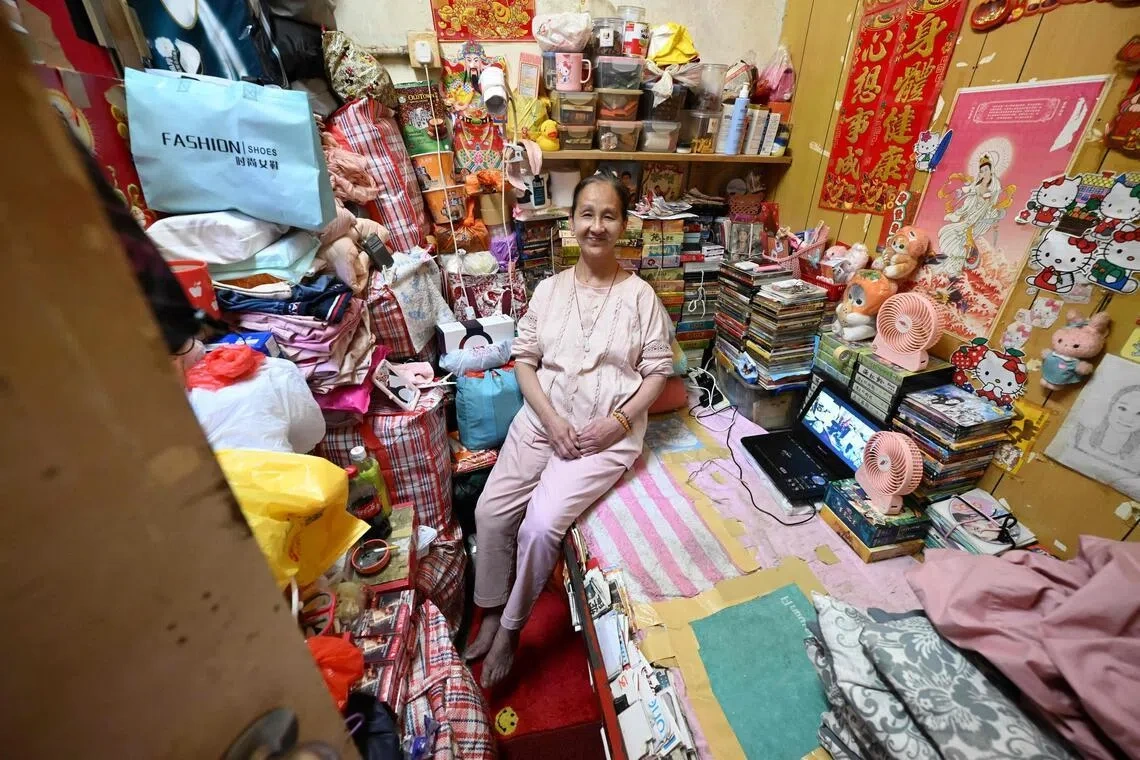 |
Lisa Lau, 48, in her cramped room filled with belongings in Kowloon, Hong Kong, on 30/4. *Photo: AFP*
Lisa Lau, 48, a Hong Kong resident, exemplifies those affected by the new policy. She lies watching period dramas on a bed that takes up almost her entire tiny room, trying to forget the worry of impending eviction. Lau, who receives social welfare, was notified months ago to vacate her home. "I'll stay here for as long as I can," she shared, adding, "I don't know where to go." She relies on a 930 USD monthly allowance, with 330 USD allocated to rent. "I'm really stressed about this," Lau stated.
Lau's small room is one of nine within an apartment, separated by thin wooden partitions, inside a 60-year-old building in Sham Shui Po, one of Hong Kong's poorest neighborhoods. Lacking a kitchen, she cooks soup or noodles using a rice cooker placed on her bed. Lau shares a communal toilet and bathroom, and she uses a foam strip at the bottom of her door to deter cockroaches and rodents. Despite the cramped conditions, Lau is hesitant to leave her familiar neighborhood, where she has established social connections. She hopes her application for public housing nearby will be approved. "As long as the landlord doesn't come to evict us, we feel very peaceful and comfortable," she said.
The Hong Kong Housing Bureau stated that over 100 households have moved out of Lau's building, and the agency is assisting the remaining 40 households in finding suitable accommodation. The Society for Community Organization (SoCO), a non-governmental organization supporting vulnerable groups, believes this reform could somewhat improve the worst living environments in Hong Kong. However, Sze Lai-shan, SoCO's deputy director, argues that the government needs to provide more public housing, especially in central areas. "Don't expect those living in these tiny apartments to immediately move into new, basic flats. They won't be able to afford them," she stated. "Many of the poorest residents will be entirely dependent on government resettlement policies." SoCO has recorded approximately 300 households facing forced eviction from "matchbox homes". Some residents have been relocated to public housing or temporary shelters, while others have had to move into other substandard apartments.
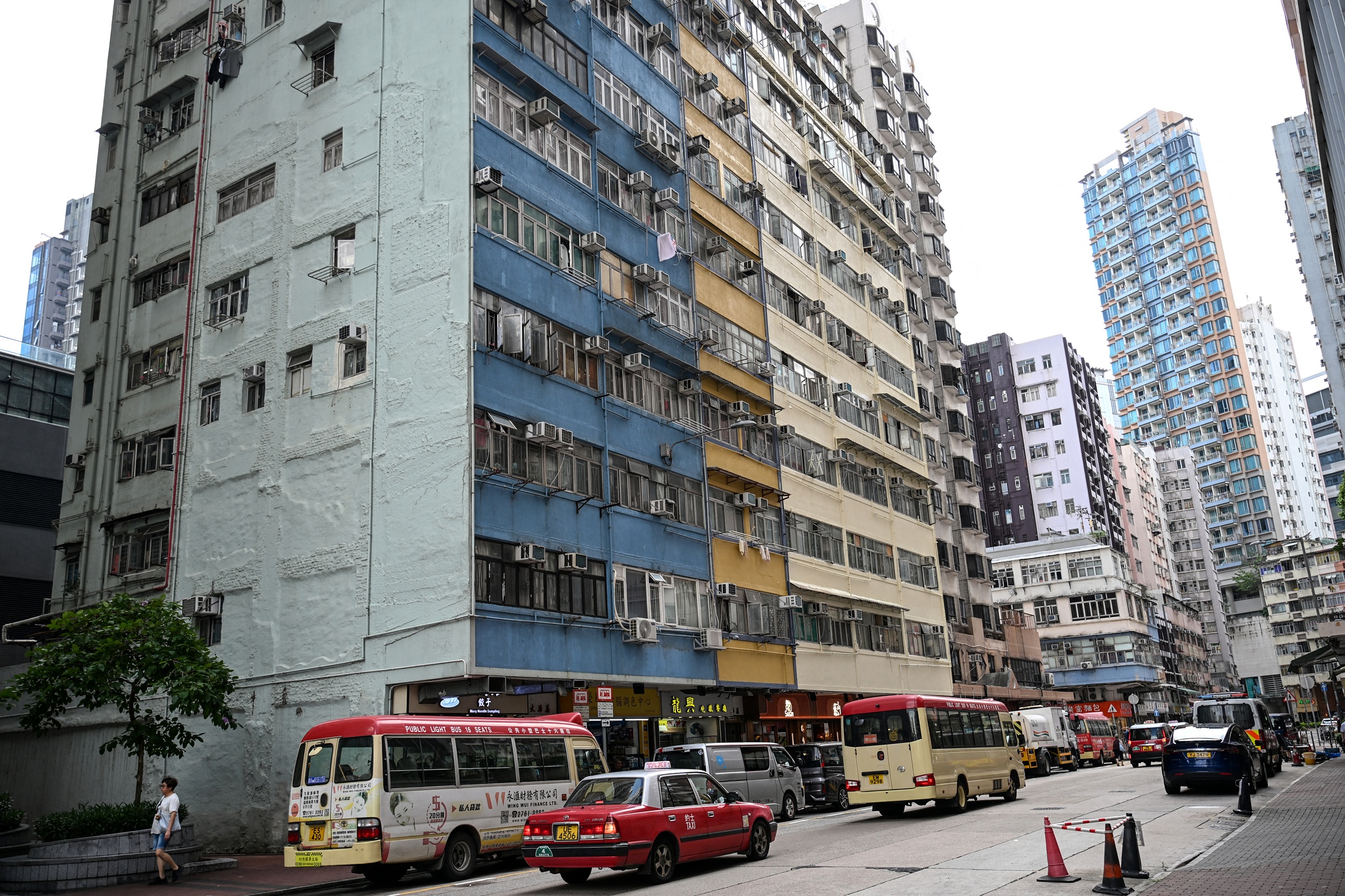 |
The Yee Wa building in Cheung Sha Wan, where subdivided apartments house residents in Kowloon, Hong Kong, on 21/5. *Photo: AFP*
Liu Xiaoli, 63, also faces eviction. She works two part-time jobs as a chef and cleaner to make ends meet after her divorce, while also supporting her daughter and grandchild in mainland China. "If rents here or elsewhere increase, I truly cannot afford it," Liu said, adding that she could not find other accommodation in the area. "I cannot find any apartment that meets government requirements," she stated. "For now, I'm just delaying it day by day."
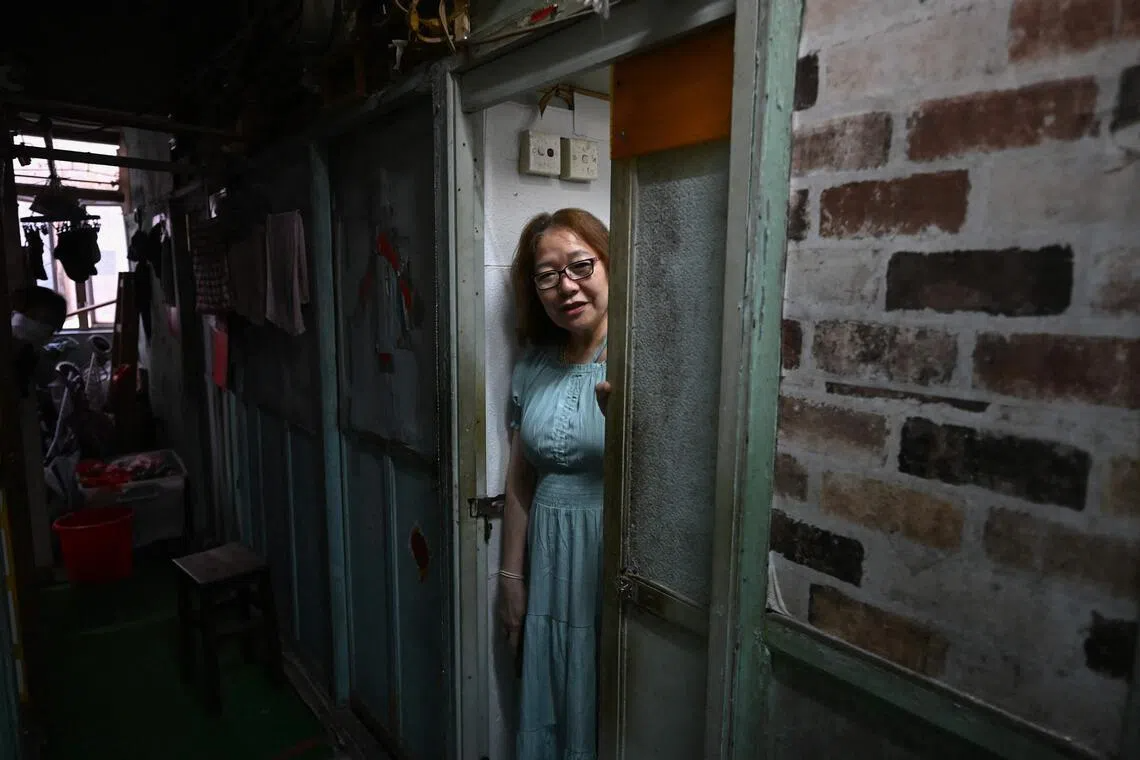 |
Liu Xiaoli, 63, looks out from her tiny apartment in Kowloon, on 30/4. *Photo: AFP*
The Hong Kong government announced a "significant increase in public housing supply", aiming to construct approximately 196,000 units over the next 5 years. It is also expediting the application process for residents on the public housing waiting list. A Housing Bureau spokesperson stated that these measures would help reduce demand for matchbox homes, thereby curbing rental prices.
However, the new regulation does not apply to "coffin homes", a term for sleeping pods stacked like bunk beds in dilapidated dormitories.
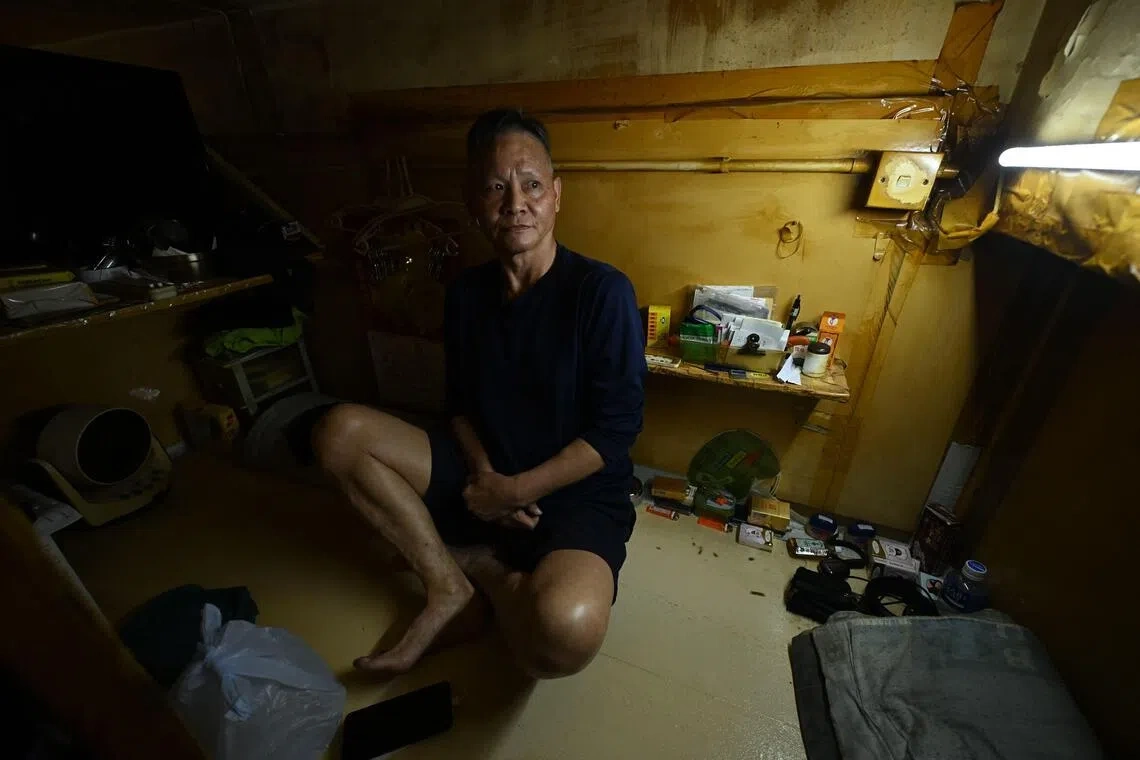 |
Wan in a "coffin home" in Kowloon on 4/5. *Photo: AFP*
Wan Hon-cheung, 64, has lived in a plywood box the size of a single bed for the past 10 years. He hopes the government will also improve living conditions for residents in his situation. He is frequently bitten by bedbugs and uses a cane to walk, making it extremely difficult to get in and out of his bed. "For the working poor like us, this is reality; there's nothing to complain about," he said.
Hong Hanh (According to AFP)