


European Union (EU) officials have told Reuters that the bloc is considering options to expedite Ukraine's membership, potentially as part of a future peace agreement with Russia. The idea, currently in its nascent stage, is seen as a confidence-building measure for Ukraine's negotiation efforts.
Under this scenario, Ukraine would not immediately receive full rights as a regular member. These rights would only be activated in transitional phases, contingent on Kyiv meeting specific conditions.
European diplomats revealed that the prospect of Ukraine joining the EU in 2027 was previously discussed during negotiations between the US, Ukraine, and the EU regarding a 20-point peace plan. This was viewed as a measure to ensure Ukraine's economic prosperity.
However, many EU governments consider such a fixed timeline 'completely unrealistic', as the accession process must be based on a merit-based assessment.
This process can only advance when an applicant makes progress in aligning its legislation with EU standards. The decision to approve an applicant's entry into the bloc also requires approval by the parliaments of all 27 member states.
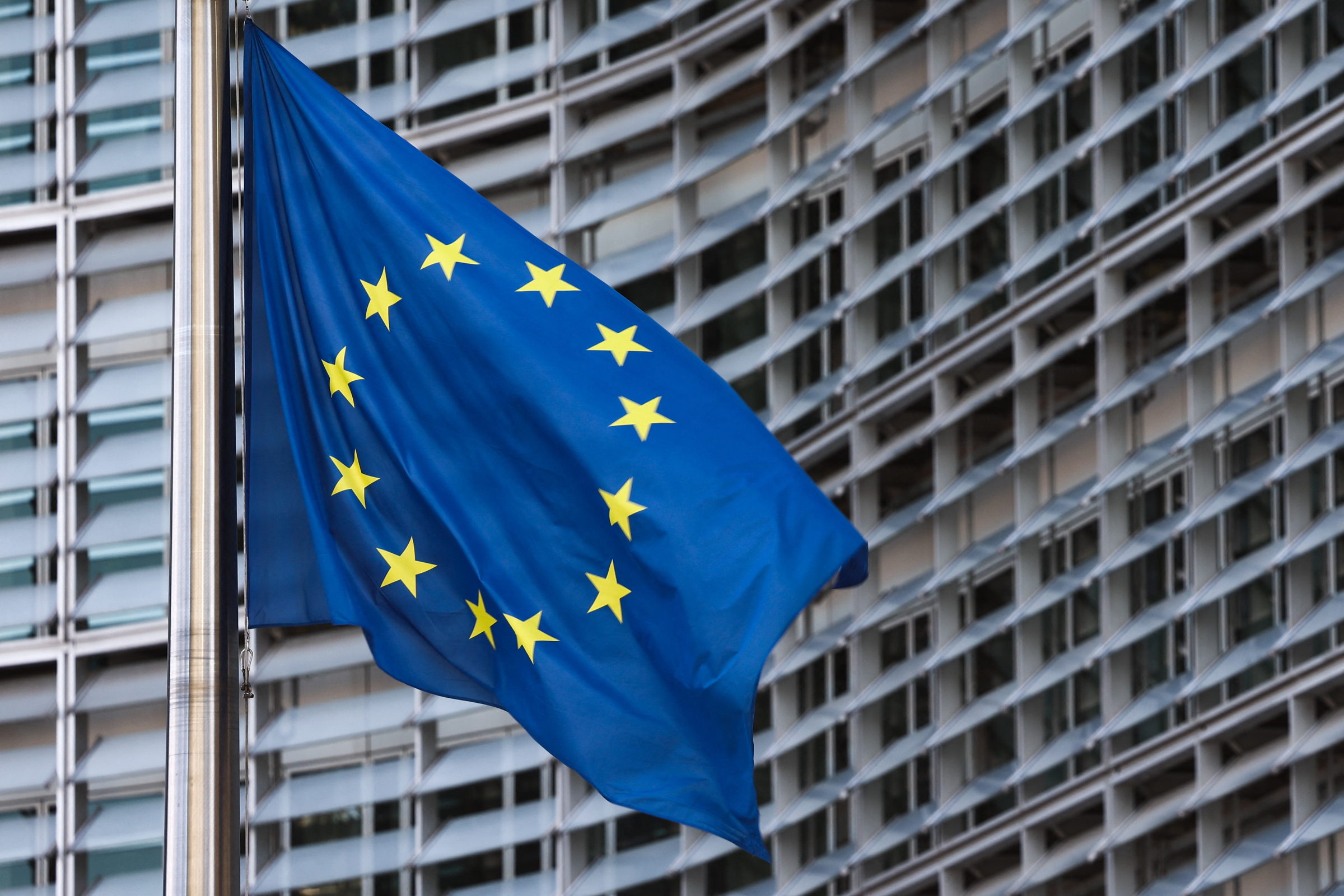 |
The EU flag in front of the European Commission headquarters in Brussels, Belgium in 2022. Photo: AFP |
Ukraine became an EU candidate in 6/2022 and began accession talks in late 2023.
The negotiation process often spans many years. For example, Poland, a country not in a state of war, took 10 years to complete negotiations and joined in 2004 along with 9 other countries.
Some EU officials have therefore proposed reversing the traditional process. Ukraine, and potentially other candidates, would join the EU politically earlier, then receive 'phased benefits' depending on their progress in meeting full membership criteria. These 'second-class members' would not enjoy full rights like regular members, including veto power over bloc policies.
'We must acknowledge that the current reality is very different from when the accession rules were drafted', an EU official said.
Officials within the European Commission (EC) argue that Ukraine has limited time, as a peace agreement might involve territorial concessions, which would be difficult to accept in a referendum. According to these officials, even limited EU membership could make such an agreement 'more acceptable' and provide stability for Kyiv to complete reforms.
'It is in Europe's interest to have Ukraine in the EU, for our own security', an EU diplomat said, suggesting that innovative solutions are needed to bring Ukraine into the EU quickly, with full rights granted later once conditions are met.
However, EU officials acknowledge that this model would raise many questions and be difficult to achieve absolute consensus. 'It will be very difficult to convince parties to agree to this idea', another EU official said, noting that this approach could also set a negative precedent for countries following the traditional path and nearing their accession goal, such as Montenegro or Albania.
Thanh Danh (According to Reuters)


