The European Union (EU) reached an agreement on 13/12 to permanently freeze Russian central bank assets held in Europe, valued at approximately 210 billion euro (over 246 billion USD). This decision replaces the previous system of renewing the freeze every six months.
This move eliminates political risks posed by member states, such as Hungary or Slovakia, that have maintained friendlier relations with Moscow and previously threatened to veto extensions of the asset freeze, potentially forcing the EU to return the funds. The indefinite freeze also serves as a crucial step in removing legal barriers to using these funds to support Ukraine.
The EU views the conflict in Ukraine as a direct threat to the bloc's security and aims to sustain Kiev's financial capacity in the coming period. The indefinite freeze is expected to advance plans to lend Ukraine up to 165 billion euro between 2026 and 2027, covering both military and civilian needs. Ukraine would only be required to repay the loan once Russia compensates for war damages.
 |
Co EU truoc tru so Uy ban chau Au o Brussels, Bi nam 2022. Anh: AFP
EU leaders are scheduled to meet on 18/12 to discuss the loan mechanism in detail and resolve remaining issues. These include Belgium's request for legal guarantees, aimed at preventing the country from bearing the consequences alone should Russia win any legal challenges.
Meanwhile, Hungarian Prime Minister Viktor Orban criticized the EU's decision, arguing it was adopted through an unfair voting mechanism. He warned that this decision would cause irreparable harm to the EU and stated that Budapest would seek to "restore legal order".
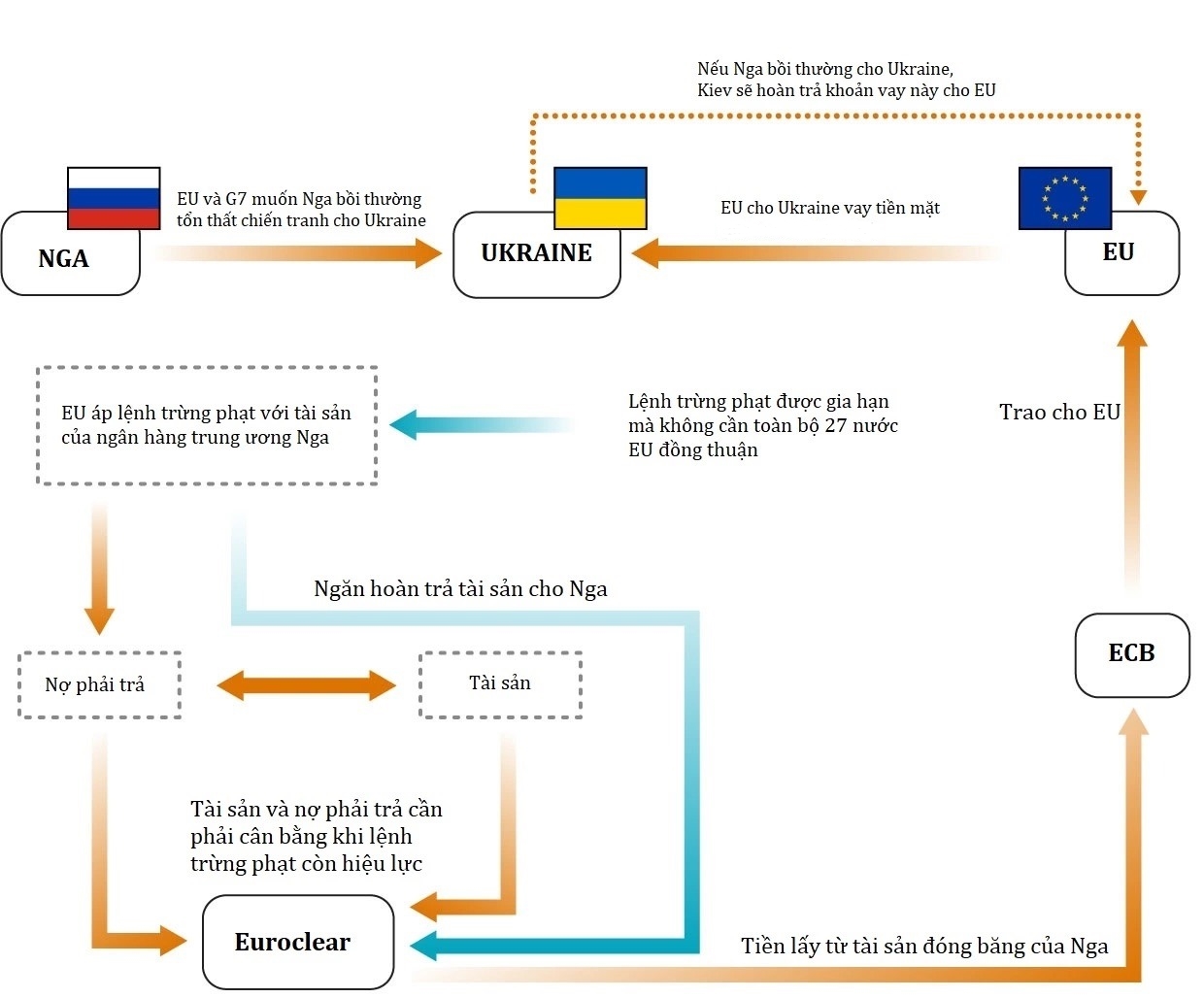 |
Ke hoach su dung tai san dong bang cua Nga de ho tro Ukraine. Do hoa: WSJ
Russia's central bank opposes the EU's plan, asserting that using its assets is unlawful and affirming it will take all necessary measures to protect its interests.
The central bank has initiated legal proceedings against Euroclear, a Belgium-based securities depository holding approximately 185 billion euro in Russian assets. Russia alleges illegal actions that have damaged its ability to manage funds and securities. Euroclear currently faces over 100 lawsuits in Russia related to the asset freeze since 2022.
Ukrainian Prime Minister Yulia Svyrydenko praised the EU's decision as a "turning point towards justice and responsibility", stating that the move strengthens the foundation for a compensation loan mechanism and brings Kiev closer to the prospect of Russia paying for the damages it has caused.
Thanh Danh (Based on Reuters, Guardian)