On 15/1, President Emmanuel Macron announced that the first group of French soldiers had arrived in Greenland, with additional forces to be deployed soon. Several other European nations, including Germany, Sweden, Norway, the Netherlands, and Finland, also confirmed they would send troops to the autonomous Danish territory.
This development is described as unprecedented for NATO, as the move targets the US, the alliance's leader, which is threatening to use force to control Greenland. According to observers, the European troop deployment signals solidarity with Denmark while showing the US that Greenland is not an "easy target for acquisition".
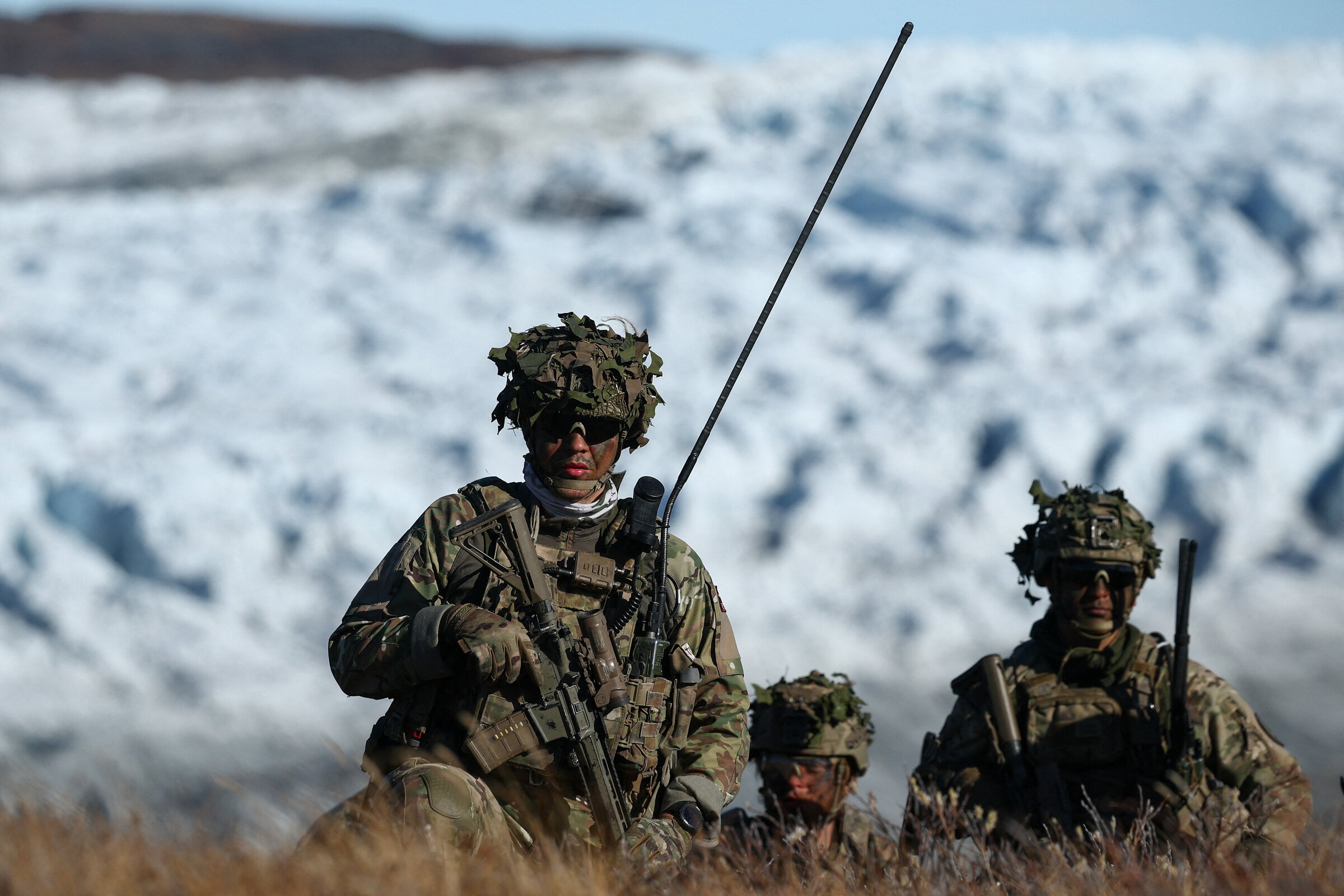 |
Danish soldiers during a joint exercise with Germany, France, Sweden, and Norway in Kangerlussuaq, Greenland, September 2025. Photo: Reuters
The US President believes that adversaries like Russia and China are seeking to control Greenland, and Denmark lacks the capacity to defend the island. Pressure from Mr. Trump led the Danish government and Greenlandic authorities to propose a trilateral meeting with US officials on 14/1, but the talks at the White House failed to break the deadlock.
Danish officials argue that Greenland is "not at all necessary" for US ownership to ensure its security, and Copenhagen, along with its allies, is taking concrete steps to demonstrate its serious commitment to defense.
The Danish Ministry of Defense announced on the same day that it would organize exercises in Greenland with the participation of European NATO member soldiers. Danish Defense Minister Troels Lund Poulsen added that Copenhagen "will deploy permanent forces in Greenland", but did not specify whether this was to help the US defend the island, or to defend the island from the US.
Europe has not yet announced specific plans for troop increases in Greenland, but the initial deployments are relatively small. France has 15 soldiers on the island. The German army deployed a 13-member reconnaissance team, Sweden sent three officers, Norway and Finland each sent two officers, and the UK and the Netherlands each sent one person.
Despite the small numbers, this presence carries high symbolic meaning. President Macron declared that France and other European nations must maintain a presence "wherever our interests are threatened, and resolutely defend the principle of territorial sovereignty".
Marc Jacobsen, an associate professor at the Royal Danish Defense College, noted that Europe is deploying forces to Greenland to send two messages to the US.
"One is deterrence, to make the US understand, 'if you decide to act militarily, we are ready to defend Greenland'," Mr. Jacobsen told Reuters. "The second is to affirm, 'we are seriously taking criticism from the US, increasing our presence, strengthening sovereignty, and enhancing our surveillance capabilities over Greenland'."
Natacha Butler, a writer for Al Jazeera, commented that European nations "are sensing the urgency of the situation", especially after US actions in Venezuela.
"They feel that when President Trump says something, he truly intends to do it. And that is why we have seen many European nations deploy troops," Ms. Butler said.
Lone Wisborg, a former Danish ambassador to NATO and the US, believes Denmark attempted to negotiate with Mr. Trump, but ultimately, Denmark and Greenland concluded this was an issue of territorial sovereignty.
"From that perspective, they will not compromise," Ms. Wisborg said, adding that the focus of the Danish-Greenlandic government is now to enhance security and expand military presence on the island. "It remains unclear whether that will be enough for the US to accept the reality."
Greenland is the world's largest island, located between the Atlantic Ocean and the Arctic Ocean, with a population of 57,000 people and an area of approximately 2.16 million sq km. The island lies on the shortest route from North America to Europe, making it a strategically important location for Washington. Greenland also possesses abundant, largely untapped mineral resources.
During his first term, Mr. Trump had declared the US should buy Greenland, but no further action was taken, and the proposal faded. After taking office for his second term, he reiterated this intention with increasing intensity and firmness.
European leaders and many US national security experts argue that Russia and China pose no short-term threat to Greenland. They add that the US still has significant room to establish defense measures on the island under the 1951 treaty with Denmark, rather than controlling the island.
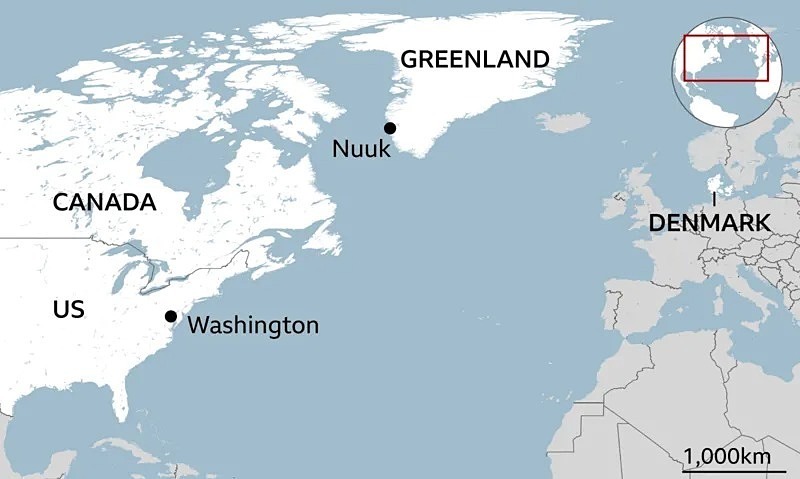 |
Location of Greenland island. Graphic: BBC
After meeting with US Vice President JD Vance and Secretary of State Marco Rubio at the White House, Danish Foreign Minister Lars Lokke Rasmussen stated that both sides agreed to establish a "high-level working group" to continue discussions on President Trump's concerns about Greenland.
Foreign Minister Rasmussen said he clearly articulated Denmark's position, and US representatives did not directly mention controlling Greenland. He added that European soldiers are in Greenland to participate in exercises, not to deter the US.
Danish Prime Minister Mette Frederiksen was not overly optimistic about the meeting on 15/1, as dialogue would likely not change the reality that "the US still has ambitions to control Greenland".
Meanwhile, the White House stated that the meeting between US, Danish, and Greenlandic representatives was productive, while warning that Europe's deployment of soldiers to the island would not sway President Trump's view on the territory.
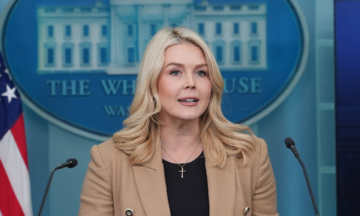
"I do not believe that the deployment of soldiers in Europe influences the President's decision-making process or his goal of controlling Greenland," White House Press Secretary Karoline Leavitt declared.
Nhu Tam (According to AFP, Reuters, WSJ)