President Donald Trump is accelerating efforts to promote a Ukraine peace plan; however, he is showing increasing impatience as he struggles to find common ground with President Volodymyr Zelensky and European leaders.
He clearly expressed his frustration on 8/12 at the White House during a special interview with Politico. The US president described European leaders as those who only talk and "produce no results", declaring that President Zelensky "must cooperate" because, in his view, "Russia is gaining the upper hand".
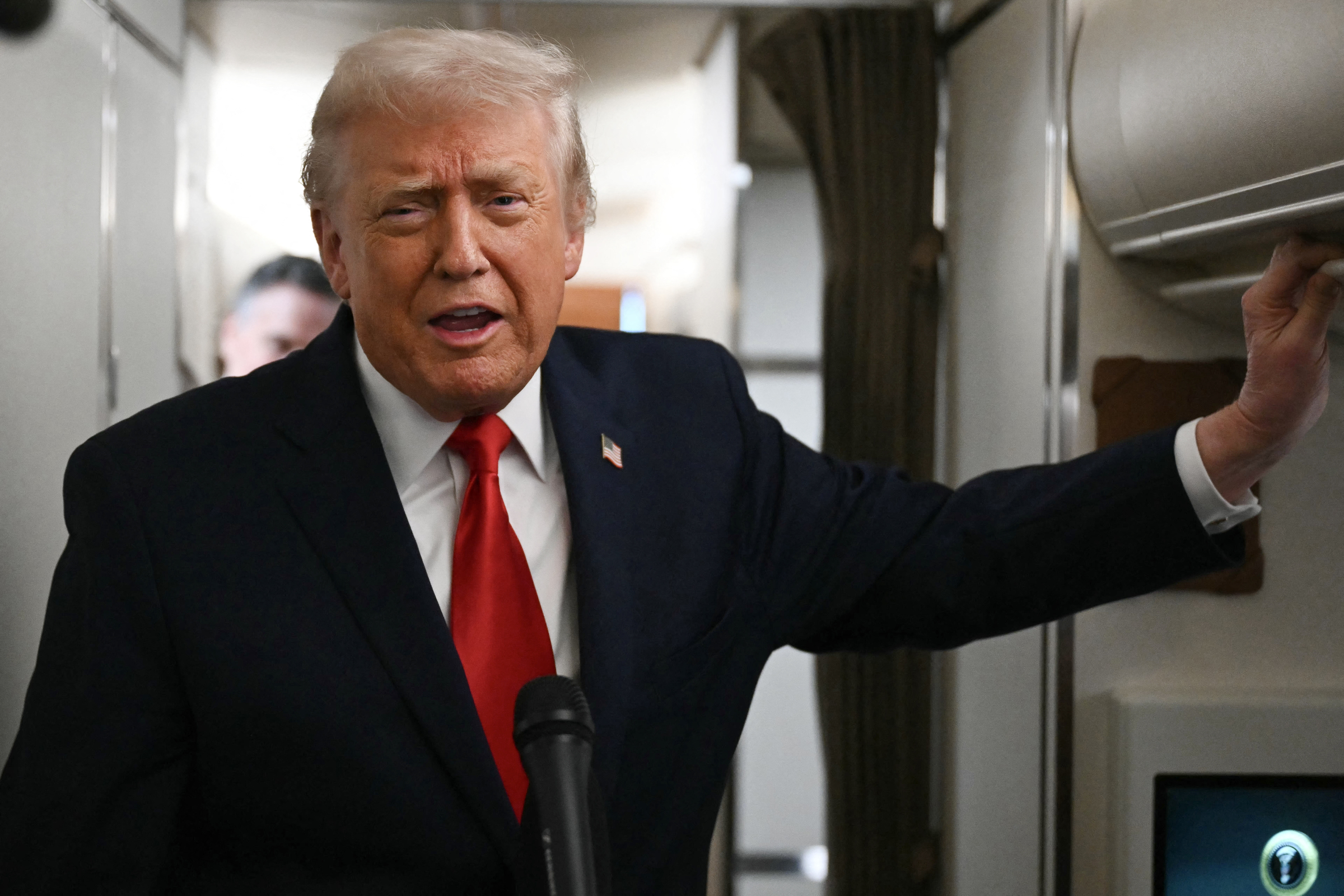 |
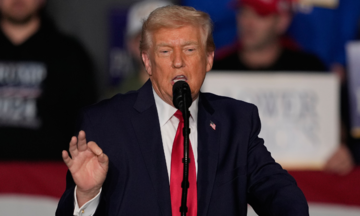
President Donald Trump speaks to reporters aboard Air Force One on 9/12. Photo: AFP
The US president's comments followed the release of the new US national security strategy last week, which directly targeted European governments for their efforts to support Ukraine. The strategy blamed European officials for "having unrealistic expectations about the conflict", which it stated has hindered the peace plan.
President Zelensky spent 8/12 working with French, British, and German leaders to revise the US's initial 28-point proposal, which has now been condensed to 20 points.
"We have removed publicly anti-Ukraine points", Zelensky told reporters, but stressed that Kyiv still requires stronger security guarantees. He remains unwilling to cede more territory in the Donbass region to Moskva beyond the areas currently controlled by Russian forces.
With Russia unlikely to alter its conditions, the White House-led peace talks now face the risk of deadlock. As President Trump's anger grows, European nations supporting Ukraine are under pressure to prove him wrong, presenting a significant challenge for them.
"He says we produce no results, I hate to say it, but that's somewhat true", an unnamed European official stated. "We are acting but have been slow to realize that we are the solution to our own problem".
The official cited NATO's commitment to increase defense spending and the PURL initiative, which allows allies to purchase US weapons to aid Ukraine, as signs that the situation has begun to shift. However, the EU currently struggles to persuade Belgium to support a loan of nearly USD 200 billion for Ukraine, using funds from frozen Russian assets.
"If this plan fails, we will be in trouble", another European official remarked.
Trump's increasing pressure on Ukraine clearly shows that months of European efforts to "charm offensive" the US president, both publicly and privately, have yielded no benefit.
However, Liana Fix, a senior fellow for Europe at the Council on Foreign Relations, noted that leaders across the Atlantic "understand perfectly well that they cannot simply confront Trump and bluntly declare that this is not how Europe should be treated", as the old continent still depends on the US.
Despite this, many in Europe remain shocked by the US president's continuous pro-Russia foreign policy. They refute Trump's assessment that Russian forces are dominant on the Ukrainian battlefield.
"Our view is that Ukraine is not losing. If Russia were that strong, they would have ended the conflict within 24 hours", a third European official said. "If you think Russia is winning, what does that mean? Will you give them everything? That is not a sustainable peace".
President Trump has refused to approve additional defense aid for Ukraine, while criticizing his predecessor for sending billions of US dollars in aid to help Kyiv after Moskva launched its campaign in 2/2022.
Jake Sullivan, national security advisor under former president Joe Biden, observed that President Trump's view of Russia gaining an advantage on the battlefield "does not align with reality".
"Russia has not achieved its strategic objectives in Ukraine. They completely failed in their initial goal of controlling Kyiv and subjugating Ukraine. They even failed in the more limited goal of controlling Donbass and neutralizing Ukraine's security", Sullivan said, adding that he believes Ukraine could achieve military victory with stronger US support.
"If the US abandons Ukraine and sides with Russia, things will become much more difficult for Kyiv, but this is likely the direction the current US administration will pursue", he stated.
Apparently seeing more benefit from the prospect of agreements with Russia than from maintaining a transatlantic alliance, President Trump has clearly expressed a desire to normalize relations with Moskva. This is certainly a significant gift to the Kremlin, experts assess.
Kremlin spokesperson Dmitry Peskov welcomed the new US national security strategy, declaring it "consistent with our vision". Unlike the strategies of previous administrations, the Trump administration's document omitted language describing Russia as a "direct threat" and called for cooperation with Moskva on strategic stability issues.
The document stated that Washington would seek a swift resolution to the conflict in Ukraine and aimed to re-establish "strategic stability" with Moskva, while affirming that Russia's actions in Ukraine remain a central security concern.
"The small changes we see in the new concepts are certainly favorable to us. This document mentions the need for dialogue and building good, constructive relations", Peskov commented on 8/12.
Kirill Dmitriev, chief executive of the Russian Direct Investment Fund (RDIF), a key figure in recent diplomatic exchanges between Washington and Moskva, also praised President Trump's criticism of Europe, particularly the US leader's warning that "Europe must be very careful" and that they "are heading in some bad, very bad directions for the people".
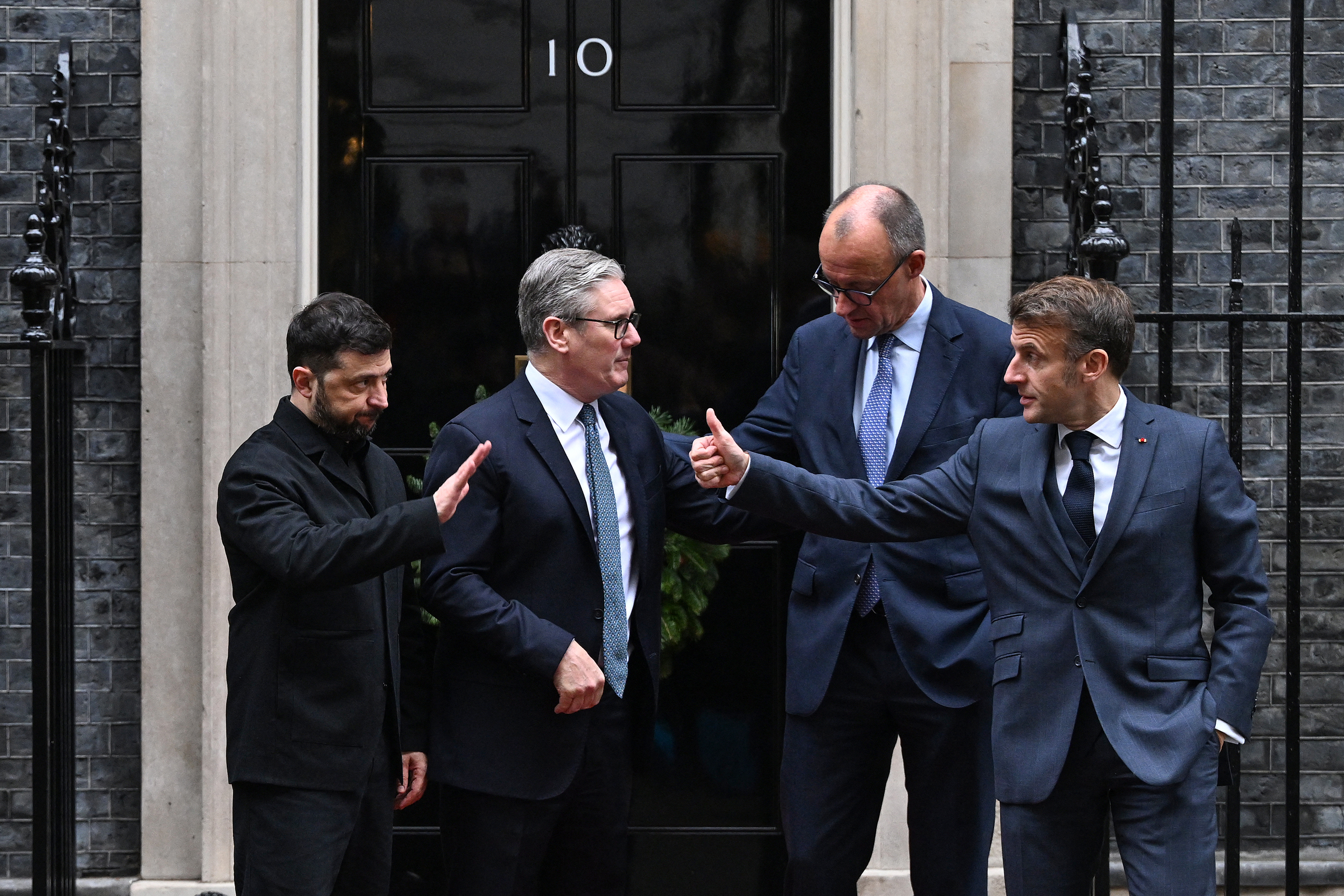 |
The president of Ukraine (left) and European leaders outside the British Prime Minister's residence at 10 Downing Street on 8/12. Photo: AFP
For its part, former EU commissioner Thierry Breton expressed concern, deeming the US security document "shocking" because it "clearly states in writing" that the White House views European institutions "as adversaries".
Furthermore, President Trump seeks to end Europe's decades-long security dependence on the US, which he believes Washington has borne for too long.
The push to end the Ukraine conflict with a deal largely favorable to Russia appears to be President Trump's final signal to Europe that they will truly have to fend for themselves, Politico commentator Eli Stokols observed.
When Politico asked if European countries would continue to be US allies, Trump avoided a direct answer. "It depends", he said, while sharply criticizing the region's immigration policies. "They only want to preserve their political image so they don't act decisively, which makes them weak".
Speaking at an event in Paris, France, on 8/12, European Council President Antonio Costa urged the region to understand that "post-World War II alliances have changed" and they must prepare "to defend themselves not only against adversaries but also against allies who challenge us".
Despite persistent warnings from President Trump and a growing awareness of the need for 'strategic autonomy', Europe remains slow in strengthening its defense capabilities to protect the continent and support Ukraine.
Under pressure from Trump, NATO members in 6 only agreed to increase defense spending to 5% of GDP over the next decade. NATO still purchases US weapons to send to Ukraine, but these are likely insufficient as the conflict enters its fourth winter and Ukraine faces severe shortages of ammunition and personnel.
"This is why European leaders will still try to continue working with the US administration, despite Washington's increasing criticism", Fix from the Council on Foreign Relations in New York remarked.
President Trump views Ukraine's and Europe's rigid stance as the main obstacle to peace, but many diplomats believe his unwillingness to increase pressure on Russia is what has led efforts to end the conflict to a dead end.
"Merely wanting peace is not enough. You have to create a dynamic where the main parties are willing to compromise, whether enthusiastically or reluctantly", Richard Haass, former senior advisor to US Secretary of State Colin Powell under the George W. Bush administration, commented. "To succeed at the negotiating table, you must succeed away from the negotiating table, and the US has failed in that regard".
Vu Hoang (According to Politico, CNN, Washington Post)