Arthur Levine, president of Brandeis University in Massachusetts, shared this prediction in a recent discussion with the independent policy research institute American Enterprise Institute, headquartered in Washington, as reported by Fox News on January 20.
During the discussion, President Levine stated that higher education is essentially undergoing a transition, a transformation that extends across the entire US society. He anticipates that 20-25% of US higher education institutions will close their doors in the coming years.
Levine explained that the US economy is shifting from a national industrial model to a global digitized knowledge economy. This fundamental change is creating a series of simultaneous challenges for higher education, encompassing demographic shifts, economic pressures, technological advancements, global influences, and political dynamics. The cumulative effect of these changes, he noted, will result in the closure of 20-25% of institutions.
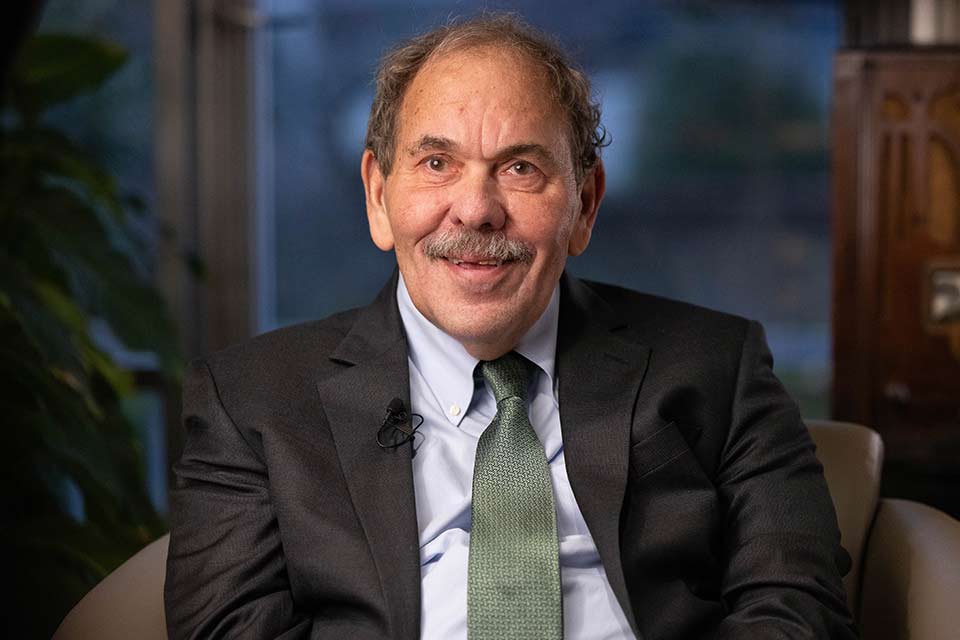 |
Arthur Levine, president of Brandeis University in Massachusetts, US. Photo: Brandeis University |
According to Levine, many universities will be compelled to transition the majority of their teaching activities to online formats. Institutions possessing greater financial resources may be able to delay these fundamental changes, but the shift is inevitable for the sector.
Traditional institutions, such as residential and research universities, are expected to undergo the most significant transformations. Levine drew a parallel to the industrial revolution, when church-affiliated schools gradually evolved into modern universities and research institutes. He believes the current era presents a similar turning point for higher education.
The Brandeis University president also highlighted several factors contributing to universities' difficulties, including excessively high tuition fees, a reluctance to embrace change, and a slow pace of adaptation to new realities.
"If the price is high, the outcome must be worthwhile. That is the essence of the problem," Levine explained. "This is not the first time. Whenever the world changes, all operating foundations of society are left behind, including higher education. Then they have to rush to catch up. Some places take a long time, some never catch up."