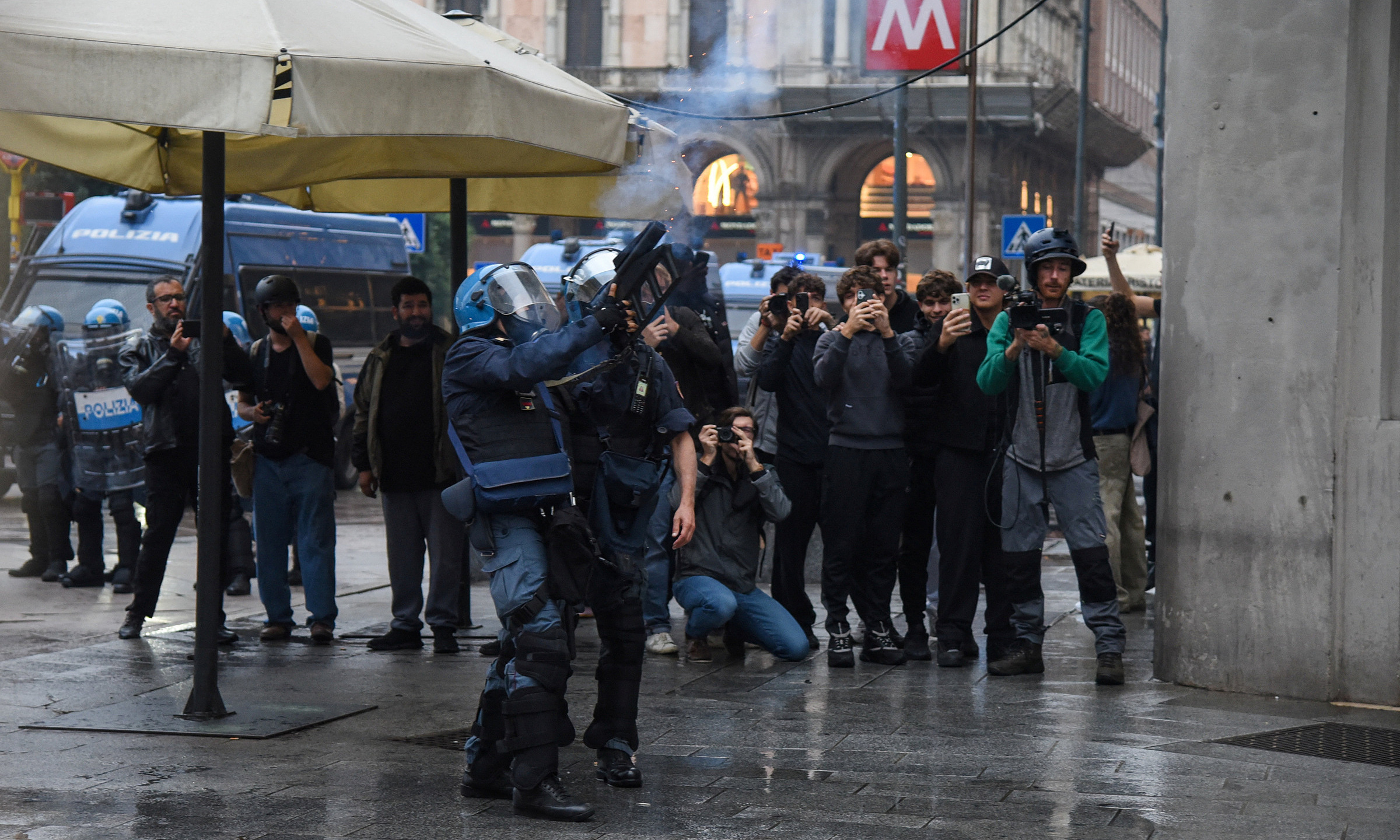
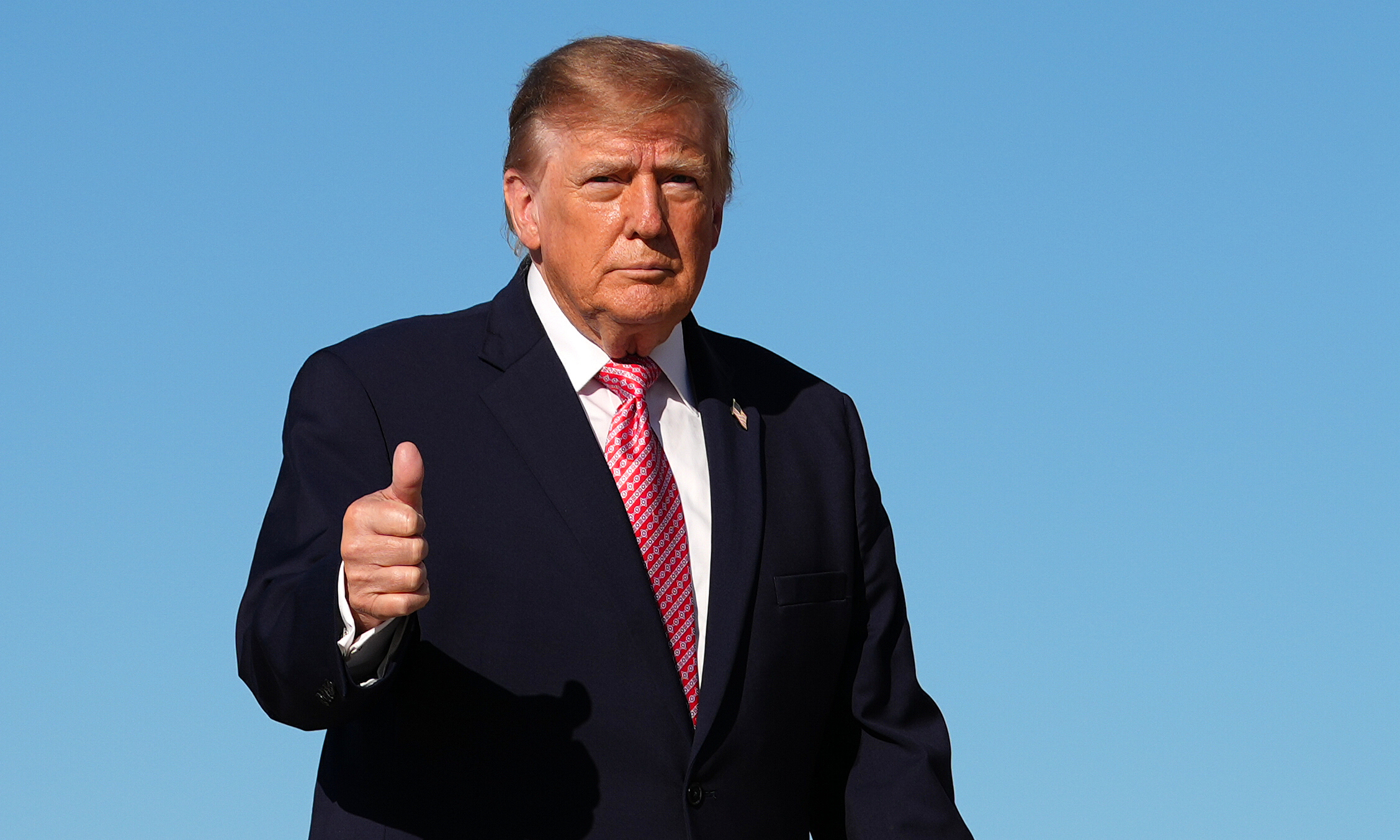
French Prime Minister Sebastien Lecornu stated on 19/10 that far-left agitators fueled violent behavior during protests last weekend in Paris and other cities nationwide. He described these individuals as part of an "underground network" aiming to "create severe chaos in the run-up to the presidential election." Lecornu praised French police for their effective response to this threat, though he did not specify which movement this network belonged to or who led it.
"We witnessed disturbing scenes of violence targeting people's property. However, it must be acknowledged that no one died. This is truly a miracle," Lecornu said after an emergency cabinet meeting.
Protesters in Rennes launched fireworks at police on the night of 18/10. Video: X/Visegrad24
The French Prime Minister announced that police are conducting a large-scale operation to investigate suspects involved in the riots. In Paris alone, 200 investigators are tracking individuals who participated in acts of vandalism and looting.
"My determination to restore order is absolute," Lecornu stated, vowing to use "every tool the government has" to control the situation. The Prime Minister directed local authorities to impose local curfews in areas severely affected by the wave of violent protests.
However, some government members suggested that authorities failed to accurately predict or adequately prepare for the scale of the riots. Interior Minister Laurent Nunez offered his resignation after admitting police "lost control" in some cities, but President Emmanuel Macron rejected it. Justice Minister Gerald Darmanin also stated that the government "clearly failed" in its response to the riots, particularly concerning intelligence gathering.
 |
French Prime Minister Sebastien Lecornu (center) speaks after an emergency cabinet meeting in Paris on 19/10. Photo: AP
According to French officials, police arrested over 2,500 people during last weekend's violence. Around 1,000 police officers were injured, and at least 3,000 businesses nationwide were looted over two days. The French Chamber of Commerce and Industry reported that over 2,000 shops and businesses were directly affected, with estimated damages reaching hundreds of millions of euros.
Marseille Mayor Benoit Payan criticized the central government and police for allowing France's second-largest city to "fall into the hands of looters." He demanded a government explanation and assurance that a similar situation would not recur, while also requesting full compensation for the damages.
In Paris, police imposed a curfew from 23h to 6h the following morning in Republic Square and the Les Halles shopping district. The capital's authorities also banned unauthorized gatherings in certain central areas. Similar restrictions and curfews were announced in Marseille, Bordeaux, Nice, Lyon, Lille, and many other localities.
 |
Riot police deployed in Paris on the night of 18/10. Photo: AFP
Before the government announced tougher measures, authorities in several cities had already imposed restrictions on gatherings to restore order. Marseille banned public gatherings on 19/10, while the northern town of Denain implemented a nightly curfew effective until 25/10. The Mayor of Coulaines proposed a curfew after 23h and suggested the government should declare a state of emergency if looting continued.
Prime Minister Lecornu stated that workers unable to work due to the riots would receive partial unemployment benefits starting from 21/10. The government also urged insurance companies to expedite compensation and pledged budget support for affected areas. He added that the government would draft legislation to compel those who damaged property to bear the costs.
 |
A store in Paris in ruins after being looted by protesters on 18/10. Photo: AP
The wave of protests began in September when student groups blockaded schools to demand improved educational conditions. The movement later attracted unions and other groups, with around 550,000 people taking to the streets last weekend to protest rising fuel prices, the high cost of living, and declining public services. While most protesters were peaceful, masked groups burned vehicles, set fire to buildings, and looted numerous shops in Paris, Marseille, and other cities. The 19th-century town hall in Limoges burned down, causing its clock tower and roof to collapse.