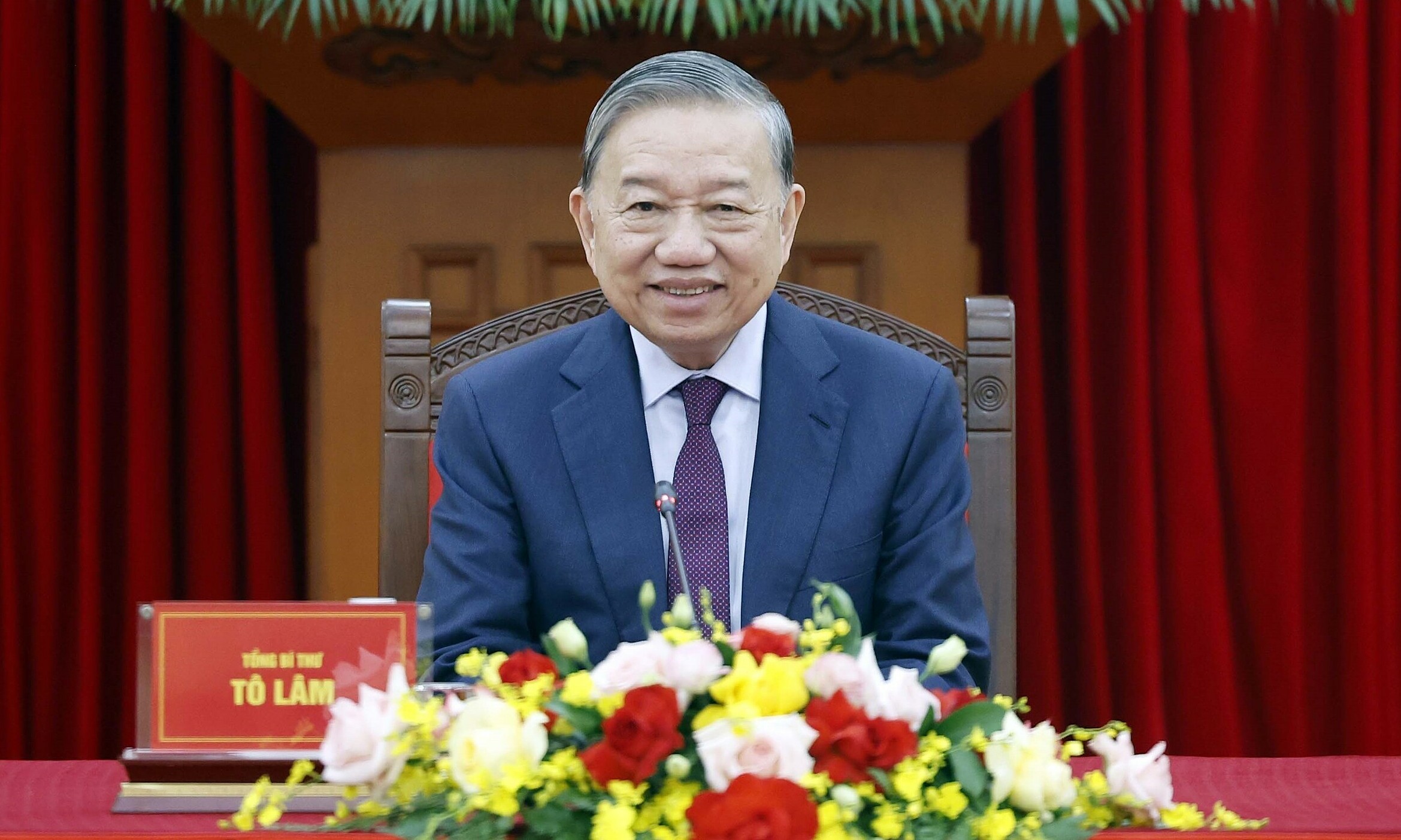
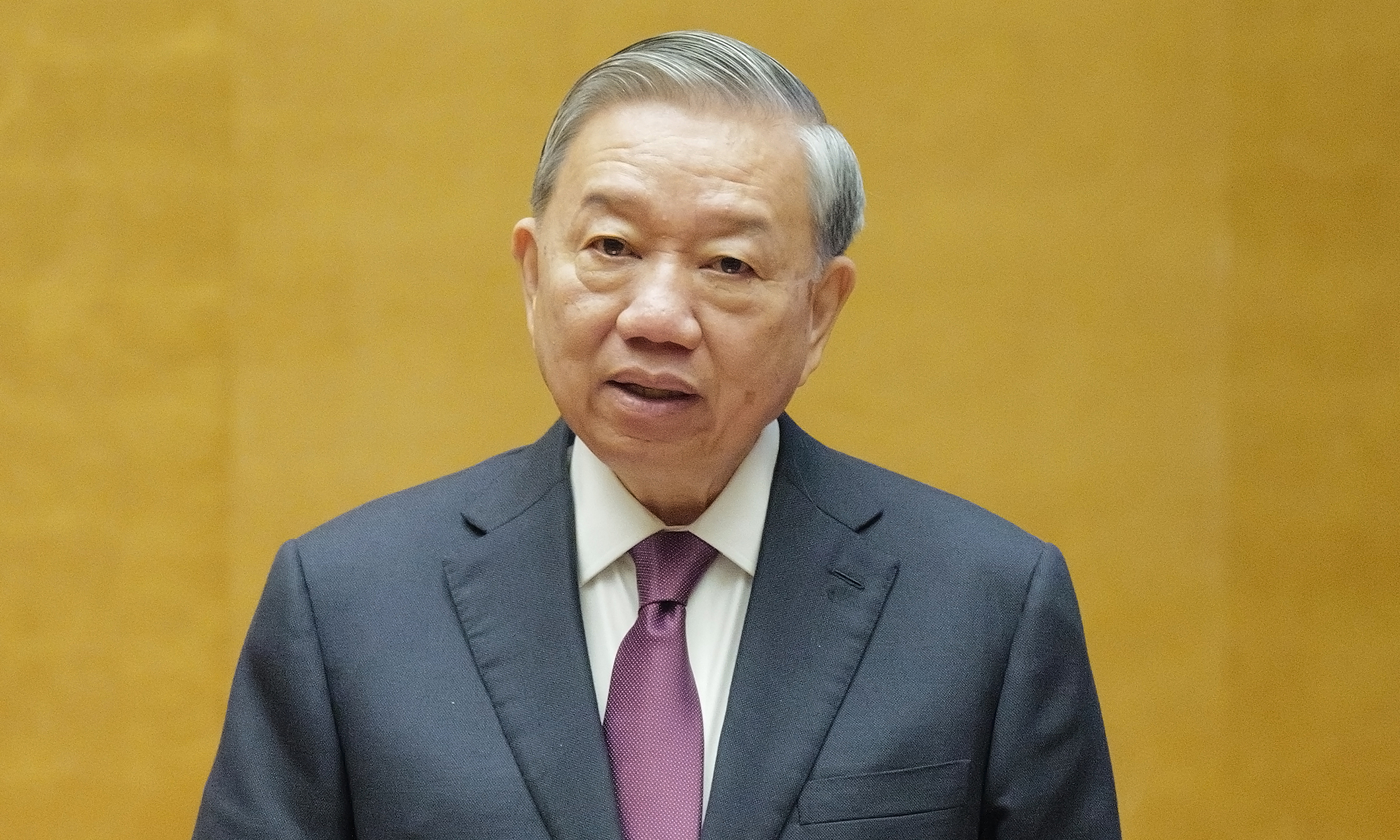
In his speech today at the Indian Council of World Affairs, a leading and highly respected strategic research body pivotal in shaping India's foreign policy, General Secretary, President To Lam shared his perspectives on the Vietnam - India Enhanced Comprehensive Strategic Partnership, guided by a shared vision, strategic convergence, and substantive cooperation.
The Vietnamese leader stated that built on a foundation of trust and strong ties, relations between the two countries have steadily developed, expanding and deepening over recent years, according to the Ministry of Foreign Affairs. Both nations are pursuing new development goals and entering a new era marked by unprecedented rapid and profound global transformations, which also present new opportunities.
"The new context and new requirements of each nation's new development phase demand that we consolidate, innovate, and elevate Vietnam - India relations to a new height," the General Secretary, President said.
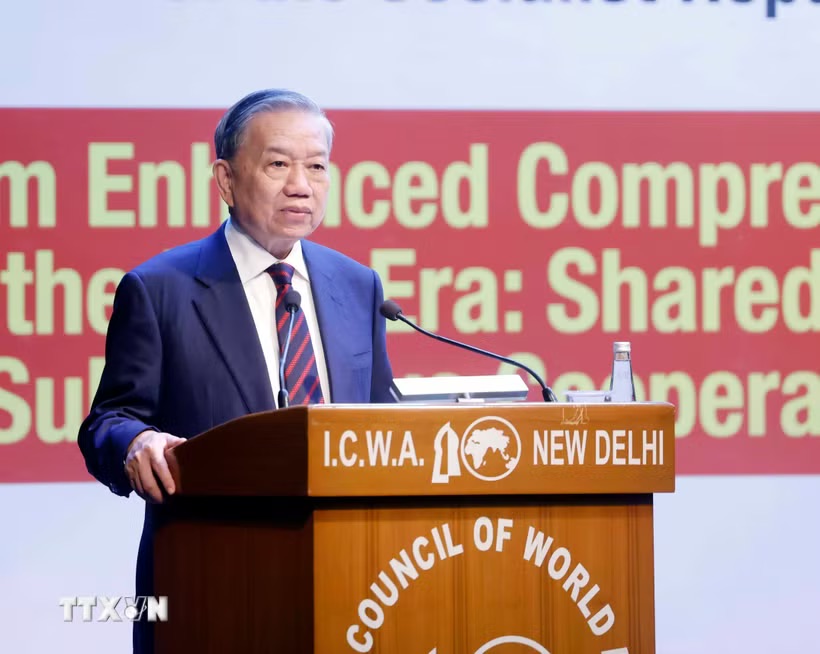 |
General Secretary, President To Lam delivered a policy speech at the Indian Council of World Affairs in New Delhi on 6/5. Photo: TTXVN
General Secretary, President To Lam outlined five key directions to elevate Vietnam - India cooperation to a new level, exploring new potential, opportunities, and areas.
The first direction emphasizes the need for both sides to further consolidate and deepen strategic trust. This is essential for maintaining stable relations, and serves as a foundation for promoting effective cooperation and jointly addressing common challenges.
The two countries should continue to enhance comprehensive exchanges across all channels and expand cooperation in strategic areas, including security and defense.
Vietnam and India also need to improve operational effectiveness and coordinate their positions in multilateral forums, including ASEAN, the United Nations, and the Non-Aligned Movement, particularly amidst complex regional and international developments.
The second direction focuses on expanding connectivity and increasing development linkages, thereby creating more momentum for regional integration. Developing connections in infrastructure, logistics, digitalization, and value chains is a crucial link in this endeavor.
Vietnam is ready to cooperate with India in pharmaceuticals and welcomes Indian pharmaceutical companies to invest in manufacturing pharmaceuticals in Vietnam for the Southeast Asian market.
Both sides will expand direct connectivity mechanisms between businesses and localities through cooperation forums and investment promotion programs. This will transform cooperation directions into concrete projects linked to specific industries, localities, and value chains.
According to the General Secretary, President, Vietnam - India relations represent a strategic connection axis between Southeast Asia and South Asia. Through the Enhanced Comprehensive Strategic Partnership between the two countries, the ASEAN - India framework, Mekong - Ganga cooperation, and various regional connectivity initiatives, both nations can contribute to consolidating a broad, inclusive, and dynamic cooperation space.
The third direction aims to elevate and accelerate cooperation in science, innovation, and strategic technology, making it a key pillar in Vietnam - India relations.
The General Secretary, President noted that knowledge, technology, and innovation have become the primary drivers of growth and new determinants of comprehensive strength and national competitiveness. This necessitates deeper and more diverse forms of cooperation in future-shaping fields such as the digital economy, data, semiconductors, and artificial intelligence.
Vietnam places particular importance on cooperation with India in science and technology, especially in strategic areas like semiconductor technology, artificial intelligence, and digital transformation.
Both sides can promote cooperation in this area not only at the policy level but also at the implementation level, by clearly defining key areas and deployment models. This involves establishing cooperation programs between research centers, universities, and businesses, linked to training and mobility of high-quality human resources between the two countries.
Disseminating cultural and social values and strengthening people-to-people exchanges is also an important direction that the General Secretary, President believes both sides need to prioritize. The bonds between people and societies contribute to the enduring vitality of relations between nations.
In 2025, nearly one million tourists traveled between Vietnam and India, indicating a deepening level of connection between the two countries, yet this figure remains modest compared to the potential of both nations' populations and economic strengths.
To enhance cooperation in this area, both sides need to strengthen collaboration in education and training, culture, tourism, local connectivity, and people-to-people exchanges, especially among the younger generation.
Finally, Vietnam and India need to work together to build and consolidate a space for peace and stability, as both deeply understand the value of peace. Peace is not merely the absence of war, but also the creation and strengthening of structural, institutional, and cultural conditions to foster sustainable peace, justice, and human prosperity.
"Peace is also not inherently available, but rather the result of sincere dialogue, responsible conduct among nations, and consistent respect for the fundamental principles of the United Nations Charter and international law," the General Secretary, President said.
Thanh Tam