A US Navy spokesperson stated on 24/5 that the service is implementing a multi-pronged strategy to ensure a stable, continuous power supply for its bases, thereby maintaining energy resilience and mission readiness.
"One of the efforts in this strategy is to use a Ford-class nuclear-powered aircraft carrier to provide power to shore facilities, demonstrating the capability to meet critical and essential mission requirements. The test is expected to take place at Norfolk Naval Station," the spokesperson added.
Fighter jets taking off from the USS Gerald R. Ford to attack Iran on 8/3. Video: US Navy
The plan was presented by acting US Secretary of the Navy Hung Cao during a hearing before the House Armed Services Committee on 14/5. He indicated that an aircraft carrier would supply power to Norfolk Naval Base "this summer" but did not disclose details about the specific warship.
The USS Gerald R. Ford is the sole Ford-class aircraft carrier currently in service with the US Navy; the second, the USS John F. Kennedy, is undergoing sea trials and has not yet been delivered. The USS Gerald R. Ford returned to Norfolk Naval Base in mid-May after 326 days on duty, concluding the longest deployment by a US aircraft carrier in decades.
"US supercarriers are essentially floating cities with thousands of crew members and associated air wings. They have enormous electricity demands," said Joseph Trevithick, an editor for the US military news site War Zone.
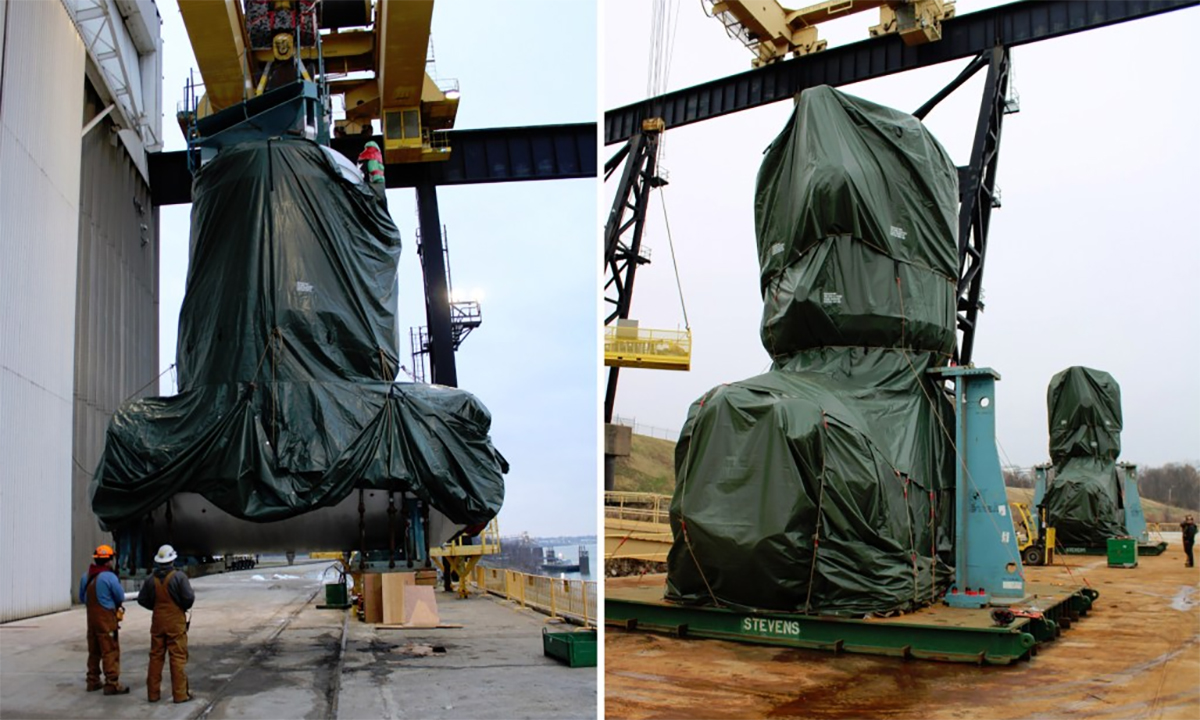 |
The A1B nuclear reactor is planned for installation on the USS Doris Miller aircraft carrier. Photo: BWXT
Each Ford-class carrier features two A1B nuclear reactors, whose power output remains classified but is estimated to be 25% more powerful than the A4W reactors on the Nimitz class. Trevithick estimates the two A1B reactors have a combined output of 1,400 MW, which is only a fraction of the capacity of reactors in US nuclear power plants.
"Transforming the Ford warship and other future aircraft carriers into floating nuclear power plants to serve major bases like Norfolk could be a useful backup option in case of power disruptions," Trevithick noted.
This capability could open new operational avenues as the US military focuses on the concept of dispersed forces across wide areas. Consequently, various units could be deployed to forward operating locations with limited power infrastructure.
Moreover, converting aircraft carriers into floating power plants would be useful in non-combat operations both domestically and abroad, including disaster relief missions. Restoring power is often a crucial element in these operations, helping re-establish medical services and support other essential needs.
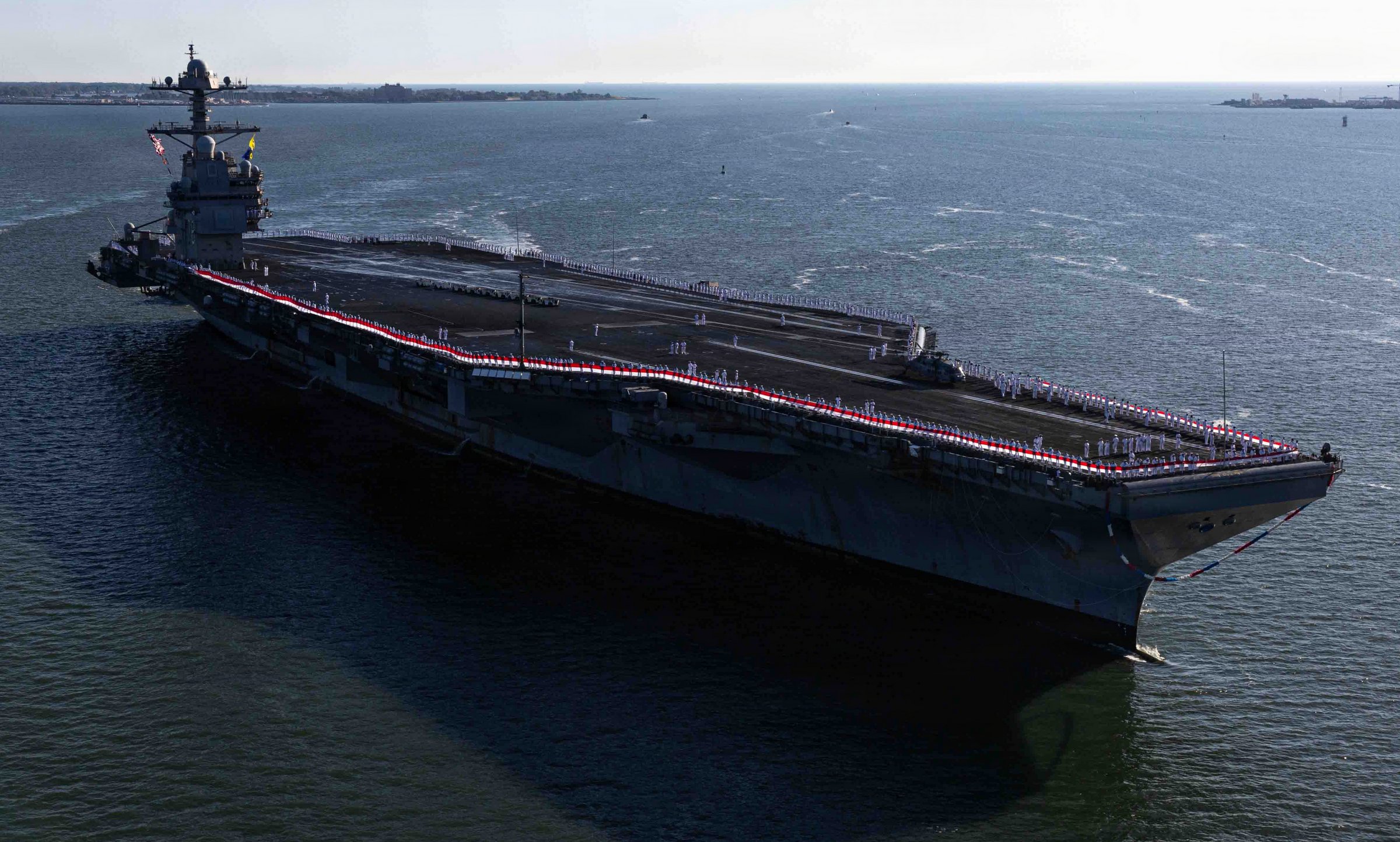 |
The USS Gerald R. Ford aircraft carrier returning to Norfolk Naval Base on 16/5. Photo: US Navy
However, the idea of transforming aircraft carriers into floating power plants also faces feasibility challenges, including the issue of warships docked in port being more vulnerable than when operating offshore.
"Aircraft carriers are high-value targets in any conflict. Significant protective forces would be necessary when using these warships to replace traditional power supplies, especially for facilities that are or have been under attack," Trevithick explained.
Furthermore, the plan could impact the US Navy's deployment capabilities, as they already struggle to meet operational requirements with their 11 supercarriers.
Russia is the only country in the world currently operating a floating nuclear power plant. This facility, named Akademik Lomonosov, was launched in 6/2010, completed in 2018, and began operations two years later. South Korea is researching designs for a similar plant to Russia's facility.
Nguyen Tien (According to War Zone, AFP, AP)