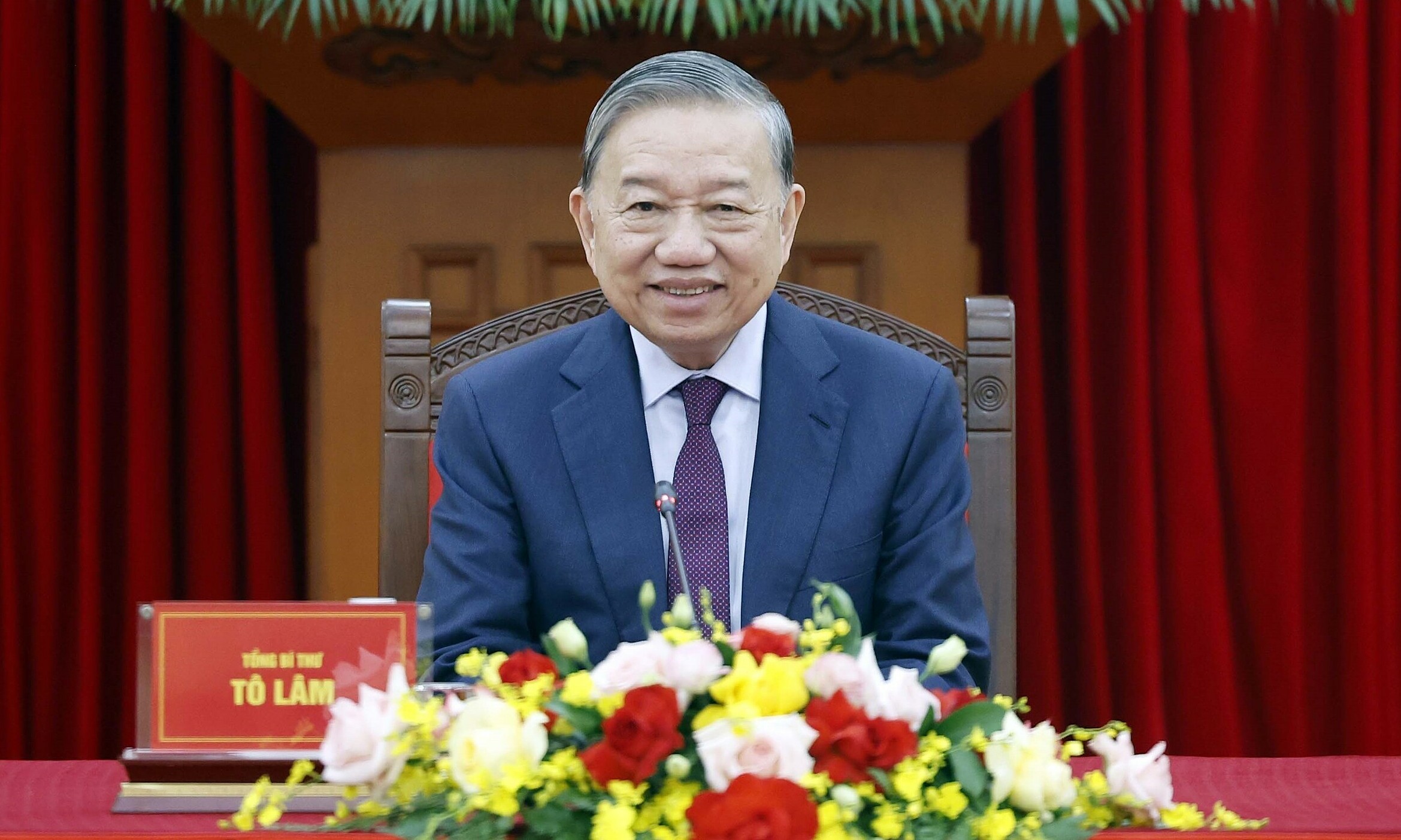
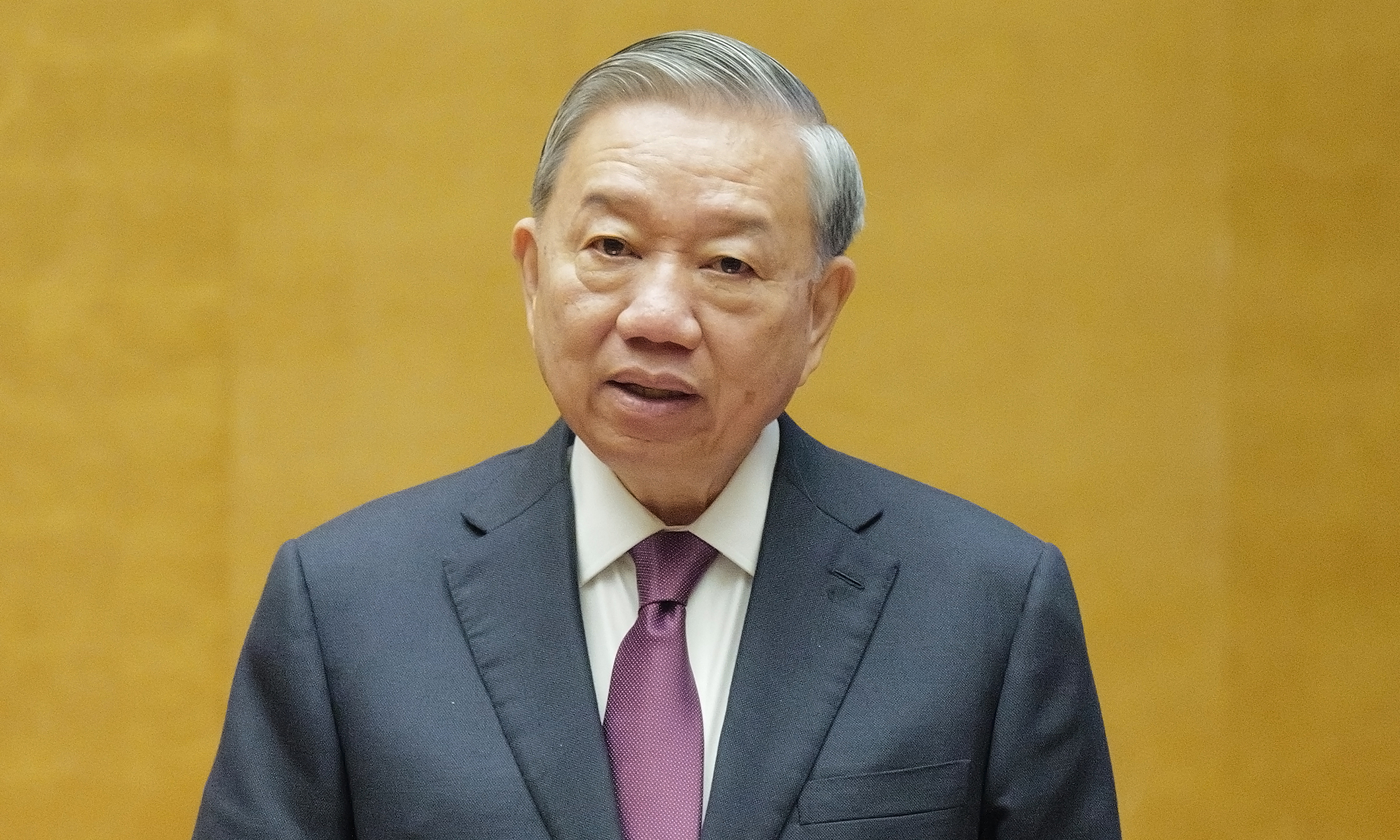
General Secretary, President To Lam on 6/5 called for the accelerated formation of a Vietnam - India Digital Partnership. He made the proposal at the Vietnam - India Innovation Forum in New Delhi, an event focused on cooperation in human resource development, science, technology, innovation, and digital transformation. The Ministry of Science and Technology of Vietnam, in coordination with India's Ministry of Electronics and Information Technology, organized the forum.
The Vietnamese leader highlighted that rapid breakthroughs in artificial intelligence, semiconductors, big data, biotechnology, quantum technology, and clean energy are fundamentally changing production methods, growth models, and the global economic structure. Trends in the digital economy, green economy, and circular economy, coupled with demands for technology security, data security, and supply chain stability, are defining a new development phase: the Era of Innovation. In this context, nations that master knowledge, science and technology, and innovation will lead in development.
Expressing admiration for India's achievements in information technology, software, engineer training, public digital infrastructure, digital payments, the pharmaceutical industry, space technology, artificial intelligence, and semiconductors, the General Secretary, President stated that India is not only a great civilization but has also become a global knowledge, technology, and innovation hub – a "Silicon Valley of Asia."
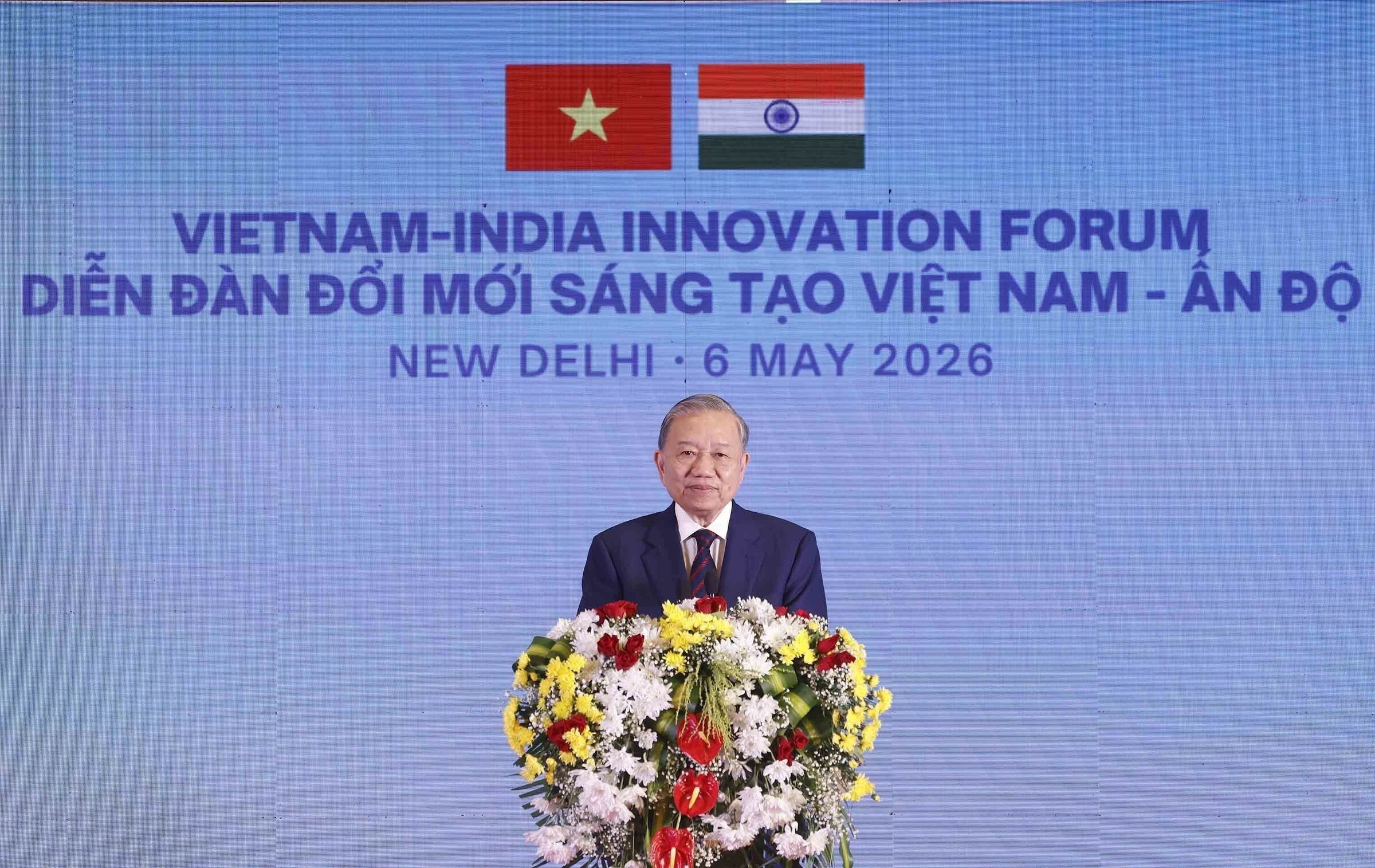 |
General Secretary, President To Lam speaking at the Vietnam - India Innovation Forum in New Delhi on 6/5. Photo: TTXVN.
General Secretary, President To Lam assessed India as one of the world's major economies, possessing superior strengths in technology, software, artificial intelligence, and digital services. He noted Vietnam as a dynamic economy, with an important geostrategic position, rapid digital transformation, and a thriving startup ecosystem. The relationship between the two countries is entering a new phase of development, where knowledge, data, technology, and high-quality human resources should become new cornerstones for strategic cooperation.
He urged the forum to focus on identifying priority cooperation areas, particularly strategic 21st-century technologies such as artificial intelligence, semiconductor microchips, digital technology, biotechnology, clean energy, and smart manufacturing. To Lam proposed building new cooperation spaces in science and technology through large-scale projects and long-term mechanisms. This includes promoting the formation of a Vietnam - India Digital Partnership and accelerating a "co-research, co-development, co-production" model to create joint-brand technology products capable of deep participation in global value chains.
The General Secretary, President also suggested improving coordination mechanisms among stakeholders in the innovation ecosystem, specifically the "three-house" model (State - Scientists - Enterprises). He advocated for public-private cooperation, building risk-sharing mechanisms, encouraging businesses to increase investment in research and development, and establishing bilateral innovation co-investment funds.
Businesses from both countries should lead investment in new technology sectors, boost research and development cooperation, and engage in key cooperation projects. This approach aims to deepen Vietnam - India relations through production linkages, technology transfer, and participation in global value chains. To Lam further proposed fostering substantive connections between research institutes, universities, and businesses in both countries to establish a Vietnam - India technology human resource corridor. This initiative would focus on creating linked research and development centers, joint laboratories, and implementing high-quality human resource training programs in fields like artificial intelligence, semiconductors, data science, and cybersecurity.
General Secretary, President To Lam, alongside Vietnam's Minister of Science and Technology and India's Minister of Electronics and Information Technology, witnessed the signing of cooperation documents. These agreements were made between research institutes, universities, associations, and businesses from both nations, focusing on human resource development, science and technology, innovation, and digital transformation.
Ngoc Anh