The traditional centerpiece of the annual christmas market in Augsburg, a 2,000-year-old city in southern germany, has long been its splendid christmas tree. This year, however, many visitors are focused on the sturdy steel pillars lining the market's perimeter. These new installations are designed to prevent vehicle ramming attacks on visitors during the festive season.
On a december afternoon, curious onlookers gathered as municipal workers used a crane to position the 350 kg steel pillars. "These things are scary", said Hannelore Hendrick, 67. "They remind me of the lurking threats when I'm here."
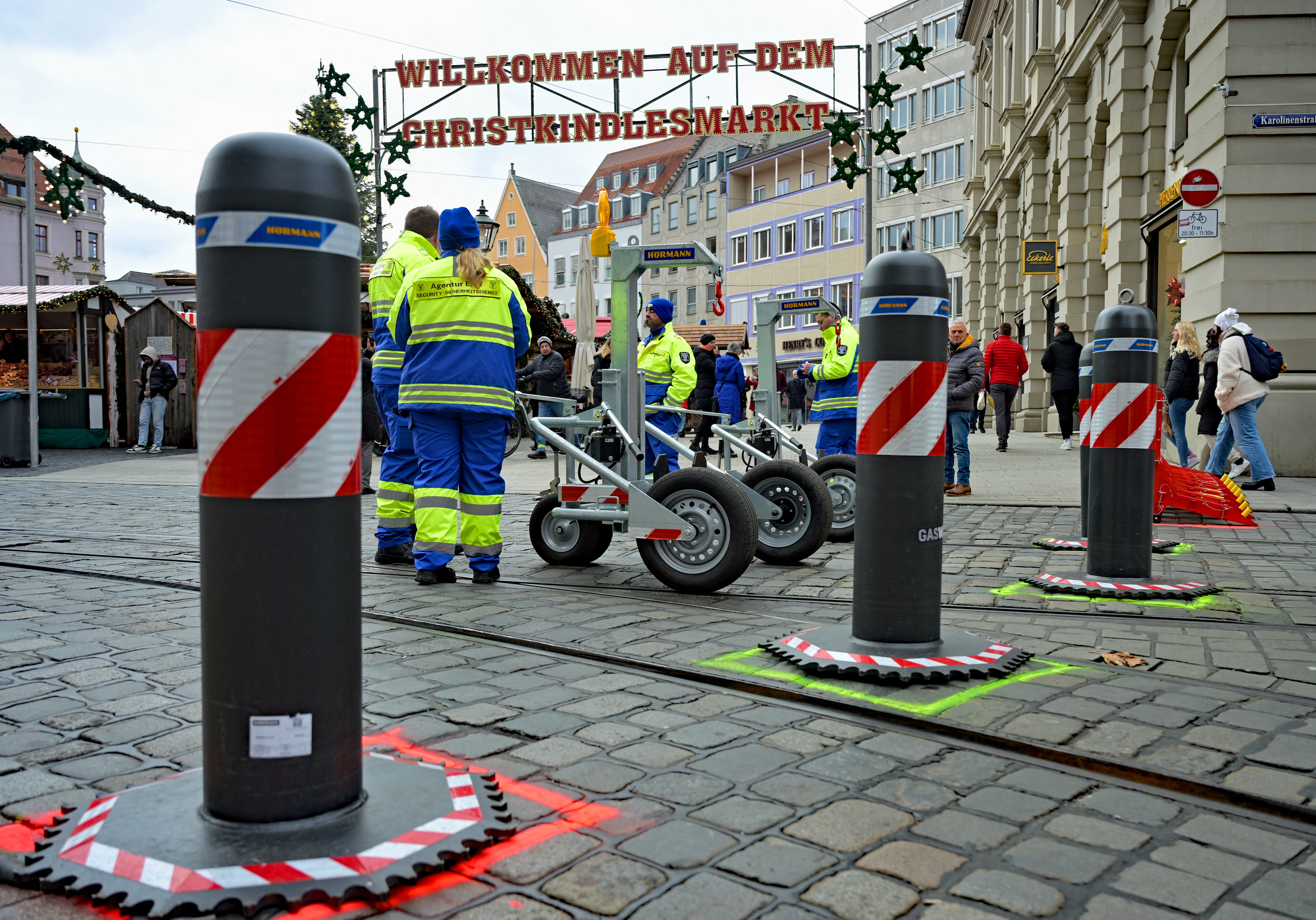 |
Steel pillars to prevent vehicle attacks at the Augsburg christmas market on 27/11. Photo: AFP |
For centuries, christmas markets across germany have been a cherished tradition, bringing festive cheer at year-end. Augsburg's market, held for over 500 years with only interruptions for World War II and the Covid-19 pandemic, offers visitors mulled wine, steak sandwiches, and vibrant wooden stalls selling christmas decorations. This year, the festive atmosphere at germany's approximately 3,200 christmas markets is somewhat subdued by security concerns.
Market safety became a national concern in 2016, after a man drove a truck into a crowd in Berlin. Since then, german city authorities have worked to prevent similar attacks by installing barriers around markets.
This year, security measures are even tighter following an attack in Magdeburg, eastern germany, last december. A man drove a rented SUV into a crowd, killing 6 and injuring hundreds. He then escaped through a gap in the barriers, which had been left open for emergency vehicles.
To address this security vulnerability, city authorities have blocked these gaps with police cars, iron gates, or concrete blocks. Augsburg's christmas market, uniquely traversed by tram lines, is the only location to install easily removable steel pillars.
This cumbersome security measure has drawn national attention and some criticism, with suggestions that the city is "overreacting". However, Mayor Eva Weber emphasized that ensuring the security of Augsburg's christmas market outweighs any criticism. "It's better for people to mock Augsburg than to cry with the city", she stated.
On-site security personnel face demanding work, sometimes moving the steel pillars once every minute for passing trams. The task involves hooking the pillar to a crane, lifting it, and moving it off the tram tracks. After the tram passes, they reverse the process to return the pillar to its position. "Maybe they don't need to go to the gym", commented Elke Noll, 58, regarding the security pillar operators.
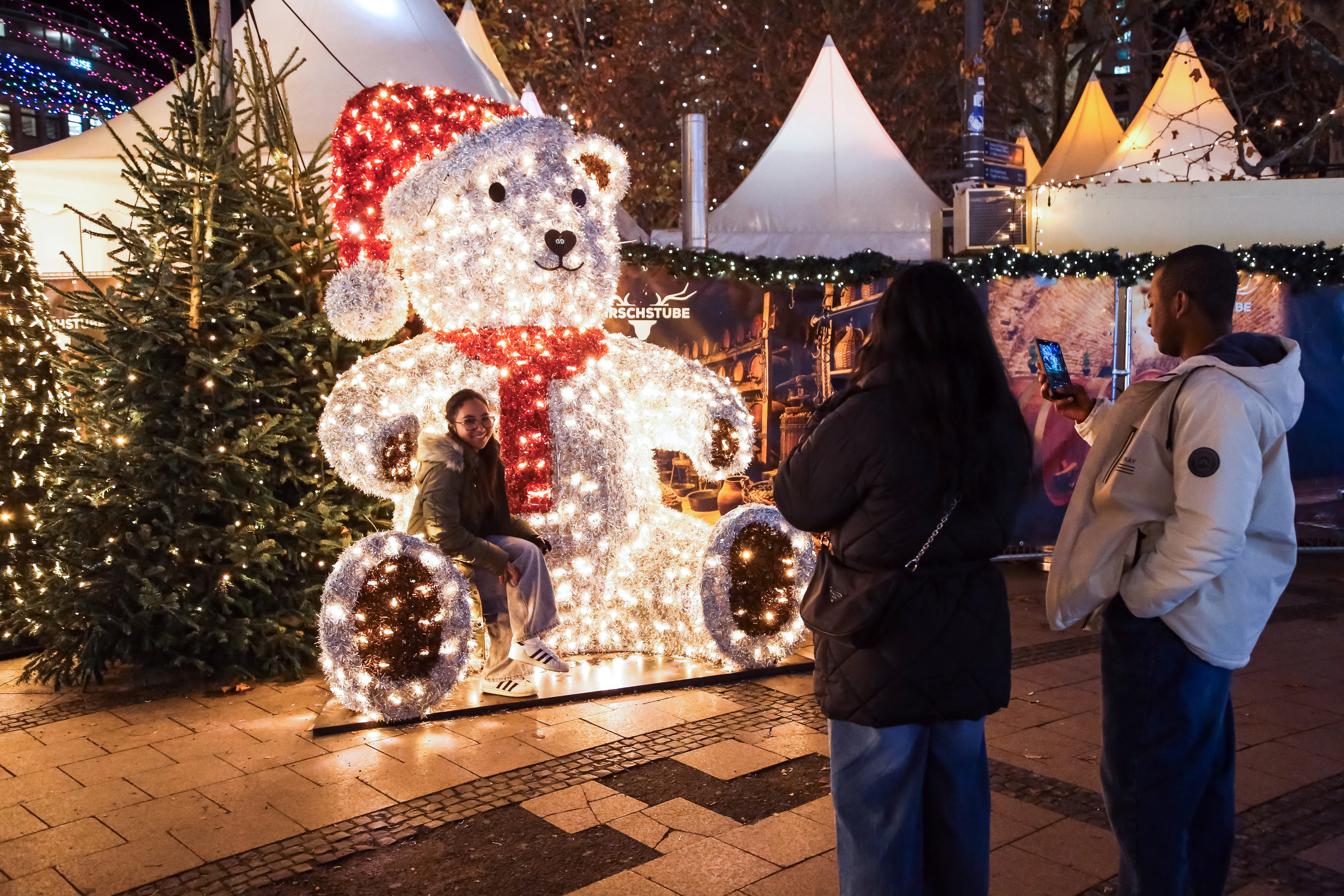 |
A corner of the christmas market in Breitscheid square in Berlin, germany on 1/12. Photo: AFP |
Despite the seemingly humorous appearance of this security measure, most locals do not oppose its installation due to fears of attack. A poll in germany last month indicated that 62% of respondents expressed concern about a christmas market attack, while 35% reported no worries.
Mayor Weber stated the city spent approximately 58,000 USD to secure the christmas market. This cost includes salaries for a team of 6 operating the steel pillars and crane for over 60 hours weekly. She noted this figure is a small fraction of the market's estimated millions of USD in annual revenue. "It would be truly irresponsible not to consider how to protect major events", she said.
Some vendors believe this unusual barrier system will attract more visitors. "We will definitely have more customers than last year, not just germans but also foreign visitors", said Sina Hefele, 21, who sells christmas tree decorations a few meters from the steel pillars. Reinhold Hohenogger, a 59-year-old vendor, mentioned some of his friends no longer visit the market due to attack fears. "If you want people to come here, you must show them that security measures are in place", he stated.
In Bonn, a city in western germany, the christmas market also features security barriers. Concrete blocks are strategically placed to cordon off streets leading to the central square, where visitors typically gather for mulled wine and traditional gingerbread.
Kathrin Krumbach, the market manager, pointed to rubber mats covering cables across walkways, saying, "you might not notice, but that's also part of our security measures". She explained that these mats create a smooth path, preventing people from tripping and allowing wheelchair users to move quickly in emergencies.
Krumbach stated that Bonn's christmas market security plan is "dozens of pages" thick, developed to address "every possible scenario". Besides concrete blocks to prevent vehicle attacks, officials train staff for emergencies, coordinate with local firefighters, and prepare for other risks like power outages.
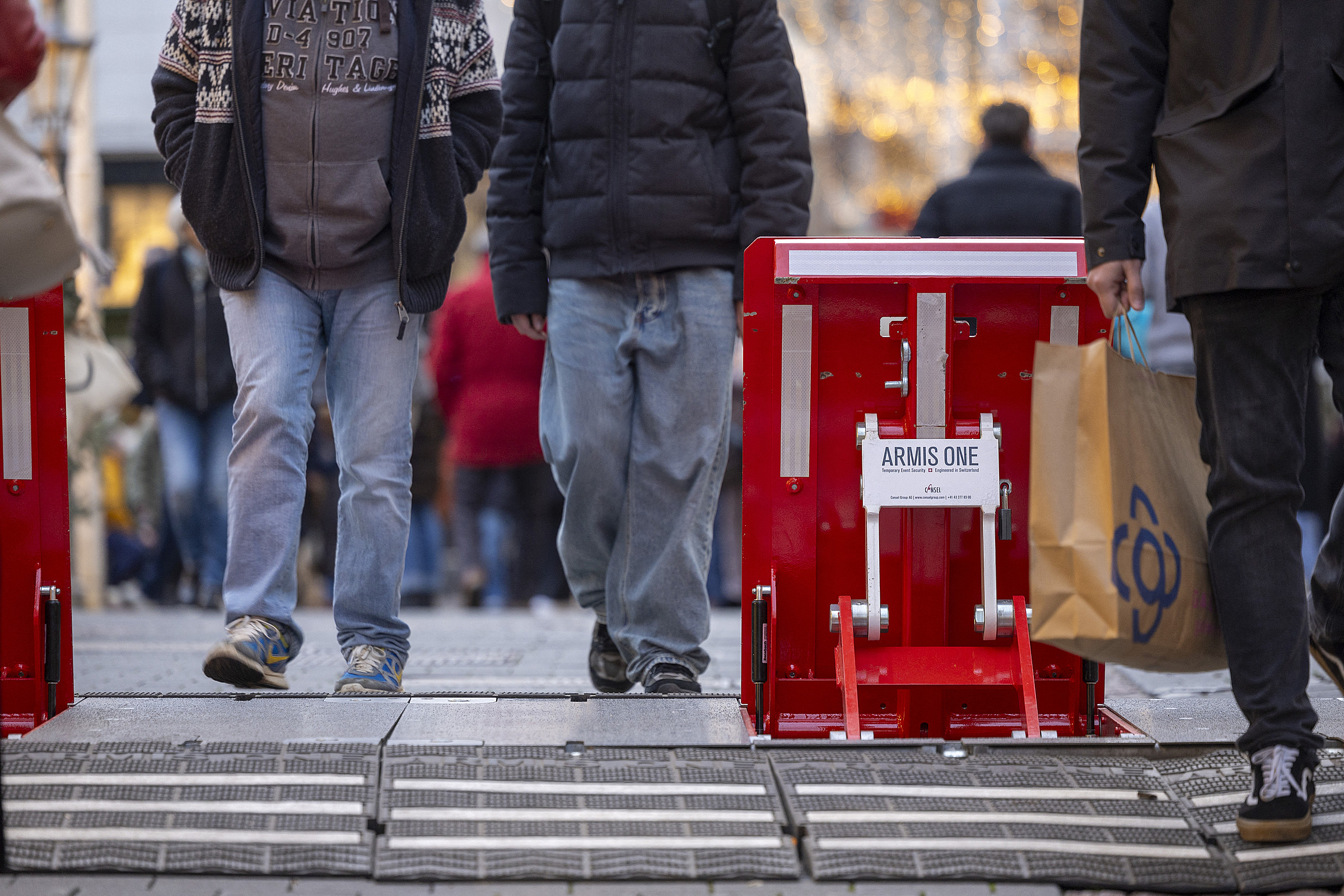 |
Steel plates that can be raised and lowered to prevent trucks from ramming into crowds at the Bonn christmas market on 16/12. Photo: AFP |
At the Bonn market, police forces also patrol regularly. The city government even hires additional private security and installs surveillance cameras to maximize security.
Swathi, a visitor from india experiencing a german christmas market for the first time, planned to spend around 29 USD that evening, which is the average daily expenditure for visitors at such markets. Food, gifts, and mulled wine were on her list. Walking among the brightly lit stalls and ringing bells, Swathi commented, "I thought I'd see more police, but I believe they are prepared".
Thanh Tam (According to DW, Courthouse News)