The 3 AM rooster alarm isn't what bothers Mason Aiona in Hawaii the most. What concerns him more is spending most of his day chasing away feral chickens that dig deep holes in his yard, listening to their constant squawking and flapping wings, and having to remind people not to feed them at the park right near his home.
"It's a big problem," he said of the flocks waddling along the narrow road between his Honolulu home and the city park. "Their numbers are growing."
Communities across the state have faced rampant feral chicken populations for years. Honolulu has spent thousands of USD to capture them, but with little noticeable effect.
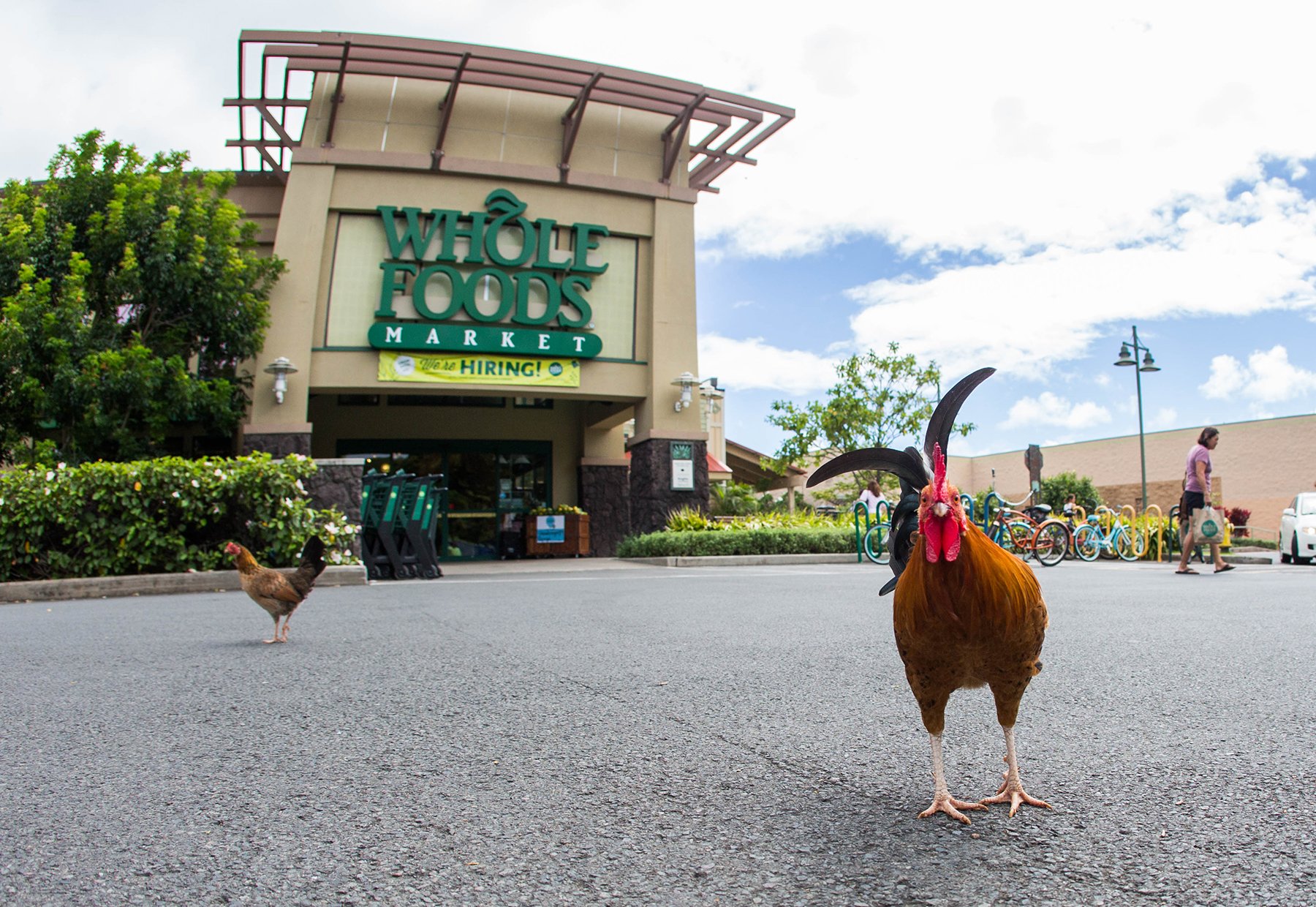 |
A flock of feral chickens crosses a Whole Foods parking lot. Photo: Honolulu Civil Beat |
A flock of feral chickens crosses a Whole Foods parking lot. Photo: Honolulu Civil Beat
The pervasive nuisance caused by feral chickens has even prompted legislative action. Representative Scot Matayoshi, a Democrat representing Honolulu's suburban Kaneohe area, began drafting a chicken control bill after an elementary school teacher reported that chickens regularly bothered students. "The children are afraid of them, and the chickens are often aggressive when chasing children for food," Matayoshi said. He noted that bills to remove feral chickens have repeatedly failed over the years.
Attempts to manage the population have met with various challenges. In 2022, Hawaii lawmakers tried to pass a bill allowing consideration of poultry birth control for population management, but it did not pass. Population control tools, whether birth control or toxins, carry risks of environmental spread or unintended impact on other species. The Hawaii Humane Society also opposes allowing people to kill chickens "as a population control measure, unless all other options have been exhausted without yielding results."
Adding to the complexity, what is a nuisance to one person can be a cultural symbol to another. Kealoha Pisciotta, a Hawaiian cultural expert and animal rights activist, disagrees with killing feral chickens simply because they are a nuisance. She states that some current chickens are descendants of those brought to the islands by Polynesian explorers long ago.
According to Eben Gering, an evolutionary biologist at Nova Southeastern University, when Polynesians crossed oceans to lands like Easter Island and Hawaii, they brought pigs, dogs, and small fowl. The fowl brought to Hawaii were actually red junglefowl, the wild ancestors of modern chickens. In the late 20th century, two major hurricanes, Iwa and Iniki, struck the Hawaiian Islands, destroying chicken coops and releasing many domestic flocks into the wild. Particularly on Kauai, where predators are absent, the chicken population adapted and flourished.
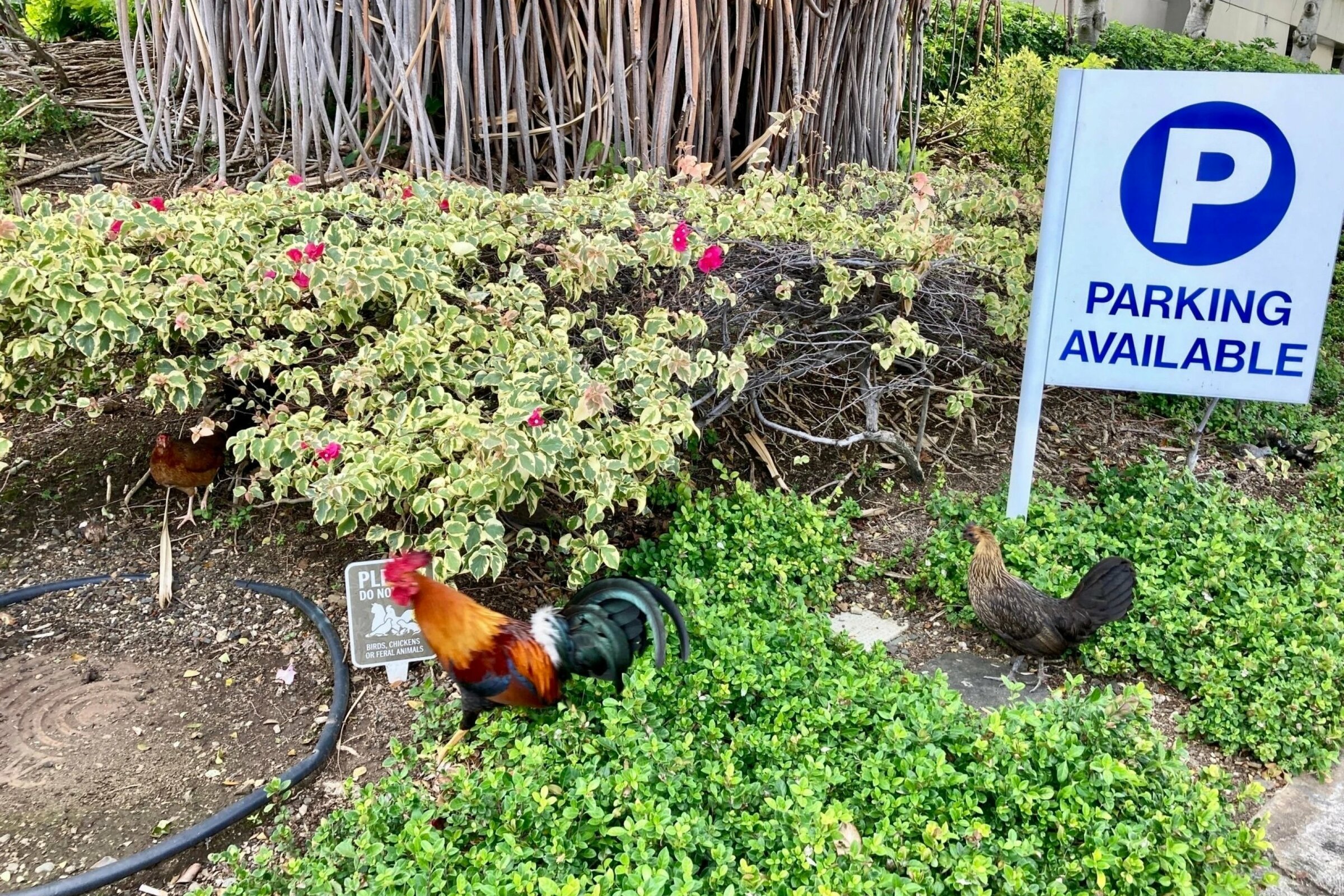 |
Feral chickens near downtown Honolulu on 19/4/2023. Photo: AP |
Feral chickens near downtown Honolulu on 19/4/2023. Photo: AP
The city's current efforts to control the population have proven costly and frustrating. Aiona, 74, who has lived near downtown Honolulu for over 30 years, believes the city's chicken trapping program is too expensive. The city contracts with a pest control company for chicken trapping. The service costs 375 USD for one week for private owners, plus a 50 USD cage rental fee and a 10 USD disposal fee per chicken. In 2025, over 1,300 chickens were caught through this program. Hawaii previously tried, but failed, to implement fines for people, both tourists and residents, who feed chickens.
Feral chickens are also unlikely to become a cheap dinner. Their meat is tougher than that of farmed chickens, and these feral birds can also be a source of disease. The ongoing battle for residents like Aiona is a daily reality. One of Aiona's neighbors often chases them away with a leaf blower. "I also have a leaf blower, but it's electric," Aiona said. "The cord's length only allows it to go so far." Aiona is fed up with spending time reminding park visitors not to feed the chickens. And while he doesn't encourage anyone to eat them, he's willing to let anyone who wants to catch a chicken just come and take them away. "No charge," he said.
By Hoang Lan (AP, Atlantic)