In a video released on 20/5, a Hezbollah first-person view (FPV) drone flew over an open area, approaching an "iron dome air defense site" on the Israel-Lebanon border, near Jall el Aalam.
Two launchers were protected by blast-resistant concrete walls, with openings facing the other side of the border. The FPV drone approached and crashed into one launcher, causing the video to cut out.
The outcome of the attack is unclear, but Hezbollah claimed to have destroyed the iron dome launcher in the video. The Lebanese armed group appears to have used a fiber-optic drone, given the clear and uninterrupted signal transmission as the drone descended.
The Israel Defense Forces (IDF) have not commented on the information. If confirmed, this would mark the second time Hezbollah has deployed an FPV drone to attack an iron dome launcher positioned by the IDF at the border.
A complete iron dome system consists of 3-4 launchers, each equipped with 20 Tamir interceptor missiles, along with surveillance and fire control radar, and a battle management and control system. The iron dome specializes in intercepting slow-moving, low-flying targets with predictable trajectories, such as rockets, mortar rounds, and low-altitude unmanned aerial vehicles (UAVs).
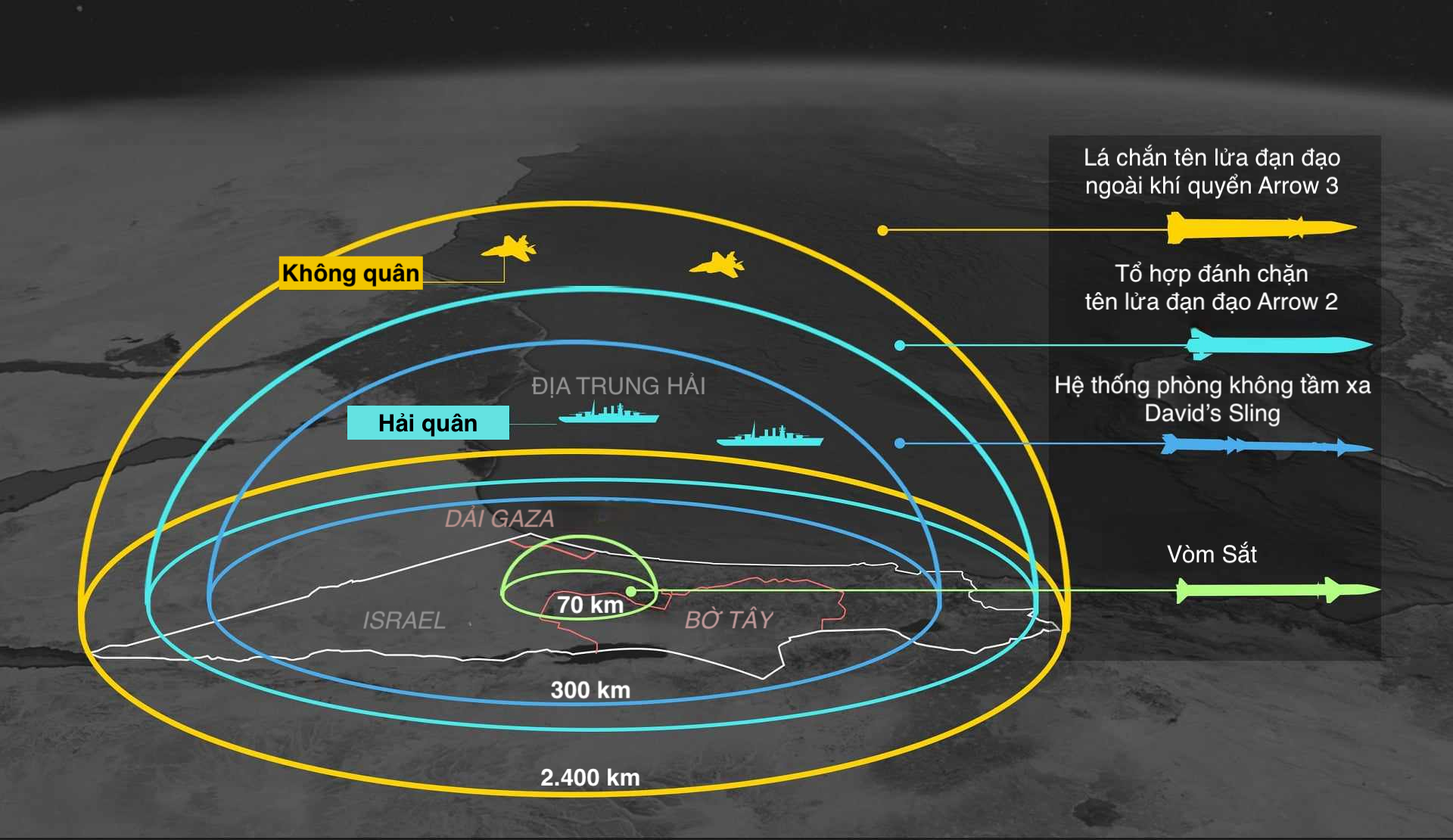 |
Multi-layered air defense network protecting Israeli territory. Graphics: The Print |
The IDF deploys iron dome systems at the border to counter rockets and UAVs launched by Hezbollah from Lebanon into Israel. However, these systems have been targeted by Hezbollah on multiple occasions.
Israeli newspaper Ynet reported mid-month that the IDF is transferring thousands of meters of fishing nets across the border to units stationed in southern Lebanon. This measure aims to stop suicide drones before they reach soldiers and infrastructure. This development highlights the growing challenge posed by inexpensive drones, even for "one of the world's most renowned air defense systems".
Hezbollah regularly uses FPV drones to attack Israeli forces. Most are controlled via fiber optics rather than radio signals, making them immune to electronic warfare measures. The IDF has recently faced continuous criticism for not adequately preparing defenses for personnel and equipment against enemy FPV drone attacks.
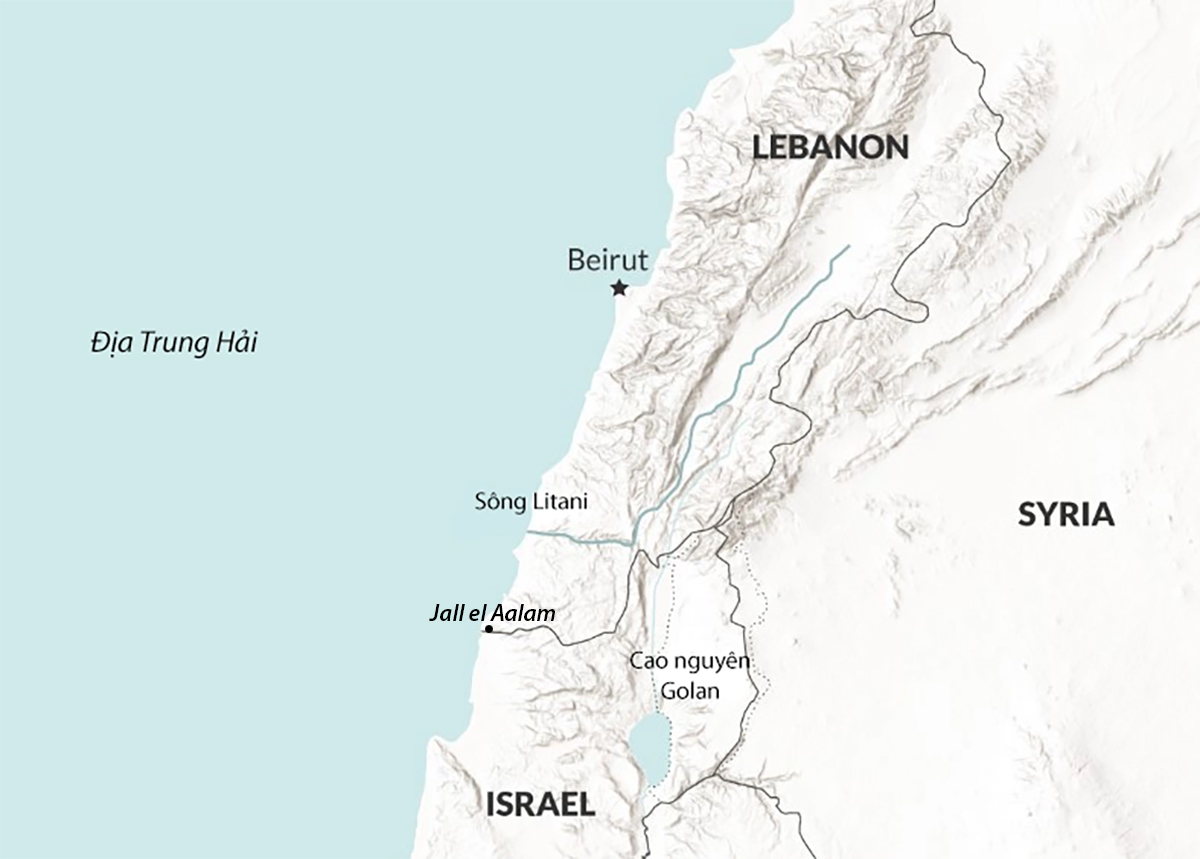 |
Location of Jall el Aalam area. Graphics: RANE |
Images released late last month showed Hezbollah drones attacking numerous Merkava Mark 4M main battle tanks and Eitan armored personnel carriers, as well as targeting several enemy soldiers. The IDF confirmed that at least one service member was killed and six were injured in an attack in southern Lebanon on 26/4.
In an incident on 27/4, a Hezbollah suicide drone also nearly hit a Black Hawk helicopter evacuating Israeli soldiers.
Nguyen Tien (According to AFP, AP, Al Jazeera)