


During a televised speech at a rally expressing solidarity with Iran on 26/1, Hezbollah leader Naim Qassem stated that Hezbollah and its allied forces were facing "an indiscriminate attack."
"A war against Iran at this time would ignite a regional conflict," he said. "At that point, we will choose how to act, but Hezbollah will not be neutral. The battlefield situation will determine our actions. Hezbollah will make decisions based on relevant interests."
Qassem stated that over the past two months, through mediators, Hezbollah had received "a clear and unequivocal question" regarding the armed group's potential intervention if the United States and Israel went to war with Iran. "They want us to commit not to intervene," he added.
Iran is Hezbollah's primary supporter, providing funding and weapons since the group's establishment in the 1980s.
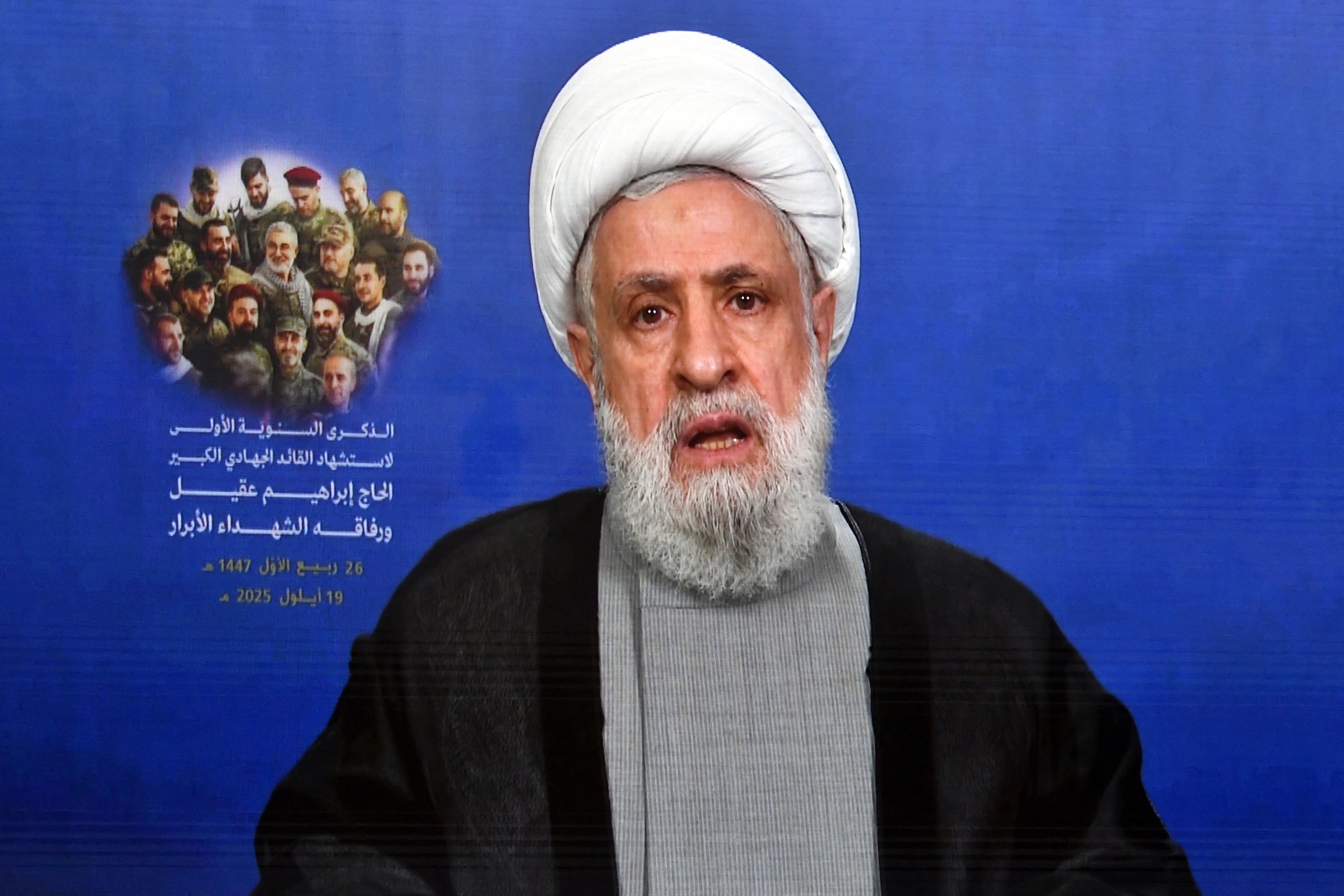 |
Hezbollah leader Naim Qassem speaks on television in 9/2025. Photo: AFP |
The Hezbollah leader's statement came after US President Donald Trump announced a "large fleet" was heading towards Iran. The US leader appeared to have abandoned the intention of military intervention in Iran but affirmed it remained an option under consideration.
On 26/1, Hezbollah called on supporters to gather at the organization's strongholds across Lebanon to express support for Iran "against US and Israeli sabotage and threats." In the southern suburbs of Beirut, some people held up images of Iranian supreme leader Ali Khamenei, along with Hezbollah and Iranian flags, while chanting anti-US slogans.
Qassem warned that any assassination attempt on leader Khamenei would undermine regional and global stability. "Hezbollah considers such a threat to be targeting us as well," he emphasized.
More than one year of conflict with Israel, culminating in a ceasefire agreement in 11/2024, severely weakened Hezbollah. The Lebanese government implemented a plan to disarm Hezbollah, starting in the south.
Despite the ceasefire, Israel regularly attacked targets it considered to belong to Hezbollah and maintained troops at 5 locations in southern Lebanon, which Tel Aviv considered strategically significant.
Huyen Le (According to AFP)


