Huang was one of 12 participants in a training session at the Lvxing Disaster Simulation Training Center in Hangzhou, eastern China. This facility offers realistic simulations of extreme weather events, aiming to equip individuals with essential survival skills as China faces increasingly frequent natural disasters.
Climate change is causing China to continuously suffer severe natural disasters. This year is even more concerning with the emergence of the El Nino phenomenon, which raises temperatures and triggers more aggressive storms. The National Climate Center of China predicted up to 6 typhoons would form in the Northwest Pacific and South China Sea in july, higher than the average of 3,8 storms.
For a fee of 1,599 yuan (235 USD) per day, the center offers a realistic experience of being trapped in a major storm or flash flood. According to the center, it is the first in the world to offer storm response training, with simulated experiences generating wind speeds of up to 165 km/h accompanied by torrential rain. Participants wear wetsuits, helmets, and are accompanied by safety instructors.
Disaster response class in Hangzhou on 15/7. *Video: Reuters*
The training scenarios are diverse and challenging. In one section of the center, 900 tons of surging water are released to simulate mountain flash floods. In another area, participants wade through 400 tons of water, sometimes thigh-deep, sometimes shoulder-deep, in a simulated urban environment.
"Over the past two years, the weather has become increasingly erratic," Huang shared. "Opportunities like this help us better understand what different disaster levels actually look like, while also raising awareness about preparing for natural disasters."
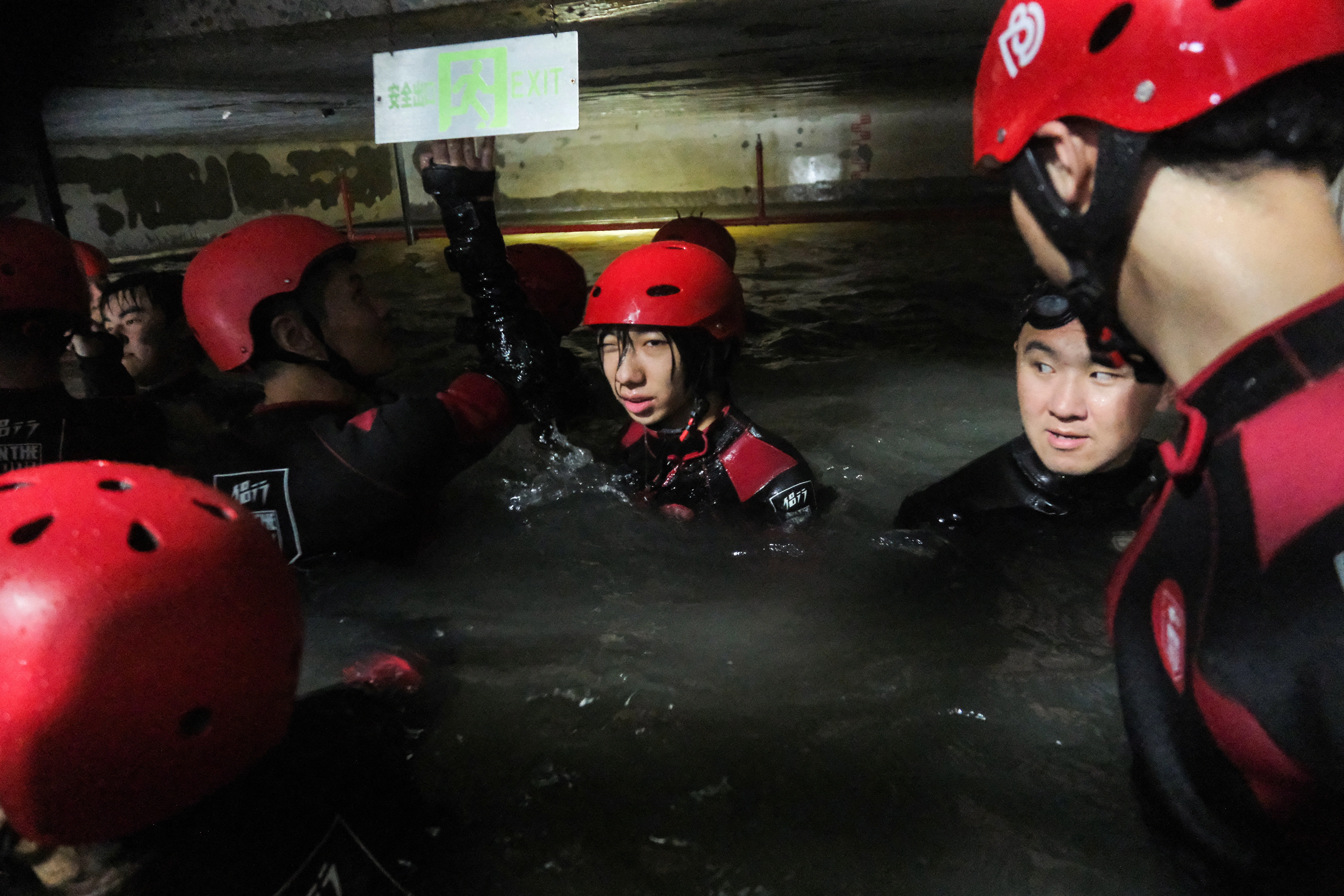 |
Participants practice evacuating from a flooded underground area at the training center in Hangzhou on 15/7. *Photo: Reuters*
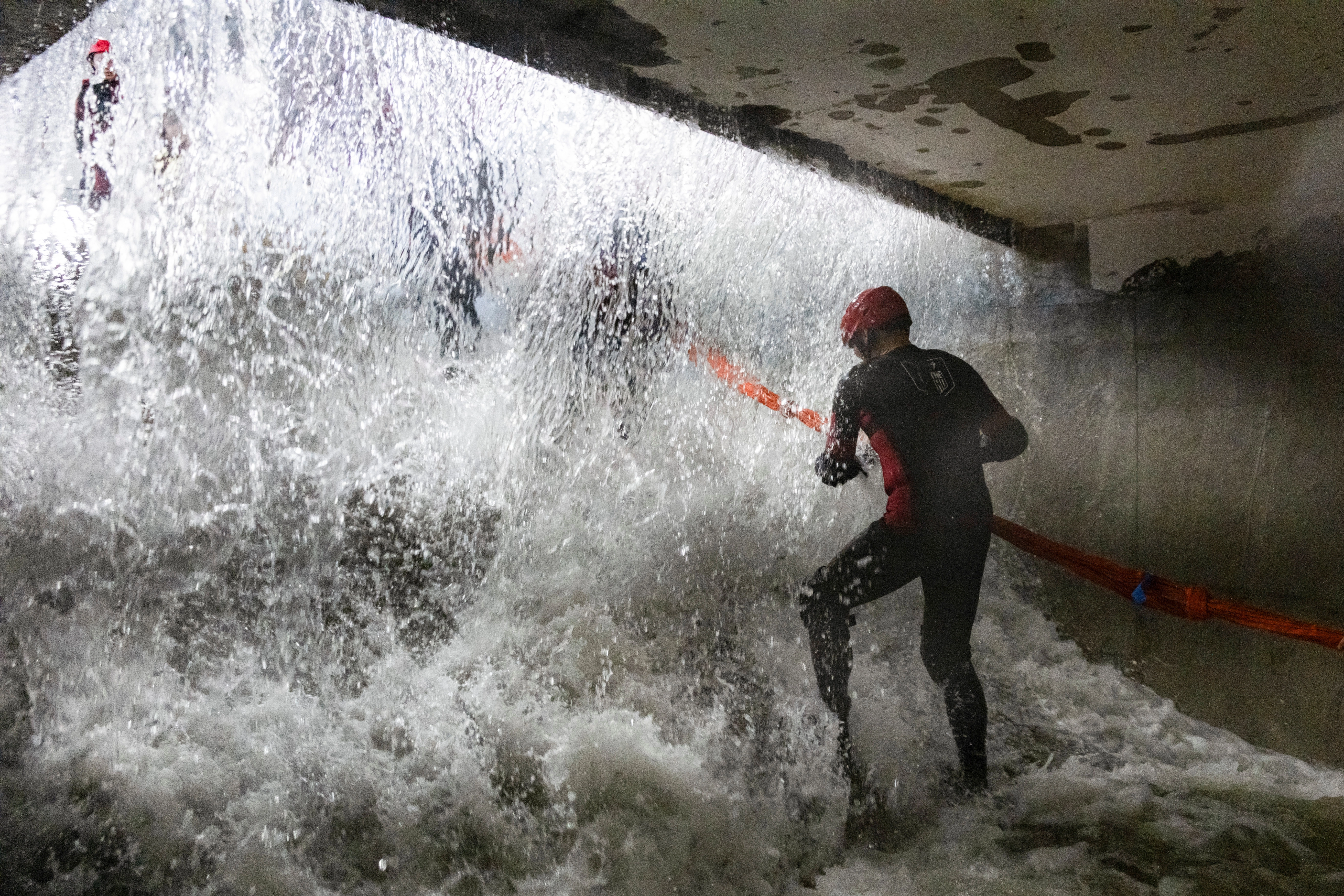 |
Participants hold onto ropes to exit the basement. *Photo: Reuters*
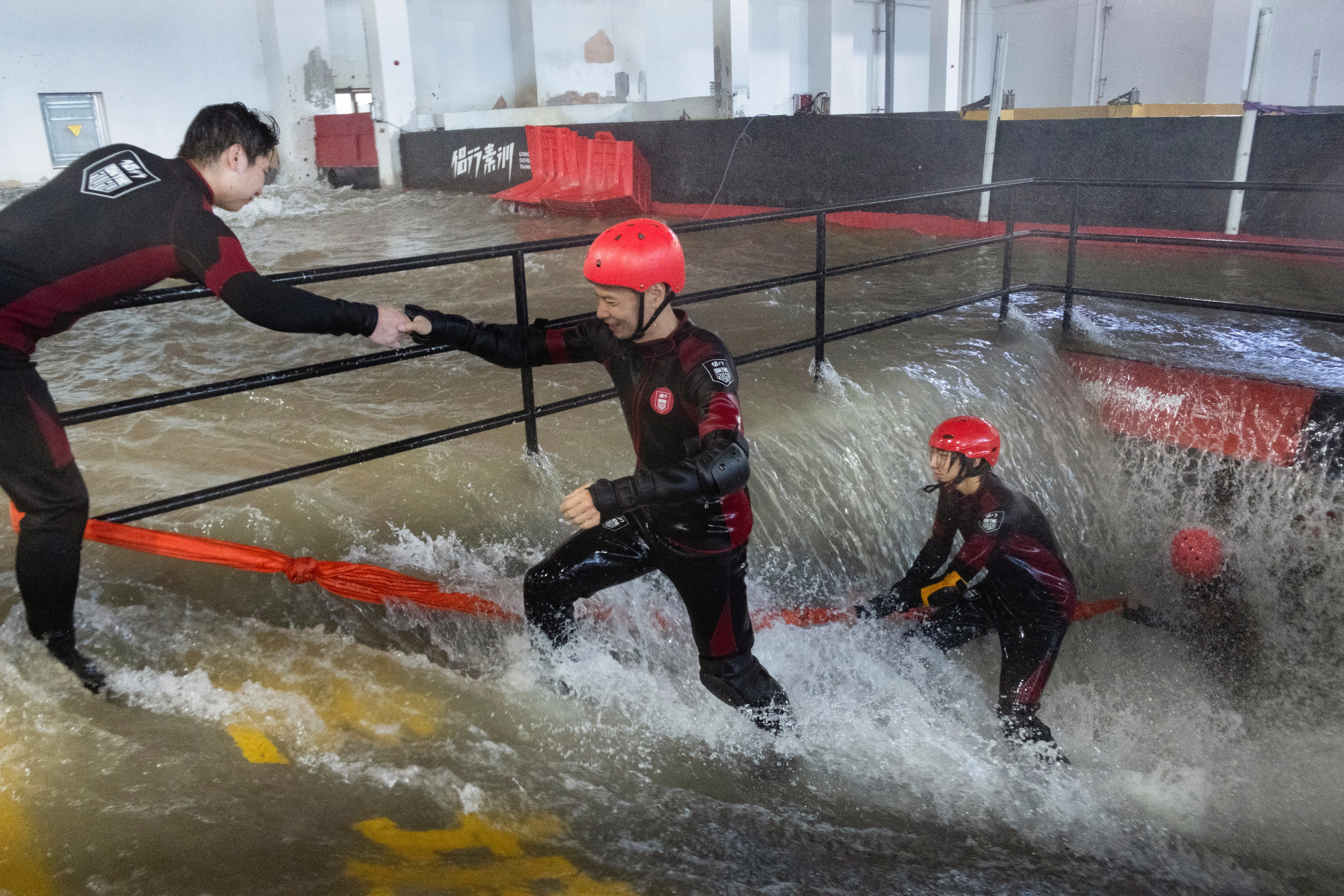 |
Participants exit the basement one by one with the help of instructors. *Photo: Reuters*
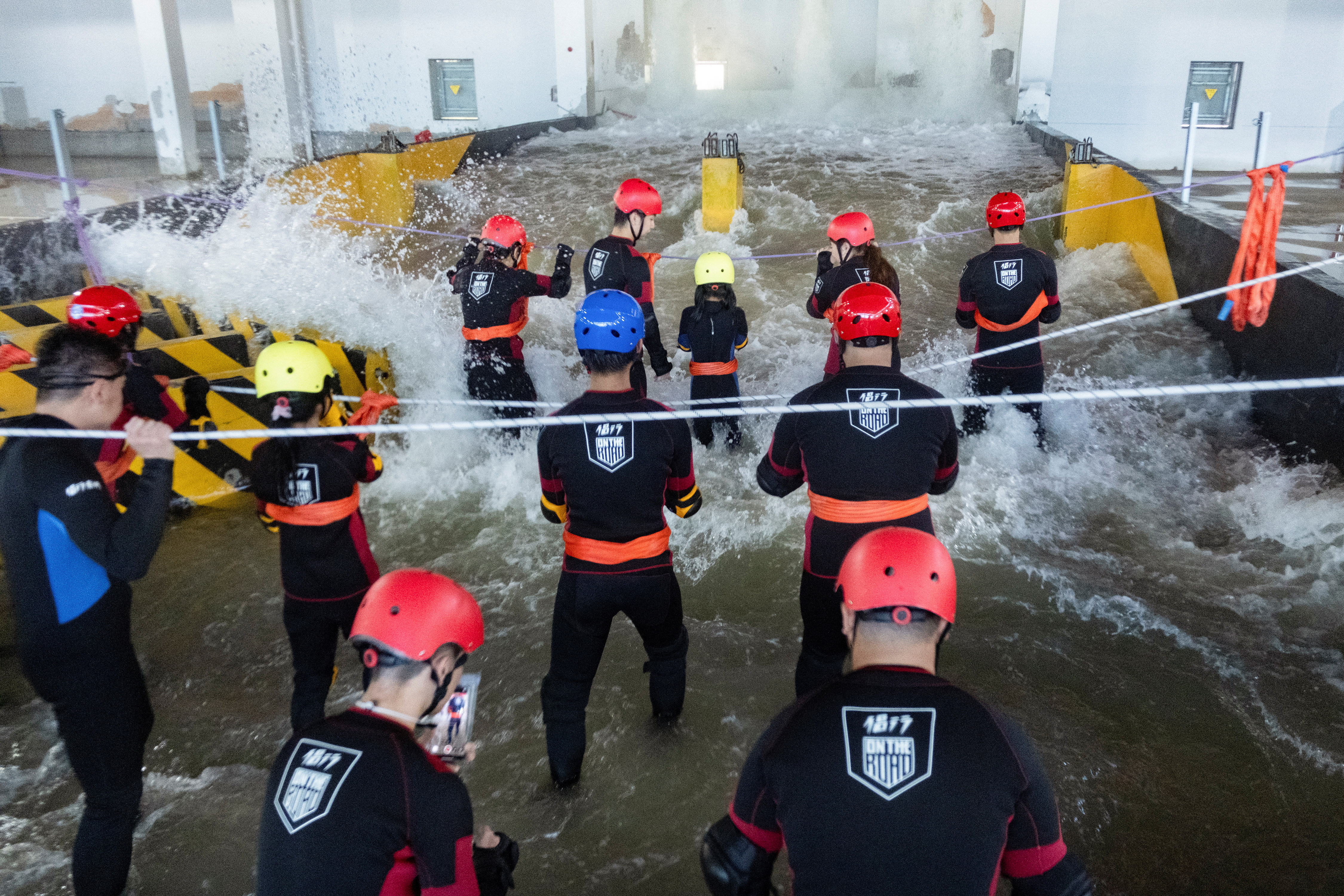 |
They practice dealing with rising floodwaters. *Photo: Reuters*
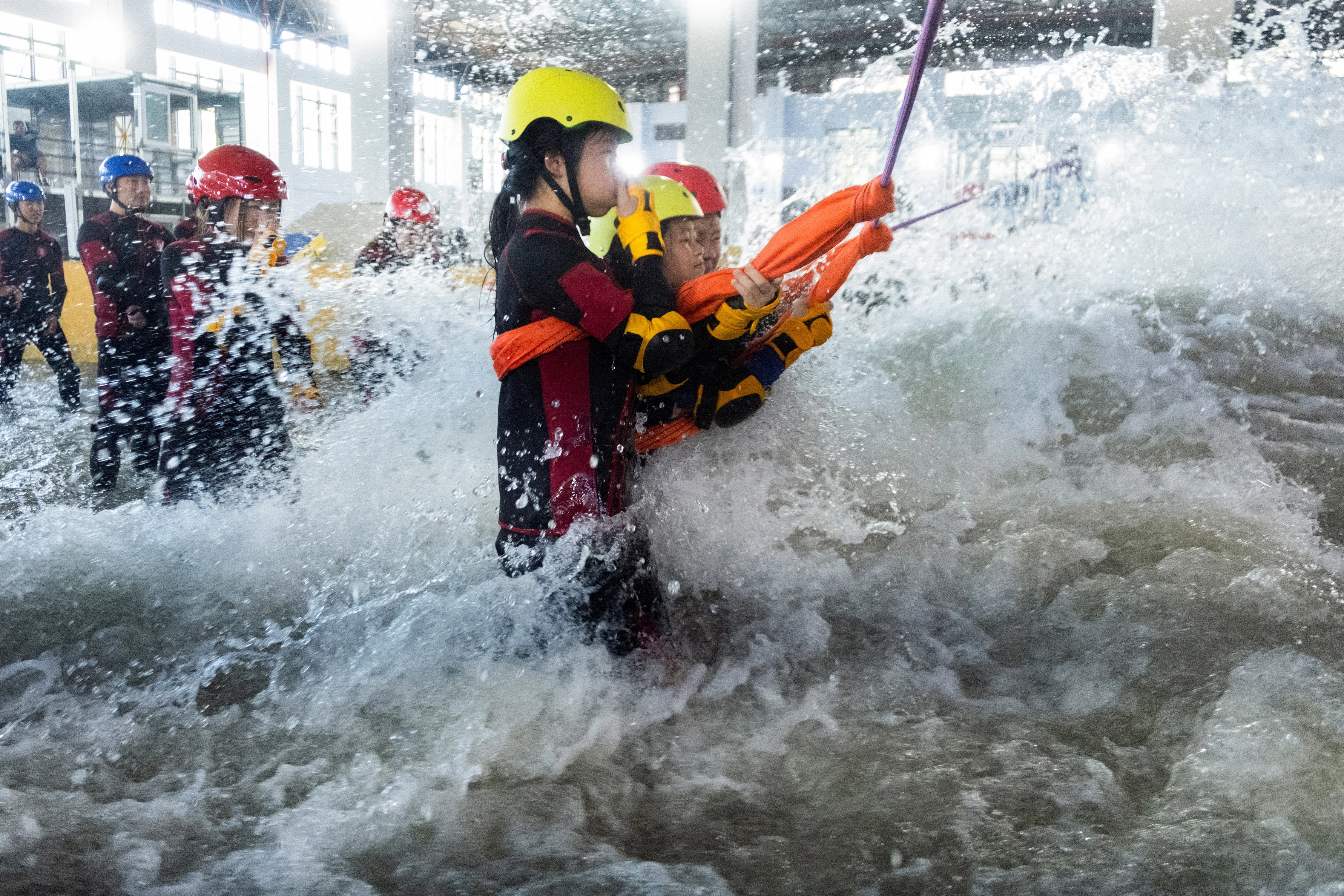 |
Participants practice responding to rising floodwaters. *Photo: Reuters*
The urgency for such training was highlighted by recent events. One of the typhoons predicted was typhoon Ba Vi, which caused severe flooding and forced millions of people in China to evacuate. In Hangzhou, the capital of Zhejiang province, two major railway stations temporarily suspended operations, and 327 flights were canceled at Hangzhou Xiaoshan International Airport. In nearby Shanghai, 1.620 train services and 684 flights were canceled.
"Typhoon Ba Vi swept through a few days ago, making people realize that the dangers from storms are much more terrifying than we imagined," said Wu Zijian, a 44-year-old freelancer from Shanghai who traveled to Hangzhou for the course.
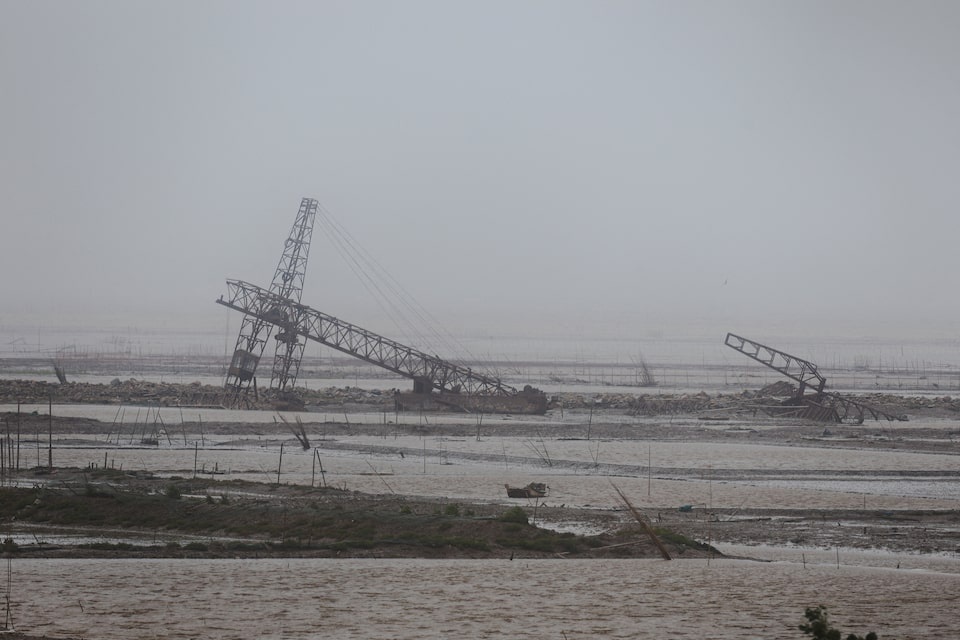 |
Typhoon Ba Vi toppled power poles near Wenzhou city, Zhejiang province, on 12/7. *Photo: Reuters*
The Lvxing Disaster Simulation Training Center has seen significant interest, with over 160.000 people participating in training sessions since its opening in 5/2025. Head instructor Wang Kuanghan stated that they plan to open five more centers in China within the next three years, including those simulating other disasters like fires and earthquakes.
For those unable to attend the center in person, Wang offers simple, yet crucial, advice: "The most important survival skill during a storm is simply not to go outside. Stay indoors and keep yourself safe."
Hong Hanh (According to Reuters, CGTN)