China's President Xi Jinping will visit Washington on 23/9 for three days of talks with President Donald Trump. The two leaders are expected to discuss trade, artificial intelligence (AI), and various geopolitical issues, amid ongoing competition between the United States and China.
Decisions made in Washington will not only affect the United States and China but also create apprehension across the Atlantic. More stable US-China relations benefit European economies, yet also make them uneasy, according to Noah Barkin, a senior advisor on China at Rhodium Group.
"Europe does not want relations between Washington and Beijing to be too warm, nor too cold. The ideal temperature lies somewhere between the two extremes, meaning stable but not moving too far towards intimacy or escalation," Barkin stated.
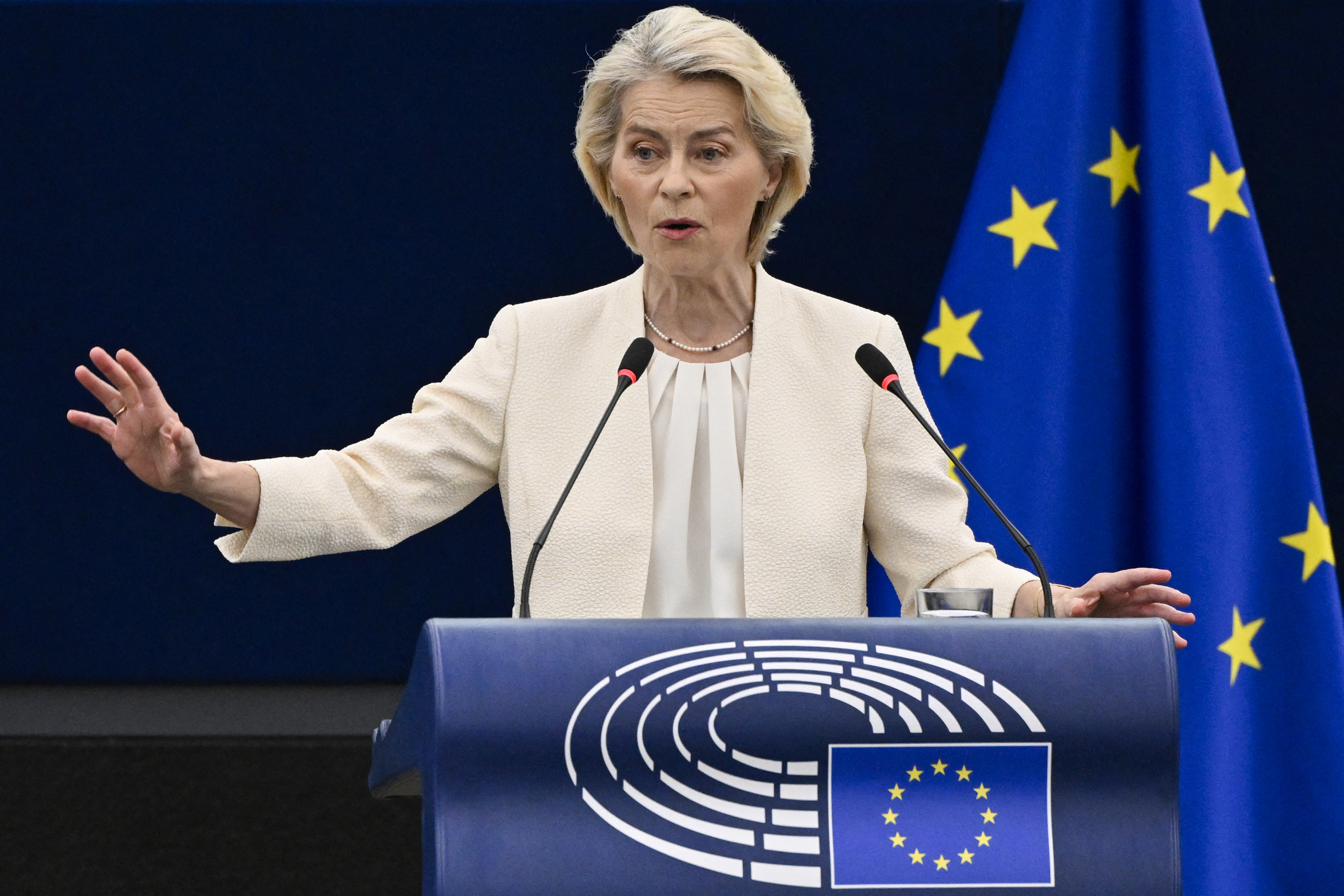 |
European Commission President Ursula von der Leyen speaks in Strasbourg, France on 16/9. Photo: AFP |
One issue of concern for Europe is the trade tensions between the United States and China. The trade war erupted last year, with continuous tit-for-tat tariffs exchanged before Washington and Beijing reached a truce agreement in 10/2025. This agreement is expected to expire on 10/11.
US Trade Representative Jamieson Greer indicated that the two countries are working towards agreements on agriculture and non-tariff barriers. Both sides are also discussing tariff reductions on goods valued at approximately 30 billion USD. Such an agreement could help stabilize US-China trade relations.
"Europe benefits if the US-China trade truce is extended," Barkin said, as European businesses could be impacted by supply chain instability. "However, Europe would be uneasy if Trump welcomed investment from China."
In her State of the Union address on 16/9, European Commission President Ursula von der Leyen warned of a "second China shock," following the wave of cheap Chinese goods that flooded global markets about 25 years ago.
This time, the pressure comes from high-tech sectors such as electric vehicles and green energy, areas the European Union (EU) also seeks to develop as it transitions away from fossil fuels. Brussels has called for additional tariffs on low-cost electric vehicles from China, while Beijing rejects accusations of unfair competition.
"Europe faces a trade deficit of one billion euros every day with China. This situation has reached an alarming level," von der Leyen declared. She stated that the EU "will use every tool at its disposal" to balance relations with China. The two sides have been negotiating since June, with Brussels aiming for concrete progress by October.
"The EU has no choice but to act. Brussels initially hoped to coordinate with Washington to pressure Beijing, but if the summit between Trump and Xi improves US-China trade relations, the EU will have to act alone," said Toomas Hanso, a researcher at the International Centre for Defense and Security (ICDS) in Estonia.
Rare earths present another issue Europe needs to monitor during the US-China summit. China controls most of the global supply of rare earths and restricted exports of this commodity last year in retaliation against the United States. This is a crucial raw material for many European industries.
EU Trade Commissioner Maros Sefcovic raised this issue with China's Commerce Minister Wang Wentao. However, Alicia Garcia Herrero, an expert at the Bruegel research institute in Belgium, believes the United States has more leverage than the EU in negotiating with China on rare earths. Brussels may need to accept some concessions to benefit from any agreement Washington reaches with Beijing.
"The United States will negotiate on behalf of Europe, and Europe will have to pay for that," Garcia Herrero told euronews.
AI is another area on Washington and Beijing's agenda. US Treasury Secretary Scott Bessent and China's Vice Premier He Lifeng discussed a proposal for an "AI hotline" to inform each other of incidents threatening national security.
Garcia Herrero suggests this mechanism indicates the United States and China are forming a separate dialogue channel on AI.
"This AI dialogue will be like the 'red button' during the nuclear arms race and only involves the United States and China. This leaves Europe with almost no position as a power pole," Garcia Herrero stated.
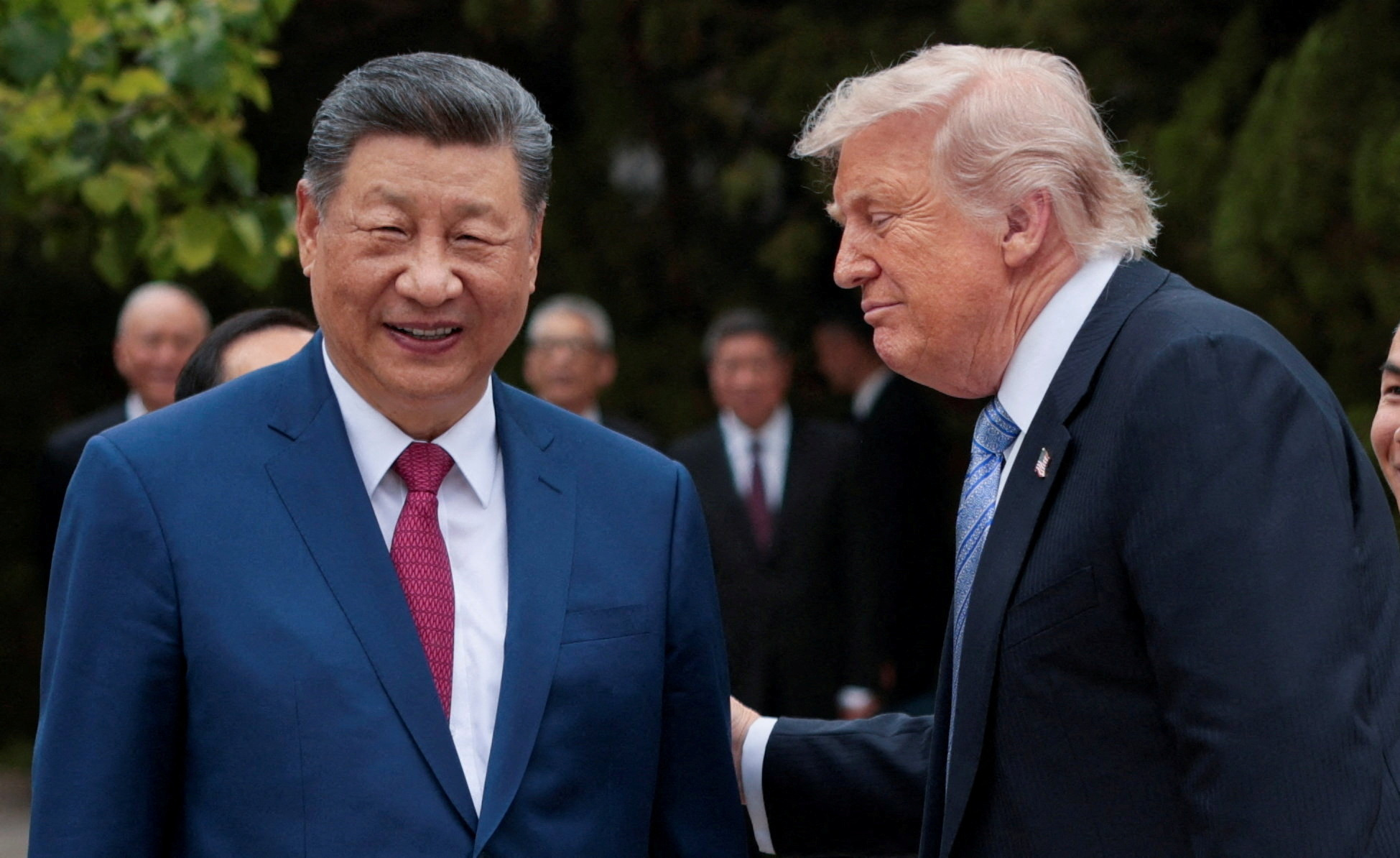 |
US President Donald Trump converses with China's President Xi Jinping after a visit to Zhongnanhai in Beijing on 15/5. Photo: Reuters |
These developments present Europe with a difficult challenge. The EU benefits from stable US-China relations but must simultaneously address its own trade, technology, and supply chain disagreements with Beijing.
In its relations with the United States, the EU also faces trade pressure and demands for coordination in responding to China. Therefore, Barkin believes Europe needs to clearly define its interests and should not solely rely on coordination from the United States.
Meanwhile, Mikko Huotari, director of the Mercator Institute for China Studies, suggests China anticipates Beijing and Washington will continue to exercise restraint in the near future.
"President Xi does not actually need a breakthrough in Washington. He needs more time. President Trump does too. We are in a strategic stalemate," Huotari told DW.
Nhu Tam (According to euronews, DW, Reuters)