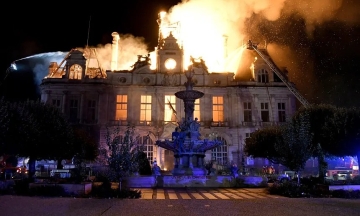
The Office of the Prime Minister of Nepal announced on 28/8 that the rescued individuals included workers and local residents who were in the Upper Trishuli hydropower plant tunnel in Rasuwa district when the flash flood struck. Efforts to reach the remaining over 100 people are underway.
The Nepal army also identified people trapped in the tunnel of another hydropower project, Upper Trishuli 3A, and is searching for an entry point to rescue them. "Two helicopters were deployed, but rescue operations face many difficulties. One current issue is locating the tunnel entrance", said army spokesperson Raja Ram Basnet.
Nepal soldiers evacuate trapped individuals from the Upper Trishuli hydropower plant tunnel on 28/8. *Video: Office of the Prime Minister of Nepal*
Nepal authorities announced on the same day that they had evacuated 533 residents from flood-affected areas to safety.
Survivors rescued from hydropower dam projects along the Trishuli valley described the flood arriving at a terrifying speed. "I survived by being in the tunnel at the dam when the flood swept through. Senior officials working on the other side were all swept away", stated worker Buddha Tamang.
Nepal officials today announced that the death toll in the country after the flash flood is 626, along with 2,426 missing persons. China also reported seven fatalities and 554 missing persons in the disaster.
How the Nepal flash flood occurred. *Video: CNN*
Rescue teams are racing against time to extract survivors from the affected area, where food and water supplies are dwindling. The search for missing persons is becoming increasingly difficult as there is a risk of further floods due to mudslides blocking river flows, creating upstream lakes.
The Red Cross estimates about 93,000 people are affected by the flash floods, with the death toll expected to rise, and assesses the disaster has caused "terrible psychological trauma" for survivors.
Survivors report losing everything and are enduring a painful wait for news of missing relatives, as well as having to rebuild their lives from scratch. "All residential areas near the river were swept away, nothing remains", said Buddhi Ram Dangol, one of the survivors.
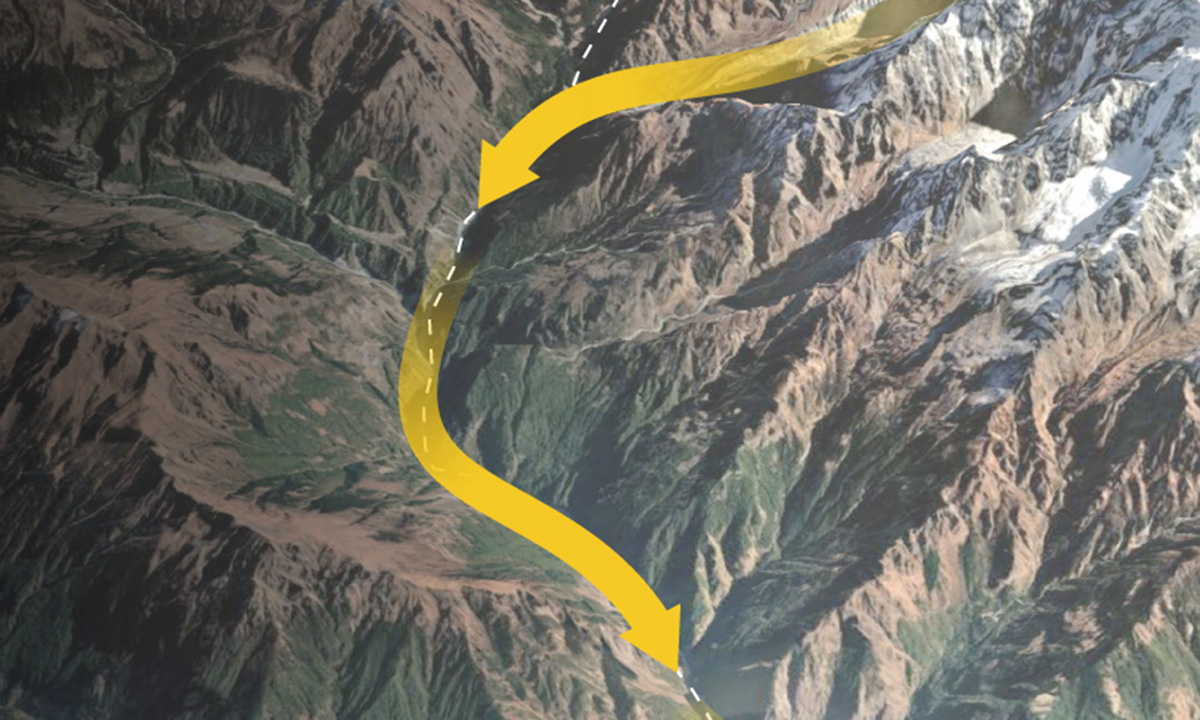 |
The path of the flash flood like a tsunami at the Nepal - China border. Click on the image for full view.
The flash flood occurred on 26/8 after a glacier collapsed, creating a massive flow that surged into the area below. The floodwaters rushed down the steep valley at over 160 km/h, carrying gravel, boulders, and large tree trunks, creating flood waves up to 21 m high.
Experts are attempting to reconstruct the precise sequence of events in the disaster. They believe the flash flood occurred after a glacier collapsed, causing a massive flow to surge into the area below. According to experts, climate change likely played a role in the incident, but they emphasize there is no evidence yet to determine the specific cause of the disaster.
Nguyen Tien (According to AFP, Fox News, Reuters)