U.S. President Donald Trump, in an interview with Fox News on 21/6, declared, "We could take over the Strait of Hormuz if necessary. If Iran does not reach an agreement with the U.S., we will charge a fee at this maritime route." He also warned of renewed bombing campaigns against Iran, seemingly threatening the Iranian delegation negotiating with the U.S. in Switzerland.
Trump further stated, "I told Iranian officials that if they close the Strait of Hormuz, they will no longer have a country. They won't even be able to return to their own country." The president added his belief that the U.S. could become the "guardian angel" of the strait, controlling 20% of the oil passing through it. In a social media post, the White House chief continued to warn Iran about its proxy forces in Lebanon. He stated, "Iran must immediately stop using its highly paid proxy forces in Lebanon to cause trouble. If they do not, the U.S. will once again strike Iran very hard, as we did last week, but even more fiercely."
 |
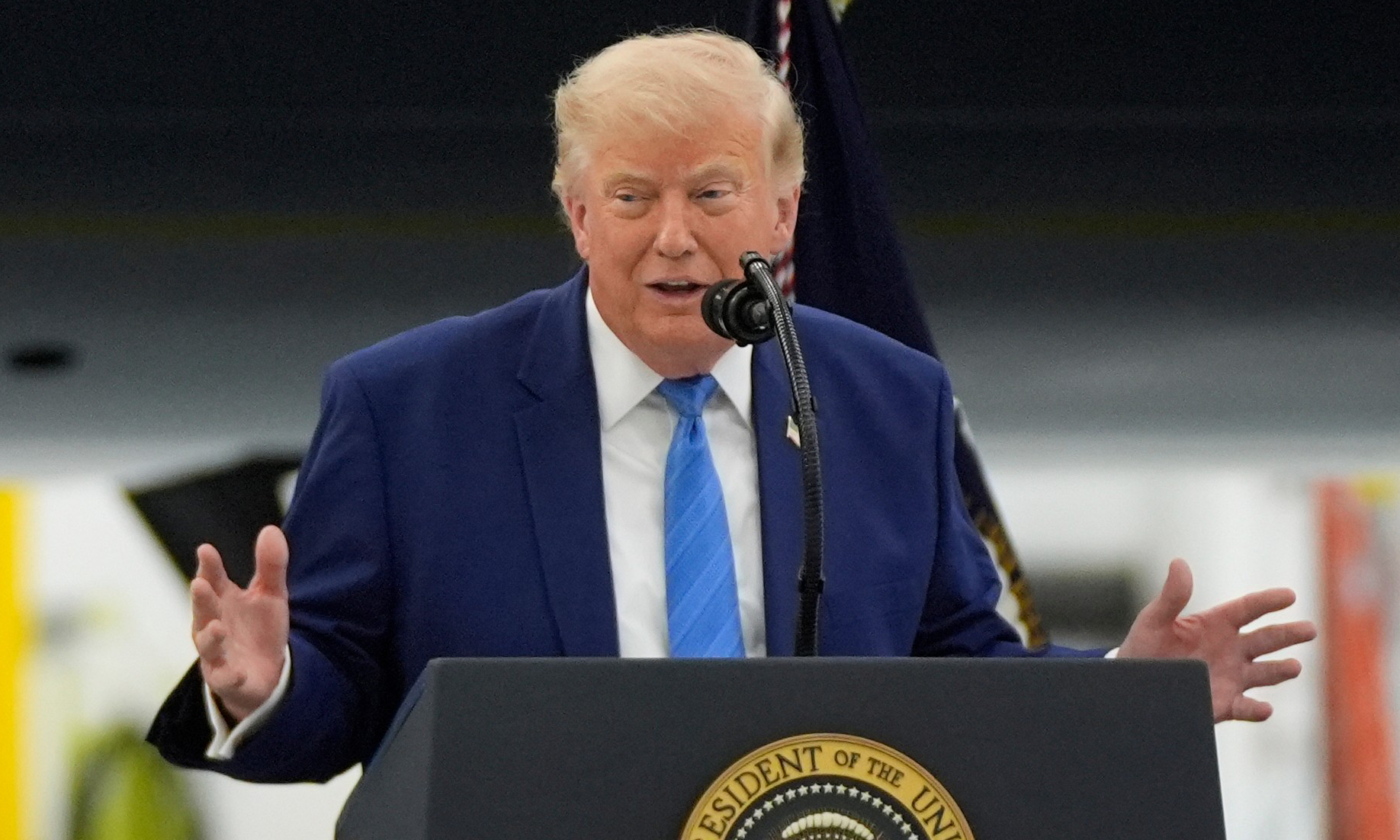
U.S. President Donald Trump at Andrews Air Force Base, Maryland on 19/6. Photo: AP |
The Iranian delegation, currently participating in negotiations in Switzerland, issued a formal protest to the U.S. side following Trump's threats. Press TV posted on X that "the delegation is considering appropriate response options to Donald Trump's recent threats."
Mohammad Bagher Ghalibaf, Iran's chief negotiator, warned the U.S. against threatening Tehran, declaring that "our armed forces are ready to respond." Ghalibaf questioned, "Does the U.S. not consider that if threats were effective, they would not be in a stalemate today? We are not bothered by threats from the U.S." He added, "The U.S. had better be more careful in its statements. Whatever they say, we are the ones who act." Tasnim later cited sources stating that the Iranian delegation left the dialogue venue to protest the U.S. president's remarks.
 |
Iranian negotiating delegation in Switzerland on 21/6. Photo: AFP |
The negotiations are taking place at the Burgenstock mountain resort in Switzerland. The U.S. delegation is led by Vice President JD Vance, while Iranian representatives are led by Parliament Speaker Mohammad Bagher Ghalibaf. Representatives from two mediating countries, Pakistan and Qatar, are also participating. Before the dialogue began, Vance stated, "President Trump asked us to turn a new chapter, changing the relationship between the U.S. and Iran."
These discussions occur as Iran announced the closure of the Strait of Hormuz in response to Israeli attacks on Lebanon. Esmaeil Baqaei, spokesperson for the Iranian Foreign Ministry, posted on X, "It is not possible to enter the negotiation phase to reach a final agreement if hostilities do not cease on all fronts." According to Iranian state television, the first 80-minute negotiation round did not discuss Tehran's nuclear program. Instead, the focus was on implementing the memorandum of understanding between Tehran and Washington, as well as the situation in Lebanon.
Huyen Le (According to CNN, AFP)