The New York Times reported on 10/4, citing anonymous US officials, that Iran's inability to track its mines is a reason it cannot quickly meet President Donald Trump's demand to fully reopen the Strait of Hormuz.
Oil shipments through this crucial maritime route have almost stalled since the US and Iran reached a ceasefire agreement on 8/4, CNN reported. AFP news agency, citing marine tracking data collected on 9/4, stated that only 10 ships have passed through the Strait of Hormuz since the ceasefire took effect.
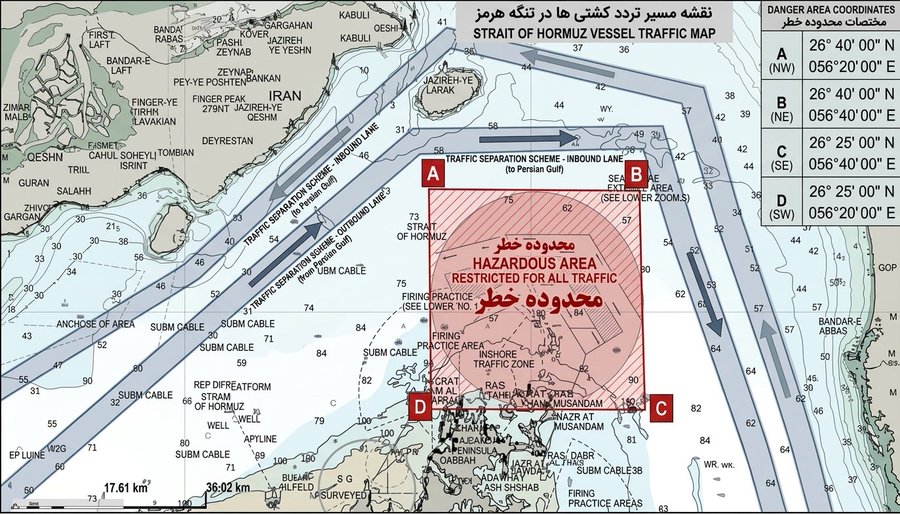 |
Travel route (gray) and dangerous zone, suspected of containing mines (red) in the Strait of Hormuz, published by IRGC on 9/4. Photo: IRGC
Immediately after the US and Israel launched an attack campaign against Iran on 28/2, Tehran deployed numerous speedboats to lay mines in the Strait of Hormuz. These mines, along with the threat from unmanned aerial vehicles (UAVs) and missiles, drastically reduced the number of cargo ships using this maritime route, driving up energy prices and giving Iran its greatest leverage in the conflict.
At that time, Iran still maintained a shipping lane through the strait, allowing ships to pass after paying a fee.
After the parties reached a ceasefire, the Islamic Revolutionary Guard Corps (IRGC) announced on 9/4 an alternative route for vessels to avoid the risk of hitting mines in the Strait of Hormuz. However, US officials believe this route is significantly restricted, largely because Iran laid mines unsystematically.
It is unclear whether Iran recorded the position of each mine. Even if it did, some mines could have drifted from their original positions. Mine-clearing efforts are also challenging, as Iranian naval forces suffered heavy losses in the conflict.
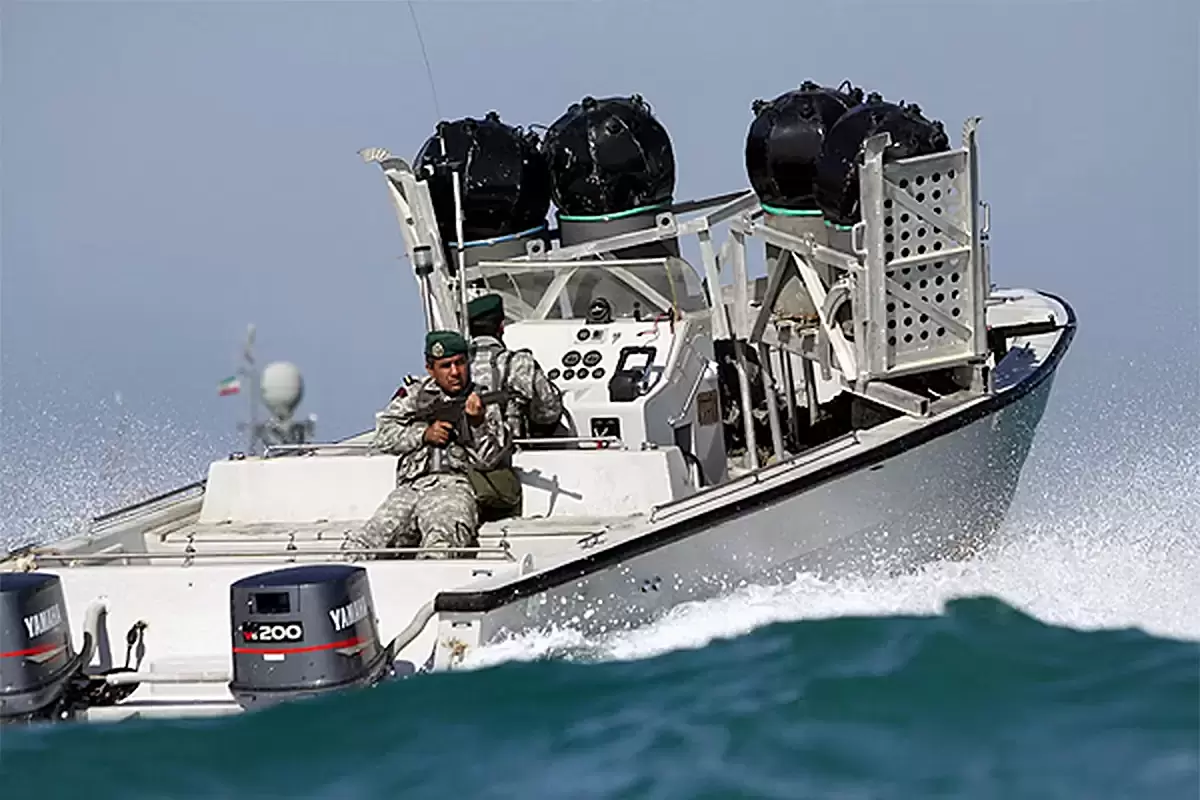 |
IRGC speedboat carrying 4 mines during an exercise in the Strait of Hormuz before the Middle East conflict erupted. Photo: IRGC
The US military also almost no longer has mine-clearing forces in the Middle East, as specialized ships have been decommissioned, and two of three littoral combat ships equipped with mine-sweeping gear moved to Singapore early in the conflict. Difficulty in tracking small boats laying mines means the US also cannot determine how many mines Iran deployed in the Strait of Hormuz, nor their locations.
US and Iranian officials have not yet commented on the information.
Iranian Foreign Minister Abbas Araghchi stated on 8/4 that the Strait of Hormuz would be opened for vessel traffic after "technical limitations are taken into account". US officials believe this phrase implies Tehran cannot quickly locate or remove the mines.
President Donald Trump told reporters at Joint Base Andrews on 10/4 that the Strait of Hormuz would soon be cleared, but admitted it would not be easy. How to quickly ensure safe passage through the area will likely be a central topic of discussion in negotiations between Iran and the US in Pakistan.
Huyen Le (According to NY Times, AFP)