Special security measures ahead of the crucial US-Iran talks in Islamabad have transformed the Pakistani capital into a virtual lockdown zone. Officials have closed Old Airport Road and deployed containers and barbed wire to block all routes leading to Nur Khan airbase.
The Serena Hotel, located next to the Ministry of Foreign Affairs in the capital's high-security zone, is expected to host both the US and Iranian delegations. The hotel notified all guests to check out by 8/4, stating the venue had been "requisitioned for an important event".
The Serena Hotel is now under government control, with all routes leading into a 3 km radius around it sealed off.
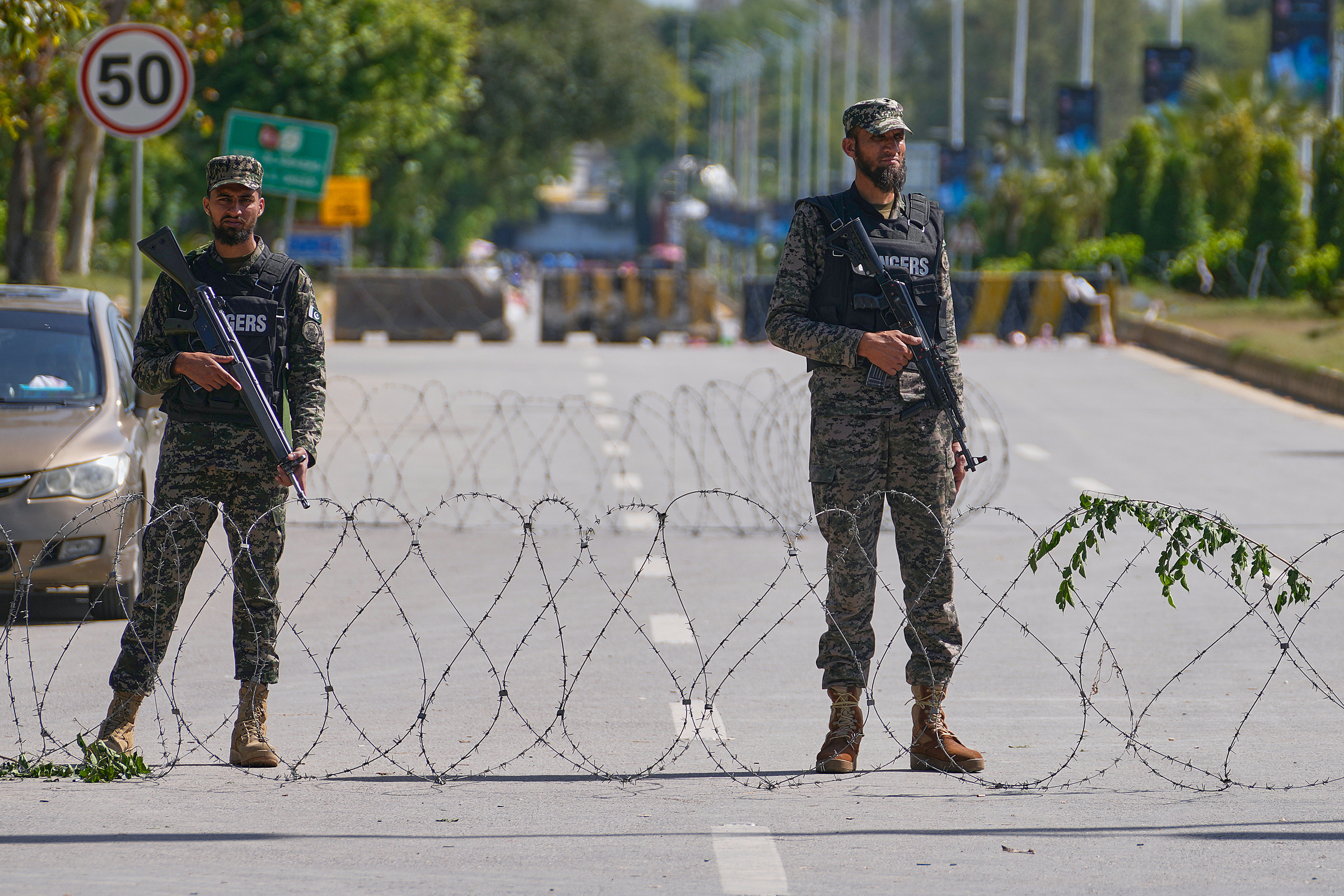 |
Binh si tai mot tram kiem soat de dam bao an ninh truoc them cuoc dam phan giua My va Iran tai thu do Islamabad, Pakistan ngay 10/4. Anh: AP
On 8/4, the US and Iran reached a two-week ceasefire agreement, mediated by Pakistan, to facilitate the negotiations. Iran's Supreme National Security Council stated that the talks in Islamabad could last up to 15 days.
The Pakistani government remains tight-lipped about the negotiation venue. Pakistan Prime Minister Shehbaz Sharif announced talks began on 10/4, though the White House later stated the first meeting would be on 11/4.
In Islamabad, armed security forces are heavily deployed on the streets. Officials are also managing traffic, setting up barricades, checkpoints, and patrol teams. The already quiet Pakistani capital became even more deserted on 10/4.
Pakistan has also heightened airspace surveillance and placed emergency response agencies on standby.
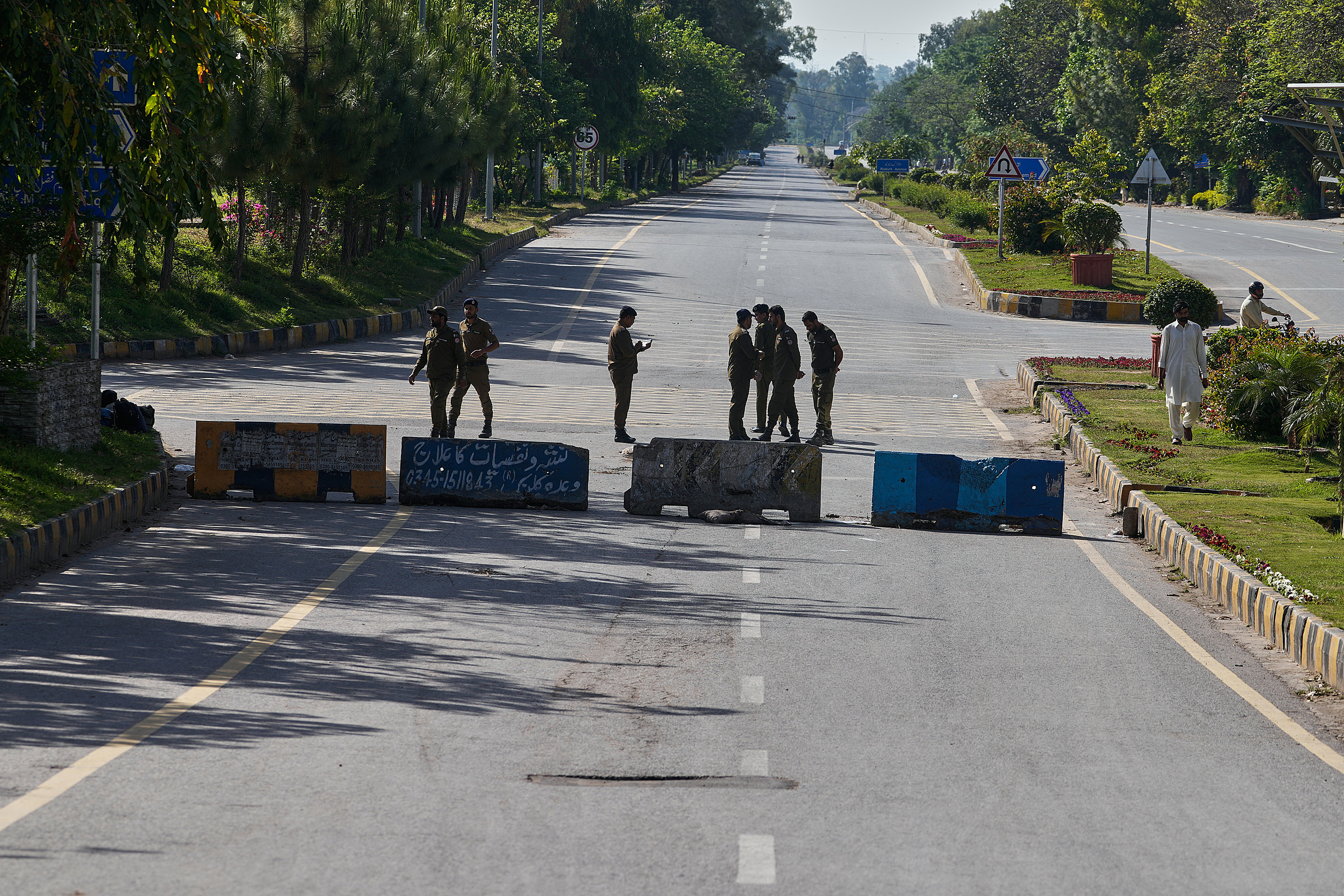 |
Mot tuyen duong bi phong toa o Islamabad ngay 10/4. Anh: AP
Pakistani security officials noted these measures surpass typical protocols for a high-level visit. During a 9/4 meeting with US Charge d'affaires ad interim Natalie Baker to discuss preparations, Pakistan's Interior Minister Mohsin Naqvi pledged absolute security for all foreign officials.
According to Dawn, a 30-member US advance team has arrived in Islamabad to review security arrangements. US Vice President JD Vance will lead the American delegation, while Iran's delegation is reportedly headed by Speaker of Parliament Mohammad Bagher Ghalibaf and Foreign Minister Abbas Araghchi.
Pakistan's hosting of the first talks between the US and Iran since hostilities erupted on 28/2 is considered a diplomatic turning point for the nation. Pakistan does not typically host negotiations of this scale.
Pakistan's mediating role is attributed to its extensive diplomatic network and good relations with both Iran and the US. Iran was the first nation to recognize Pakistan after its independence in 1947. The two neighbors share a 900 km border and deep historical, cultural, and religious ties.
Pakistan is also home to over 20 million Shiite Muslims, making it the second-largest Shiite Muslim community globally, after Iran.
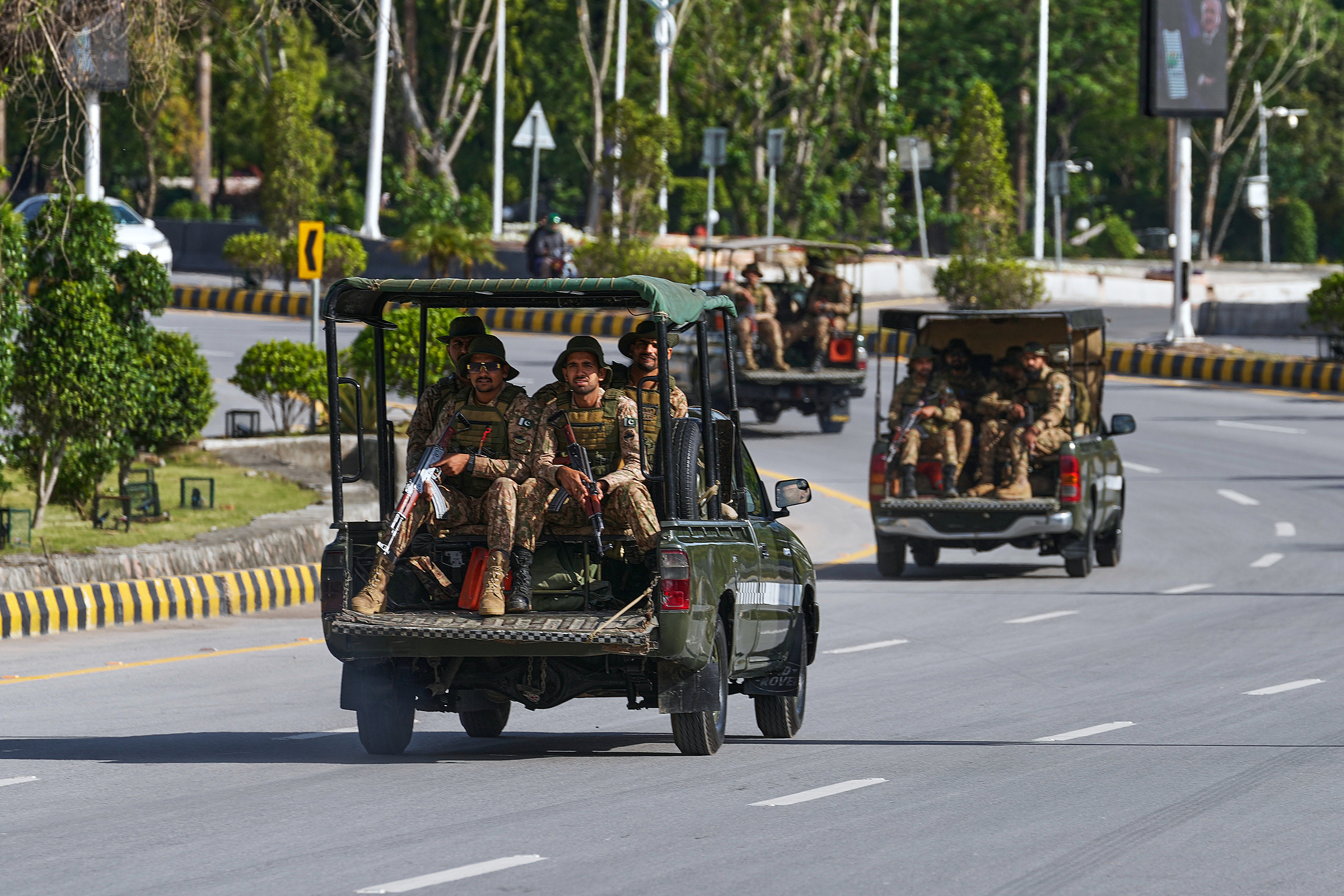 |
Binh linh tuan tra de dam bao an ninh truoc them cuoc dam phan o Islamabad. Anh: AP
Pakistan also maintains close ties with the US, Saudi Arabia, and China. Late last month, Pakistan's Foreign Minister Ishaq Dar visited Beijing for talks with his counterpart, Wang Yi, who expressed support for Islamabad's mediation efforts "in line with the common interests of all parties".
US President Donald Trump also stated that China assisted in bringing Iran to the negotiating table. Pakistani officials confirmed this information.
"On the eve of the ceasefire agreement, hope was fading, but China intervened and persuaded Iran to agree to a preliminary ceasefire. Our efforts were important, but not yet a breakthrough. Beijing was the one that convinced the Iranian side", a Pakistani official stated.
Huyen Le (According to AFP, India Today, Pakistan Today)