On 9/2, Mohammad Eslami, Director of Iran's Atomic Energy Organization, stated that the country's dilution of 60% enriched uranium "depends on whether all sanctions are lifted". Eslami did not specify if this referred to all sanctions against Iran or only those imposed by the US. Iran faces various sanctions from the United Nations and the US related to its nuclear program.
The International Atomic Energy Agency (IAEA) estimates that Tehran possesses about 5 tons of low-enriched uranium and 400 kg of 60% enriched uranium. Iran is the only non-nuclear weapon state in the world enriching uranium to this level. The US, Israel, and some Western allies accuse Iran of actively enriching uranium to pursue nuclear weapons, although Tehran consistently maintains it is solely a civilian program for peaceful energy purposes. Theoretically, if this material were enriched to 90%, Iran would have enough uranium to produce 10 nuclear bombs. Diluting uranium is the process of mixing uranium with other materials to reduce its enrichment level to a certain threshold.
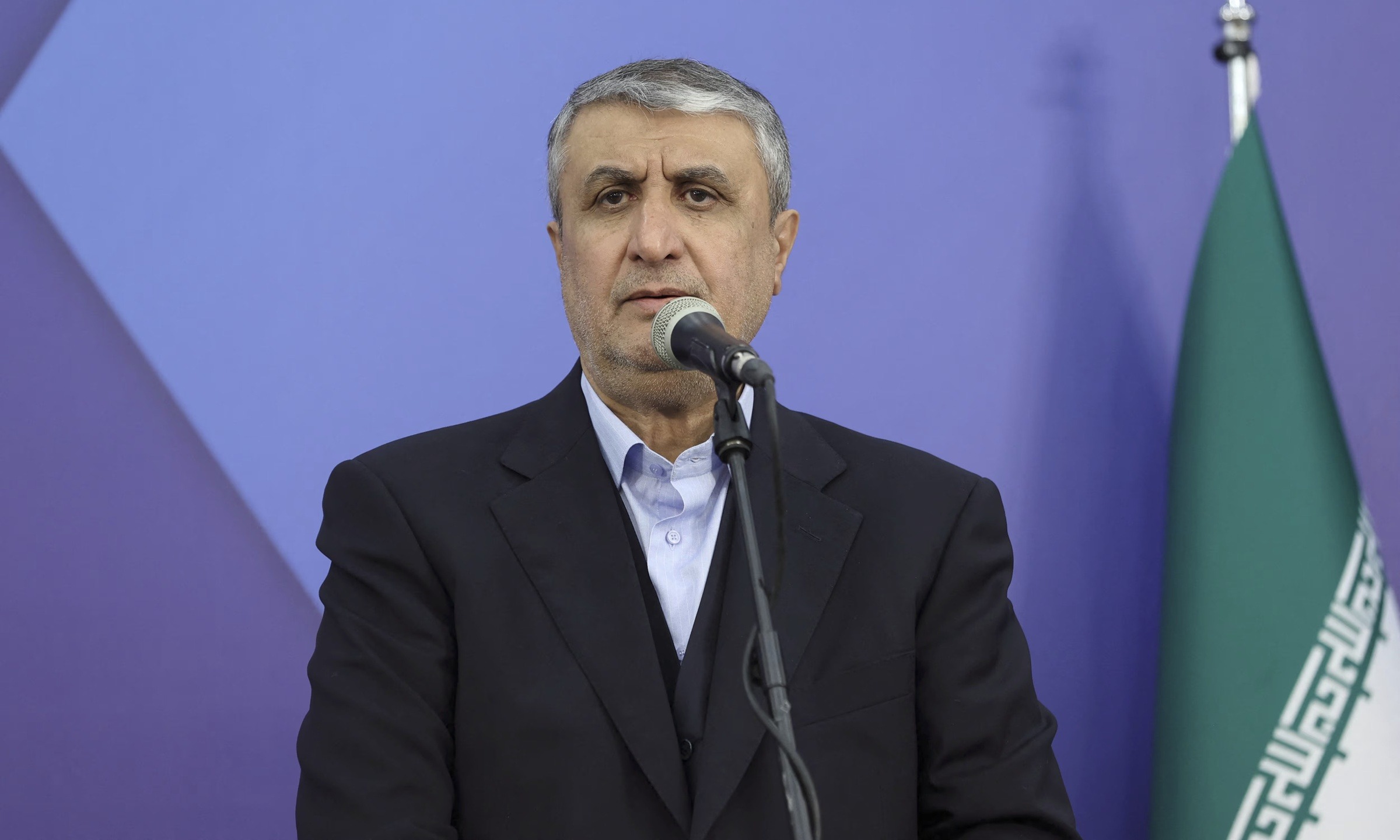 |
Leader of Iran's Atomic Energy Organization Mohammad Eslami speaks in Tehran in 11/2024. *Photo: Reuters*
The US recently deployed military forces to the Middle East and warned of consequences if Iran failed to reach an agreement on its nuclear program, escalating regional tensions. US President Donald Trump warned that "bad things" would happen if Tehran did not reach a deal with Washington.
US and Iranian officials held direct negotiations in Oman on 6/2 to de-escalate the risk of conflict. US representatives included Middle East envoy Steve Witkoff and Jared Kushner, President Trump's son-in-law.
Iranian Foreign Minister Abbas Araqchi described these talks as a "good start" and stated efforts to negotiate with the US would continue. He declared that Tehran would only discuss nuclear issues, not any other matters with Washington, while the US sought to negotiate on Iran's ballistic missile program, Tehran-backed armed groups in the region, and Iran's human rights issues. "We want serious negotiations to achieve results, and the other side also needs to show a similar level of seriousness, ready to engage in constructive dialogue", Araqchi said today. "Unfortunately, deep distrust still exists, due to the behavior of the US in recent years".
The US and Iran are expected to continue negotiations this week in Oman, but the specific time and location remain unconfirmed. Iranian media reported that Ali Larijani, secretary of Iran's security council and an advisor to Supreme Leader Ali Khamenei, would visit Oman on 10/2.