


Speaking before parliament in Tehran today, Iranian Parliament Speaker Mohammad Baqer Qalibaf accused the US and Israel of "supporting recent riots and causing unrest" across Iran. He warned that Israel and US military bases in the region would be "legitimate targets" if the US launched any attack on Iran.
Reuters, citing sources, reported that Israel is currently on high alert for potential US intervention to support the protest movement in Iran.
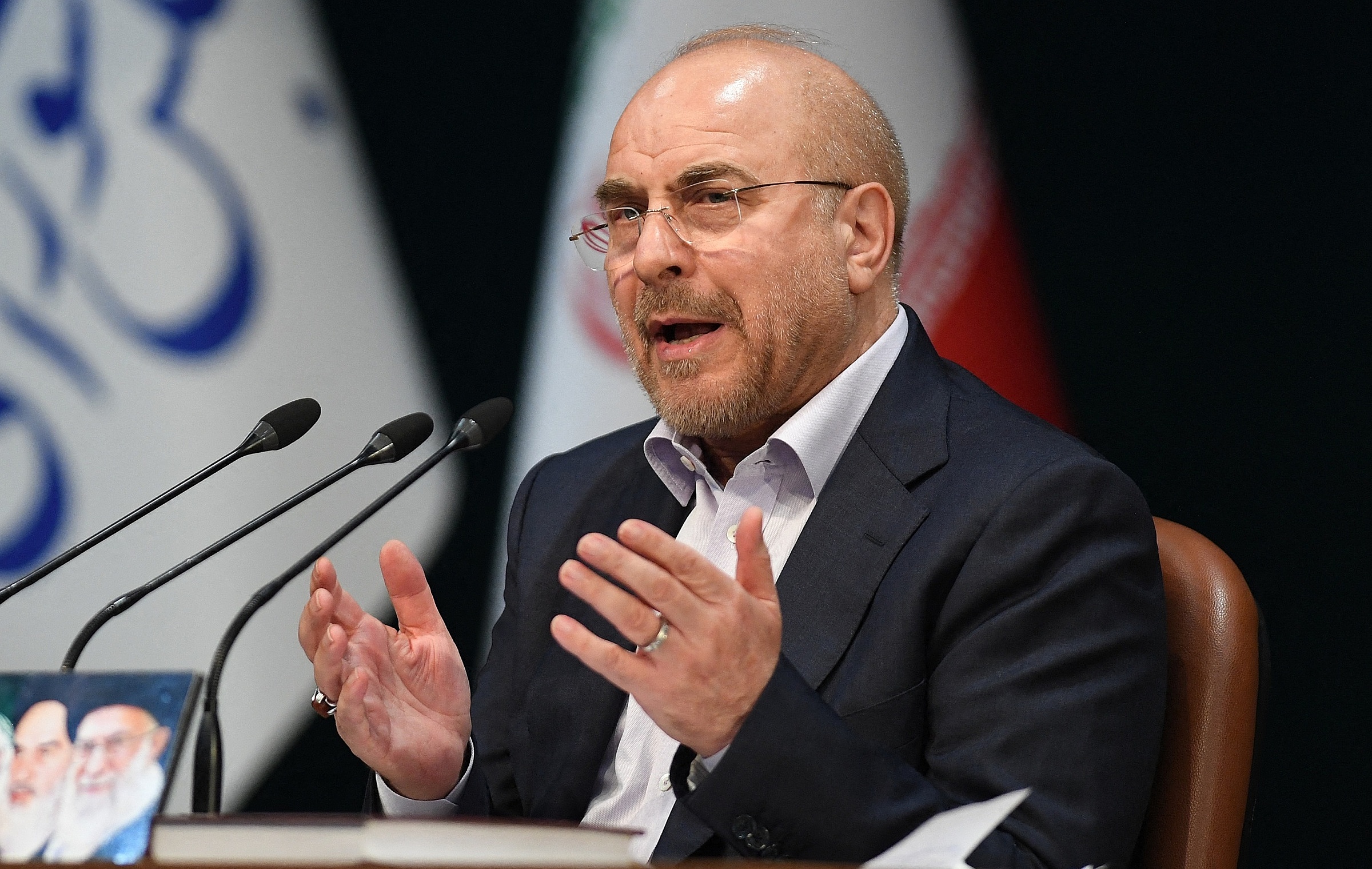 |
Iranian Parliament Speaker Mohammad Baqer Qalibaf at a press conference in Tehran in November 2024. *Photo: AFP* |
The New York Times, citing US officials familiar with the matter, stated that in recent days, President Donald Trump has received reports on military intervention options for Iran. This comes as he considers actualizing his threat to attack the country over alleged "suppression of protesters."
President Trump has not made a final decision, but officials indicated he is seriously considering launching an attack in response to Iran's "crackdown on protests." A series of options has been presented to the US President, including targeting non-military locations in Tehran.
According to the source, US Secretary of State Marco Rubio held a phone call with Israeli Prime Minister Benjamin Netanyahu on 10/1 to discuss the protests in Iran, the situation in Syria, and the peace agreement in Gaza. Earlier the same day, Rubio posted on social media that the US "supports brave Iranians."
When asked about the information in The New York Times, the White House referred to Trump's recent public statements and social media posts.
"Perhaps Iran is heading for more freedom than ever before. The US is ready to help," Trump posted on social media on 10/1.
A day earlier, he threatened to "strike very hard" if Iran "causes protesters to be killed as in previous instances." He assessed that protesters in Iran are currently facing an "extremely dangerous situation" and that the US would closely monitor all upcoming developments.
"Iran better not start shooting, because then we will start shooting too," President Trump said, emphasizing that "this does not mean US military personnel will directly land" in Iran.
The protests, which began on 28/12/2025, were sparked by small traders' dissatisfaction with the economic situation and the depreciating rial. They have since spread across the capital Tehran and many other Iranian cities in recent days. Iranian officials accuse "terrorist agents" from Israel and the US of inciting the protests to escalate into violence. The US Department of State, however, denies this, stating that Tehran is "distracting public opinion from internal issues."
International organizations, citing local sources, reported that the Iranian government has blocked nationwide information, cut internet access, and restricted international communication. This has made it difficult to determine the scale of the protests. Some human rights organizations abroad reported that over 100 protesters have been killed and over 2,000 arrested since late December 2025.
Iranian Supreme Leader Ali Khamenei declared that the government would not back down from the protests. He asserted that the past two weeks of unrest were due to provocateurs seeking to please US leaders. He mocked intervention warnings from President Trump, suggesting that the US leader should focus on domestic issues.
Iranian Judiciary Chief Gholamhossein Mohseni Ejei warned of "resolute, maximal, and merciless" punishment for those causing unrest. The intelligence branch of the Islamic Revolutionary Guard Corps (IRGC) also stated it would not allow the wave of protests to continue.
By Huyen Le (According to Reuters, The New York Times, Tehran News)


