"Iran does not seek to expand regional conflict, but if neighboring countries cooperate with the US in economic warfare, we will target their interests," Mohsen Rezaee, Secretary of Iran's Supreme National Security Council, stated on 23/8. "If they begin such actions, we will not permit a single drop of oil to pass through the Persian Gulf."
Rezaee also warned that Iran is prepared to target alternative routes that Gulf nations have used for oil exports during conflicts.
Saudi Arabia and the United Arab Emirates (UAE) have recently expanded these routes, directing oil to ports in the Red Sea and Gulf of Oman. A growing volume of crude oil is now transported out of the Gulf via the southern route, near the Omani coast, reducing the leverage Iran has employed in recent months.
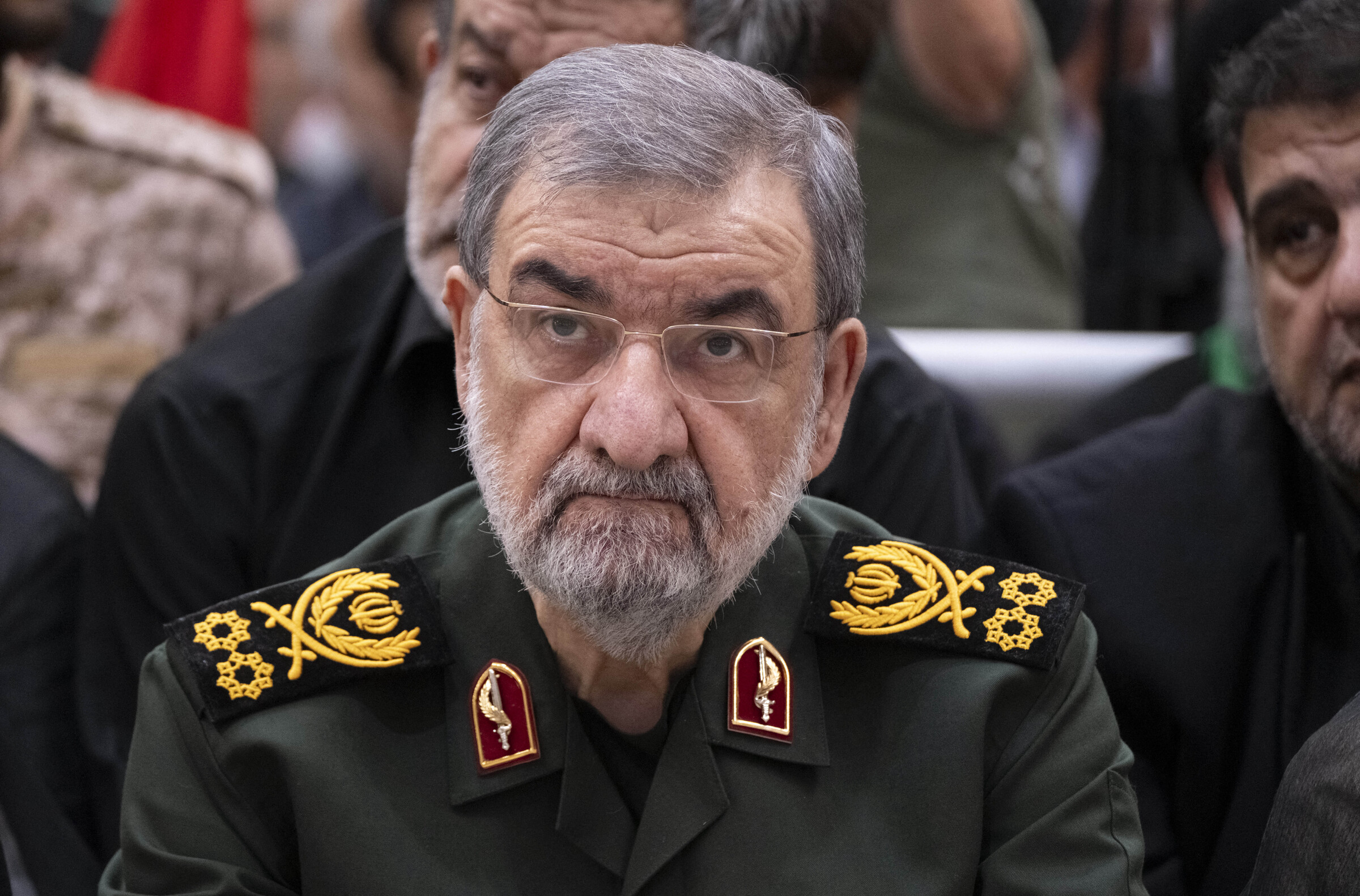 |
General Mohsen Rezaei attends an event south of Tehran on 4/6. *Photo: AFP*
The Secretary of Iran's Supreme National Security Council also declared that Tehran will not yield to Washington's pressure, adding that the Strait of Hormuz will remain closed until the US honors its commitments.
Rezaee noted that Tehran's membership in the International Atomic Energy Agency (IAEA) and participation in the Nuclear Non-Proliferation Treaty did not deter the US from targeting Iran. "President Donald Trump's ill-advised decision has driven many nations to pursue nuclear weapons for self-defense," he stated.
Mohsen Rezaee is currently one of Iran's most powerful figures, advising Supreme Leader Mojtaba Khamenei.
He served as a senior commander for Iran during the 1980s war with Iraq. Rezaee was appointed head of Iran's security agency in August, signaling Tehran's pivot from diplomatic engagement to a more hardline position.
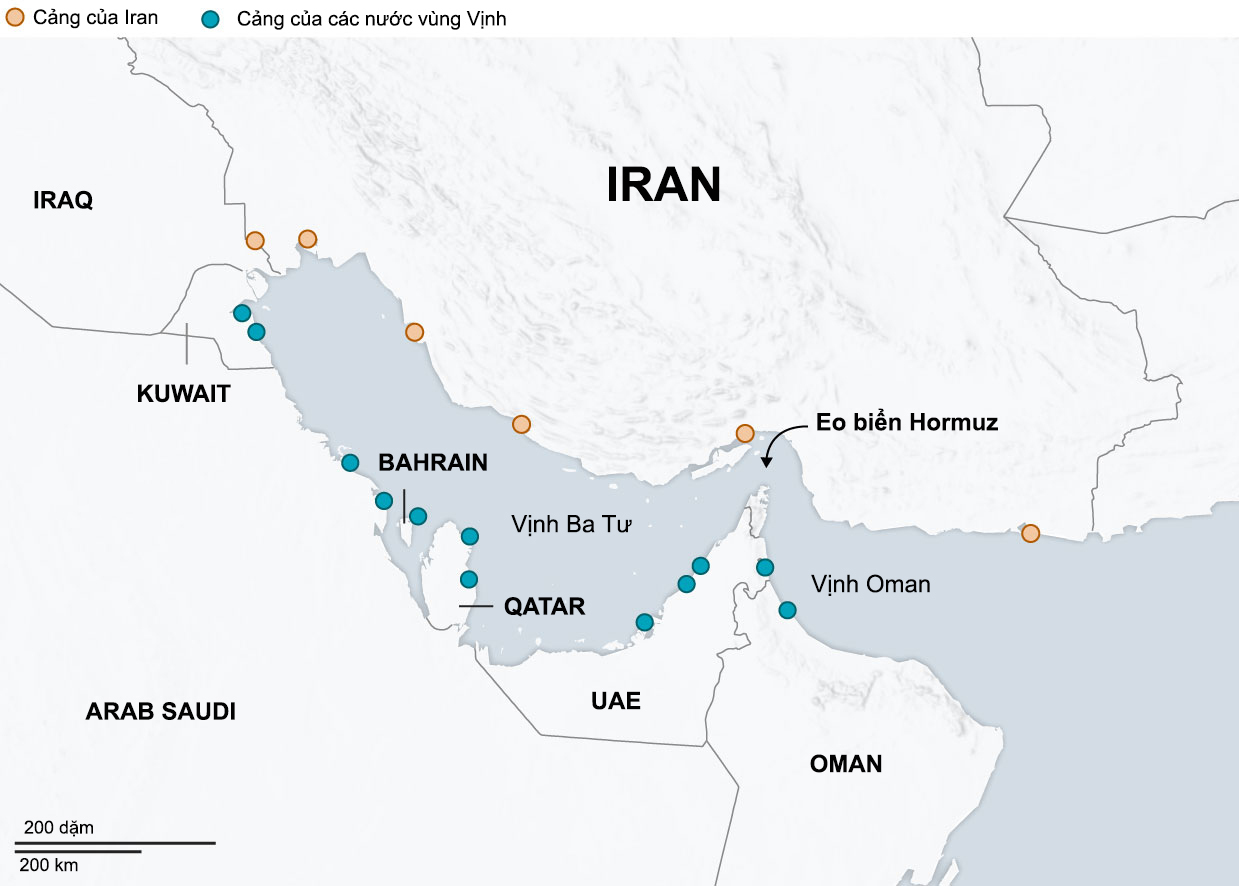 |
Location of the Strait of Hormuz and Gulf ports. *Graphic: WSJ*
According to Hamidreza Azizi, an expert at the Clingendael Institute in the Netherlands, Rezaee's statements constitute an ultimatum to Gulf nations, suggesting Tehran could interpret actions supporting US economic pressure as part of a broader conflict.
"Iran is adopting two approaches: proactive deterrence to prevent threats and asymmetric retaliation to increase the cost for any adversary attack," Azizi stated.
Azizi noted that different approaches are emerging within Iran concerning increasing US pressure. While executive and legislative leaders favor diplomacy, military and security circles are increasingly preparing for a new escalation.