


After a long period of escalating threats to annex Greenland, even through force, in an effort to control the island, president Donald Trump surprised attendees on 21/1 by arriving in Davos, Switzerland, to speak at the World Economic Forum.
Facing a host of top European officials eager to understand his next moves with the closest allies, the US president declared he would not use military action to seize Greenland from Denmark.
"This is probably my most important statement, because everyone thought I would use force. I don't have to use force. I don't want to use force. I won't use force," Trump emphasized. "The only thing the United States is asking for is a place called Greenland."
This marked Trump's clearest statement to date ruling out military power to annex the Danish island. It partly allayed European fears of a worst-case scenario where they would confront Washington, while also helping the US stock market recover.
Following a meeting with NATO Secretary General Mark Rutte, Trump further signaled a de-escalation of tensions. He stated that tariffs, scheduled to take effect from 1/2 on European allies, would not be imposed because a "framework for a future agreement concerning Greenland and the entire Arctic region" had been reached.
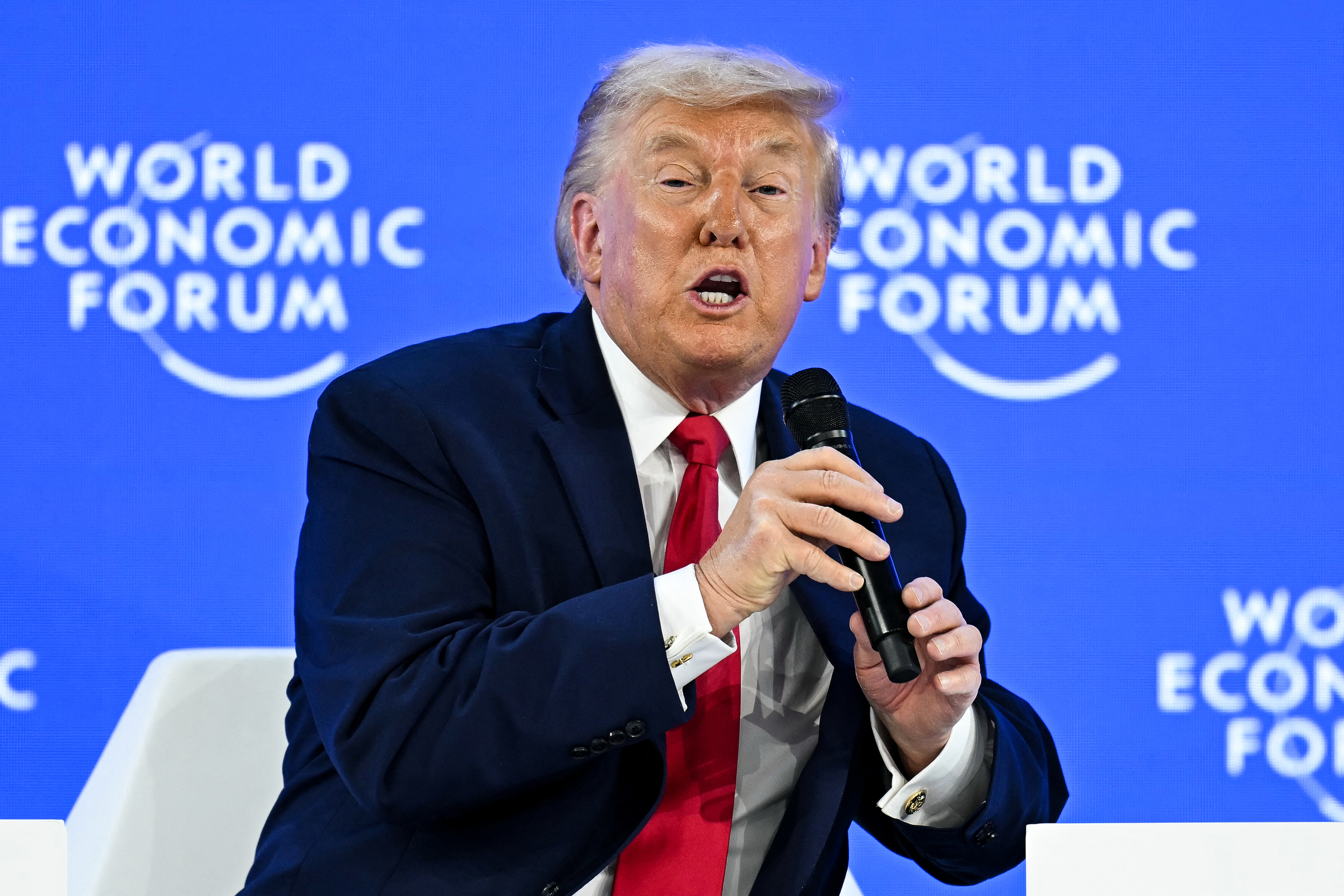 |
US President Donald Trump speaks at the annual meeting of the World Economic Forum in Davos, Switzerland, 21/1. Photo: AFP |
However, experts note that the US president's retreat does not change the fact that, after this incident, NATO leaders and partners have increasingly reinforced their belief that they can no longer consider the US a reliable ally. This comes despite Washington's 80-year role as a pillar of the transatlantic alliance.
"The lesson is that being firm with him can yield results," said a senior European official familiar with the matter. "While relieved that the military option has been ruled out, they still understand that president Trump risks changing his mind at any moment. His promises are inherently uncertain, but his contempt for Europe remains constant. We need to continue demonstrating greater resolve and autonomy, because we cannot cling to the illusion that the US is still the nation we once knew."
When president Trump arrived in Switzerland on the afternoon of 21/1 for the conference, the West remained apprehensive. The previous weekend, he announced intentions to increase tariffs on several European nations that had sent troops to Greenland for military exercises. Faced with a US leader who unhesitatingly threatened the territorial sovereignty of an ally and used economic pressure to achieve his goals, European officials publicly discussed plans for commensurate retaliation.
This represents a significant change compared to Trump's first year in office. At that time, European leaders adopted a strategy of appeasement and indulgence, accepting his conditions to keep the US in the alliance and not abandon Ukraine.
NATO reluctantly agreed to increase defense spending and bear the full cost of aid to Ukraine. The European Union (EU) accepted a 15% tariff on all goods exported to the US. All of this seemed to convince president Trump that he could do whatever he wanted with Europe.
However, Trump's challenge to Denmark over Greenland and his disregard for European territorial sovereignty represent a far more serious action, crossing a "red line" for the continent. This action risks disrupting 80 years of cooperation and overturning the meticulously built alliance structure by the US.
"This is not only strange and perplexing, but it also goes beyond imagination," commented Charles Kupchan, director of European studies at the Council on Foreign Relations and a former advisor to president Barack Obama, referring to president Trump's efforts to control Greenland. "That is why you see Europe's current reaction is entirely different from before the Greenland issue took center stage."
President Trump's social media posts the previous weekend regarding his intention to increase tariffs on European nations met with strong opposition from the continent's leaders. They also led to a series of private calls and messages, some of which the president posted publicly online, urging him to cooperate instead of confront to resolve the issue.
However, these efforts did not prevent Trump from continuing to assert his intention to buy Greenland on 21/1, despite the vast majority of the island's residents opposing living under US control.
"Don't celebrate too soon because he ruled out the use of force," another European official in Davos noted.
In a meeting with European leaders on the afternoon of 21/1 to discuss Greenland, president Trump suggested that US ownership of this massive island, located between the Arctic and the North Atlantic, would benefit both sides. "Only the US is capable of protecting, exploiting, and making that vast icy land useful and safe for Europe," he affirmed.
"You can say yes and we will appreciate it very much, or you can refuse and we will remember," Trump added.
These subtly threatening remarks further amplified anxieties in Europe that the world is shifting in a new, risky direction, according to observers.
Canadian Prime Minister Mark Carney, speaking in Davos on 20/1, before Trump's arrival, emphasized that there was no turning back for the world. "Every day that passes, we see more clearly that we are living in an era of great power competition," he said. "The rules-based order is eroding. The strong do what they can, and the weak suffer what they must."
Urging Western nations to implement measures to reduce dependence on the US and avoid vulnerability to pressure from the White House, the canadian prime minister called on other leaders to accept the new reality that the long-standing post-World War II order no longer exists.
"Let me be clear, we are in the midst of a breakdown, not a transition," he stated.
President Trump on 21/1 clearly showed he had paid attention to Prime Minister Carney's statement, hinting at Canada's continued reliance on the US and even suggesting that its security relies entirely on US defense technology.
"They should be grateful to us," he said. "Canada's existence is thanks to the US. Remember that, Mark, when you make your next statement."
This implicit threat, in a way, served as a clear testament to the canadian prime minister's perspective.
As the White House continuously threatened to increase tariffs on Canada, the country has sought to rebalance trade relations with other nations, including China, to reduce economic dependence on the US.
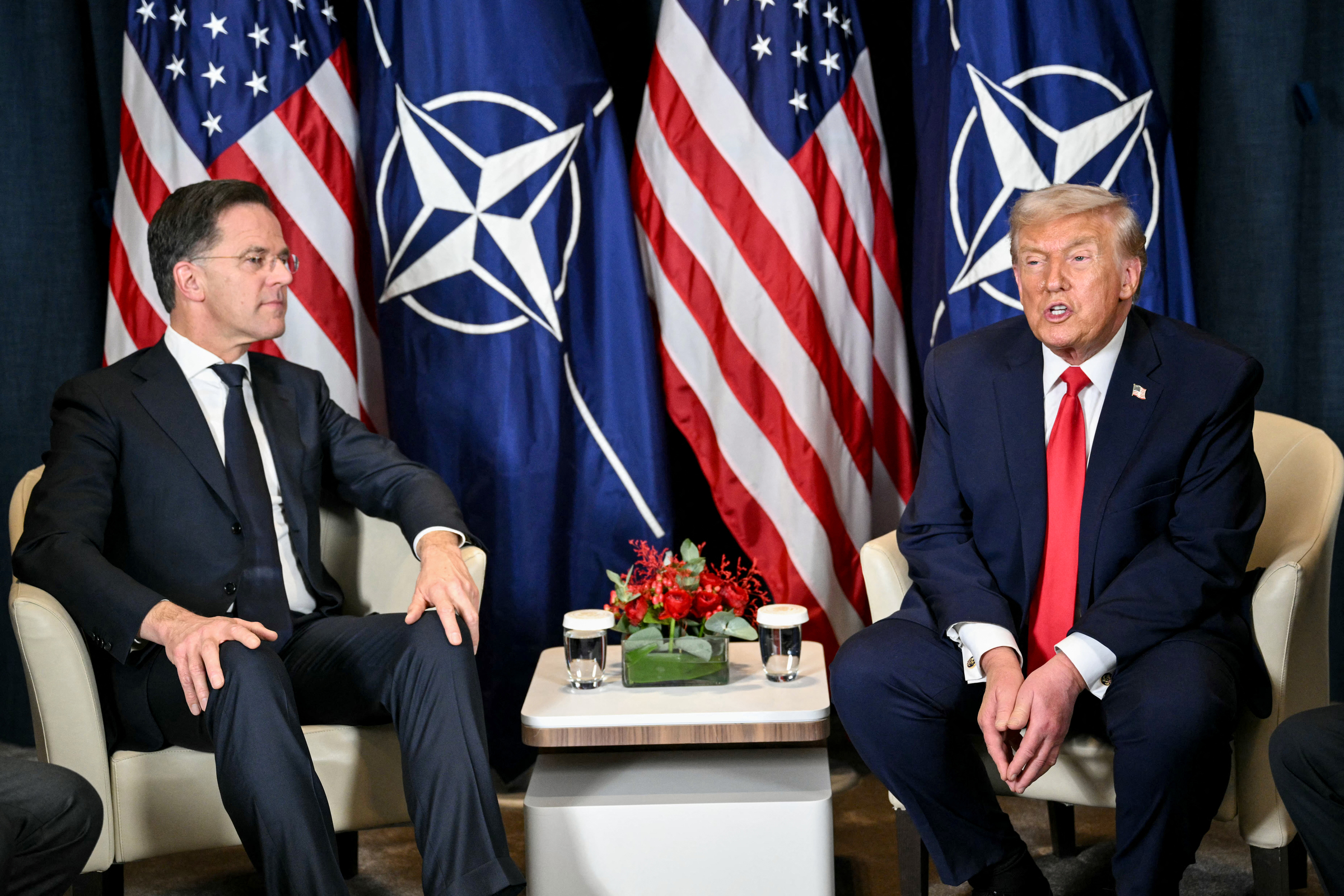 |
President Trump (right) discusses with NATO Secretary General Mark Rutte during a meeting on the sidelines of the World Economic Forum annual conference in Davos, 21/1. Photo: AFP |
European leaders also appear to be taking similar steps. Just last week, Brussels ratified a landmark free trade agreement with the Mercosur bloc of South American countries. They had long pursued this agreement, but it has become more urgent in recent months, serving as a bulwark protecting Europe against economic coercion and protectionist policies from president Trump.
Europe still hopes that president Trump would eventually accept an alternative solution rather than owning Greenland, especially after he retracted his threats of tariffs and force. This solution could include accepting Denmark's offer to increase US military presence on the island, not to mention economic cooperation agreements to exploit natural resources there.
However, European leaders are increasingly showing they have accepted the reality that their ability to restrain Mr. Trump is severely limited. Therefore, they are seeking to reduce dependence on the US as quickly as possible.
Former Danish Prime Minister Anders Fogh Rasmussen stated last week that it was time for Europe to change its attitude towards the US, shifting from a close ally to a stronger self-defense stance, defined by strengthening military power and imposing retaliatory tariffs.
"Mr. Trump only believes in power and power alone," Rasmussen wrote. "Europe must be ready to play by those rules."
According to experts, even by abandoning the military intervention option, president Trump's threats aimed at Denmark shattered Europe's long-held perception of the US. For the past 80 years, the US has been considered a leading force in maintaining a world order built on shared democratic values. But now, the spearhead is unexpectedly aimed at Washington's long-standing allies.
"The alliance system has always been the jewel in the crown of power, as well as demonstrating our role in the world," commented Jeremy Shapiro, an expert at the European Council on Foreign Relations, based in Washington.
Shapiro noted that since World War II, the US has occasionally used "hard power," but generally, US foreign policy has primarily relied on soft power, which is truly "less costly, less coercive, more ethical, and far more sustainable."
Therefore, president Trump's pressuring of allies, forcing weaker nations to comply with his will, has created an irreparable breakdown in strategic trust. "That, in the long run, will weaken US global standing," Shapiro concluded.


