Israeli fighter jets conducted at least 8 bombing raids on the Abu al-Duhur airbase in Idlib, a city in northwest Syria, on 18/8. The base is located approximately 65 km from the Turkish border.
This airstrike operation occurred about one week after US President Donald Trump intervened to prevent Israel from carrying out military activities in Syria, according to Israel's Channel 13. President Trump has long considered improving relations with the new Syrian government, led by Ahmed al-Sharaa, a significant foreign policy achievement.
Consequently, Israel's latest airstrike drew an angry response from the United States. In a social media statement, US envoy for Syria and Iraq Tom Barrack stated that Israel's action "is an unnecessary escalation".
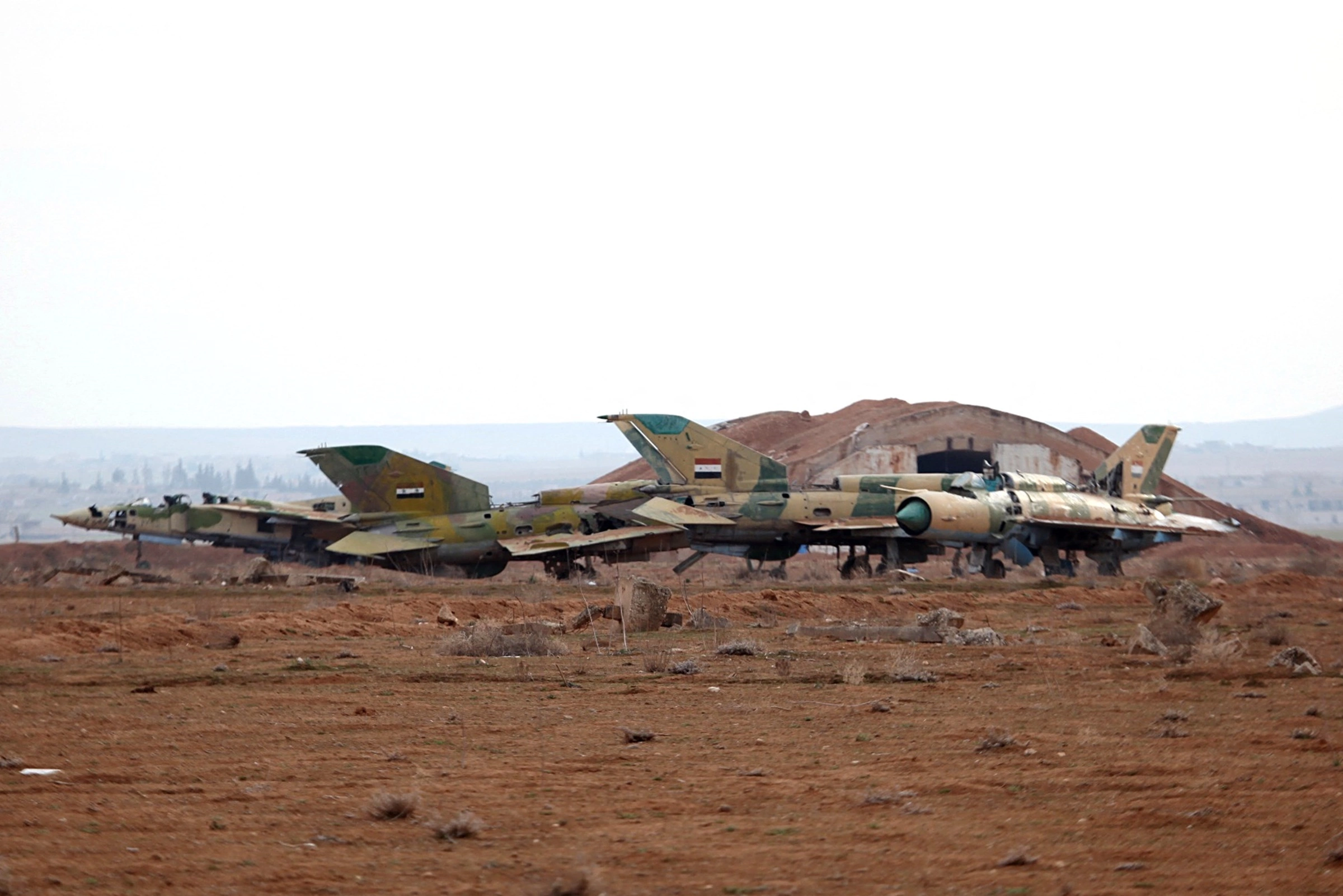 |
Syrian air force fighter jets damaged at Abu al-Duhur military base, Idlib province, Syria, in 2018. Photo: AFP |
The Syrian government "is neither aggressive nor maintains proxy forces", he said. "In fact, they have repeatedly expressed a desire to de-escalate tensions with Israel".
Mr. Barrack's comments followed a series of rifts between Israel and the US in recent months concerning conflicts in Gaza, Lebanon, and the US-Israel coalition's struggle with Iran. President Trump and Israeli Prime Minister Benjamin Netanyahu, once close partners, are increasingly choosing different paths on the issue of Gaza, the conflict with Iran, and now, relations with Syria.
Probing America's 'red line'
In response to the angry reaction from the White House, Prime Minister Netanyahu issued a statement in English, explaining that the airstrike on the Syrian base was carried out because "Turkey was planning to deploy troops there".
"We have repeatedly warned Syria that allowing Turkey to deploy forces in this area would threaten Israel's security", Mr. Netanyahu stated.
However, Itamar Eichner, a commentator from Ynet News, suggested that this airstrike contradicted President Trump's diplomatic direction toward the new Syrian government. This indicates America's increasing difficulty in restraining and controlling Israel's military decisions.
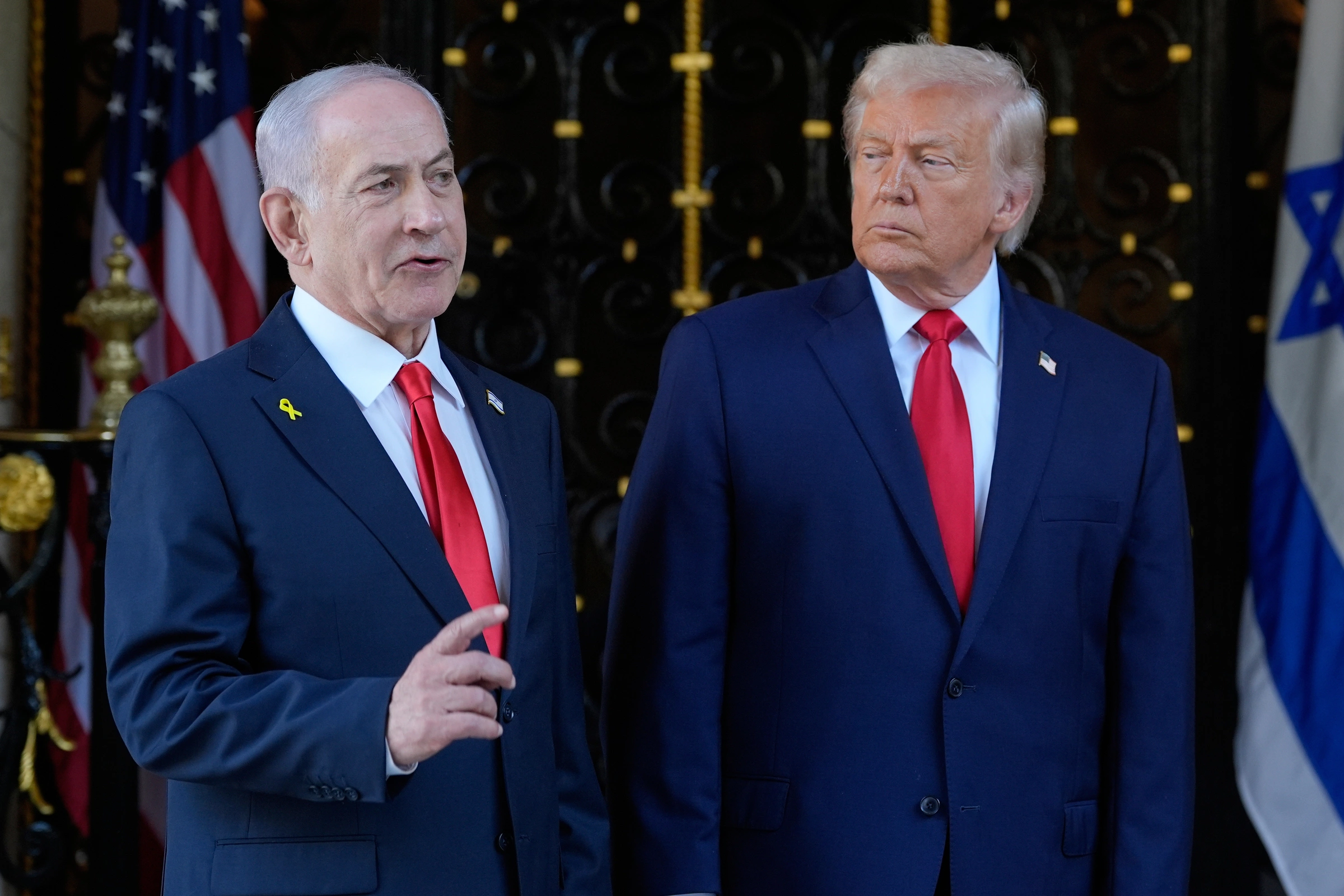 |
US President Donald Trump listens to Israeli Prime Minister Benjamin Netanyahu speak at the Mar-a-Lago club in Palm Beach, Florida, in 12/2025. Photo: AP |
Since the Hamas raid into Israeli territory on 7/10/2023, Washington has established a framework for military actions Tel Aviv can undertake, according to Eichner. This "red line" consists not of explicit prohibitions, but largely of implicit agreements that can shift depending on the location and sometimes fluctuate weekly.
The US once asked Israel to respect a ceasefire in Lebanon, but if Hezbollah forces caused a shooting incident, Israel would immediately seize the opportunity, citing the group's violation of the agreement, to strike harder at the group's senior commanders. America's red line has not disappeared, but it has become something for Israel to try to circumvent, Eichner observed.
According to him, the airstrike on the airbase in Syria was Israel's way of testing US limits, to see what they are permitted and not permitted to do.
"The next reaction from the White House will be what Tel Aviv pays most attention to. Will Washington issue more public criticism of Israeli operations in Syria, or will Barrack remain the only one speaking out?", Eichner commented.
A deterrent message
Israeli officials have repeatedly stated they consider the new Syrian government a threat, even though Damascus is improving relations with Washington. Prime Minister Netanyahu's government has also consistently warned Syria not to move troops south of Damascus, closer to the Israeli border, despite the new Syrian government repeatedly affirming it does not want confrontation.
"Syria is no longer a threat to Israel, and the two countries have engaged in months of negotiations for a security agreement. Since the overthrow of former President Bashar al-Assad's administration, the Syrian people have made it very clear they desire a peaceful relationship with Israel, and that needs to be respected", Asli Aydintasbas, a policy expert at the European Council on Foreign Relations, noted.
Nevertheless, the 18/8 airstrike still represents another tough message from Israel to Syria.
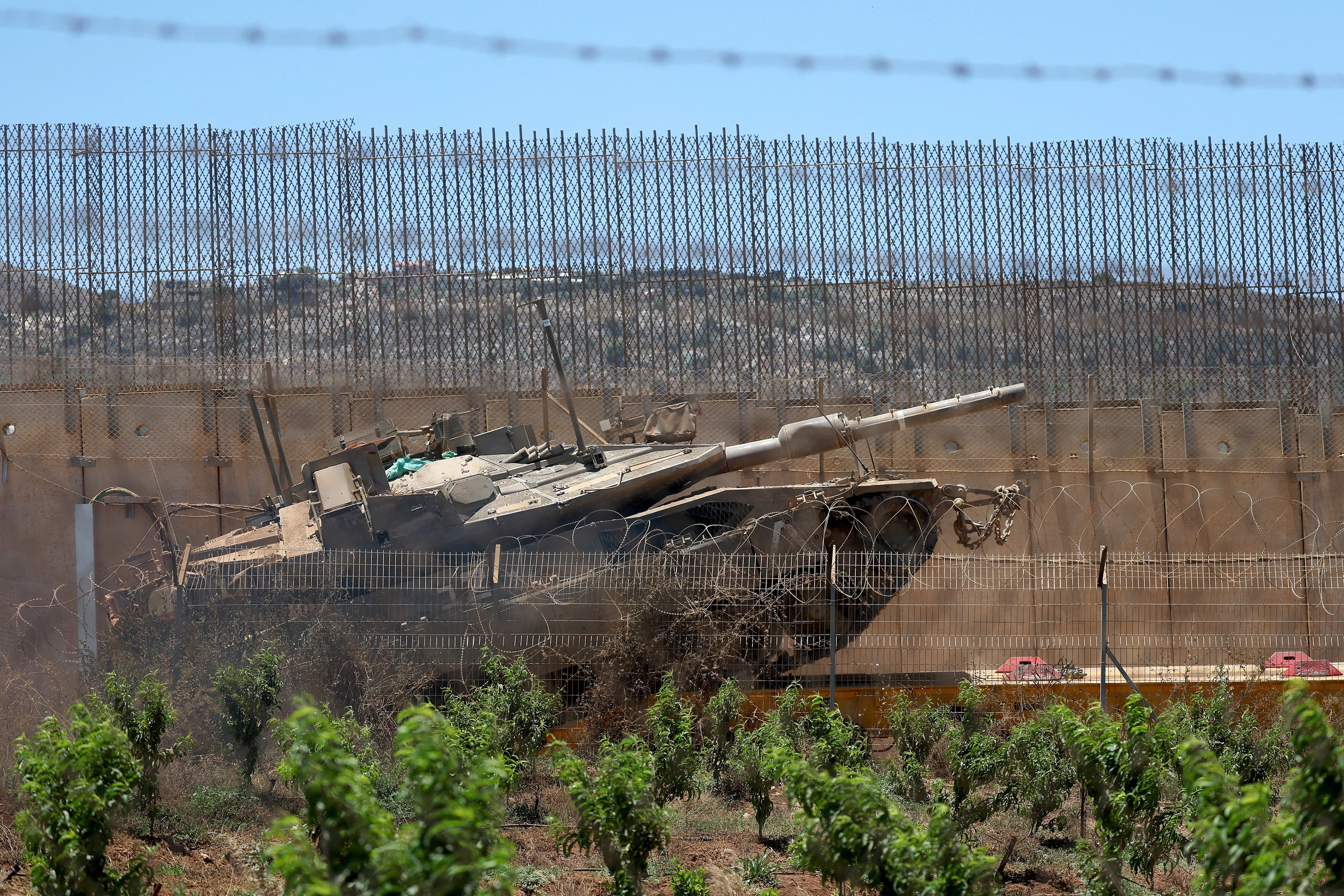 |
An Israeli army tank deployed along the border with Lebanon on 1/7. Photo: AFP |
"Bombing an airbase indicates that the Israeli military does not want the new Syrian government to possess any air force in the coming years", Kheder Khaddour, an expert at the Malcolm H. Kerr Carnegie Middle East Center, based in Beirut, Lebanon, observed.
Samy Akil, a senior advisor for Syria Report, also believes Israel intends to completely neutralize the Sharaa government's air capabilities, even if the remaining fighter jets are obsolete and pose no threat to Israel.
Moreover, analysts suggest Israel's airstrike likely sent a message to Turkey, a significant backer of the new Syrian government. Turkey currently maintains military forces in northern Syria to counter Kurdish militias.
"The Abu al-Duhur base is deep within Turkey's sphere of influence in northwest Syria", Akil stated.
Israel has often expressed concern and opposition to Turkey's expanding influence in Syria. According to Israeli media, Prime Minister Netanyahu has chaired security meetings discussing Ankara's role and consistently warned about the threat from Turkey, which possesses NATO's second-largest military after the US.
Former Israeli Prime Minister Naftali Bennett even called Turkey "the new Iran".
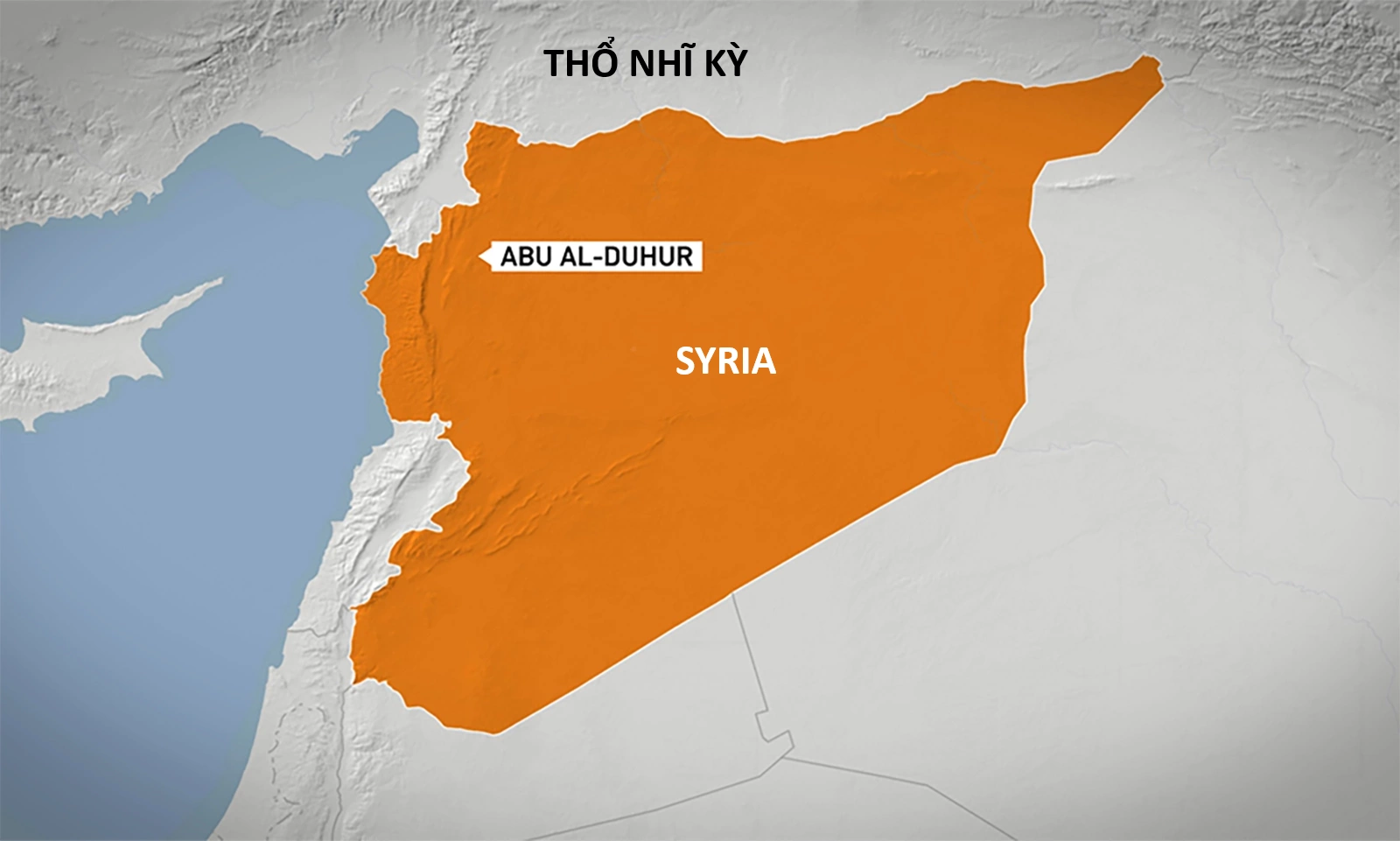 |
Location of Abu al-Duhur base in northwest Syria, near the Turkish border. Graphics: Al Jazeera |
"Israel appears to be drawing a red line regarding Syria's ability to rebuild its military infrastructure, particularly in areas where Turkish support could enhance Syria's air capabilities or restrict Israel's ability to operate in its airspace", Navvar Saban, an expert at the Arab Center for Modern Syria Studies, commented.
By Vu Hoang (based on Ynet News, Al Jazeera, AFP, Reuters)