Based on photos of the USS John F. Kennedy departing a port in Virginia, US military news site War Zone reported on 19/8 that the warship is fitted with Mk 95 fire control radar, primarily used for guiding RIM-162 ESSM medium-range air defense missiles.
The USS John F. Kennedy is the second vessel in the US Gerald R. Ford-class of supercarriers. Construction began in 2015, it was launched four years later, and is expected to be delivered in 2027. In contrast, the Mk 95 radar was developed by the US in the 1970s and equipped on Cold War-era aircraft carriers, including the Nimitz class.
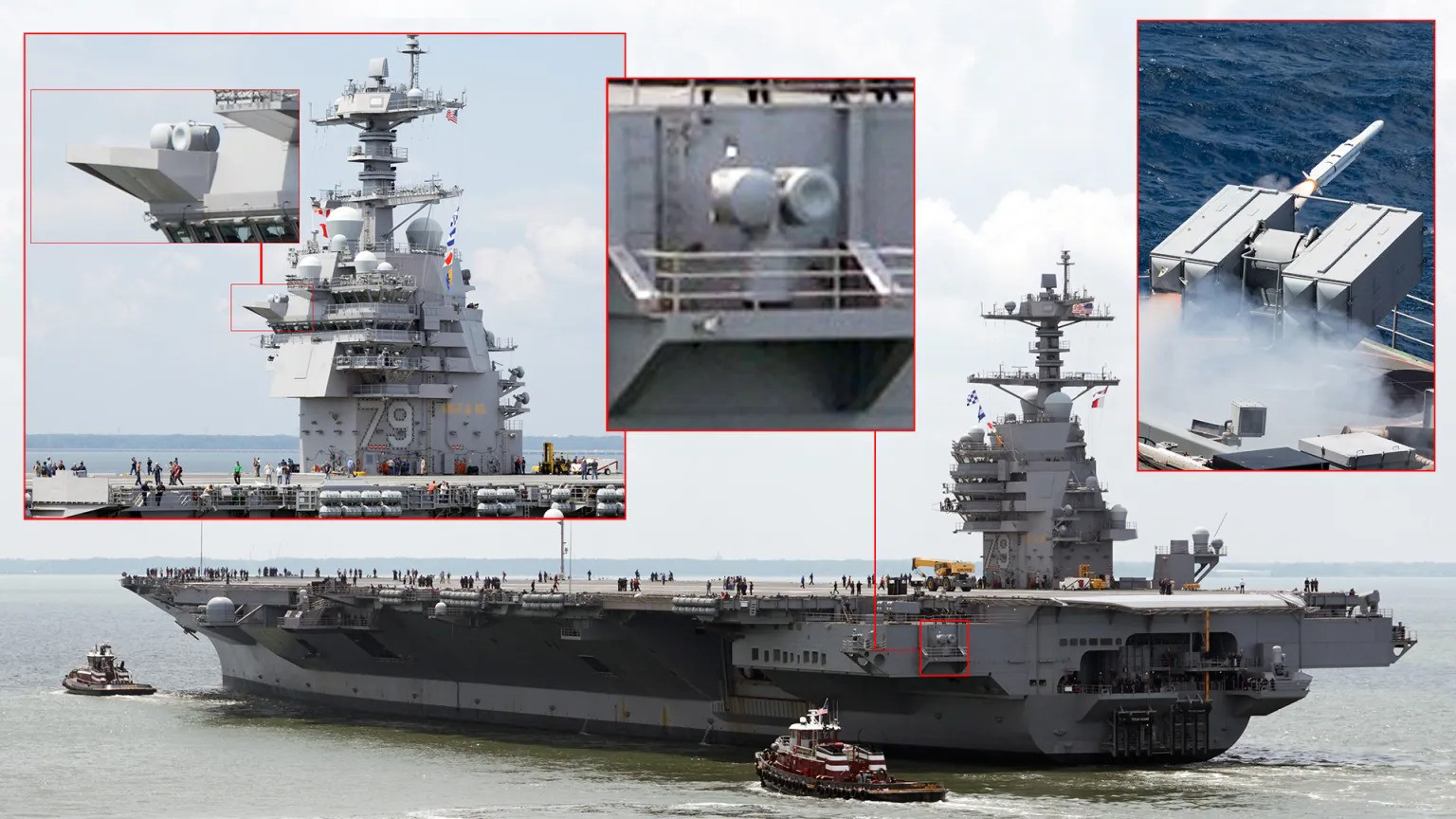 |
Two Mk 95 radars on the USS John F. Kennedy departing Newport News, Virginia on 12/8. Photo: HII
The Mk 95 was originally designed to support the RIM-7 Sea Sparrow air defense variant of the AIM-7 medium-range air-to-air missile, which was equipped on US fighter jets. All RIM-7 versions utilize semi-active radar homing, requiring the launching platform to have an illuminating radar to guide the missile to its target.
The RIM-162 ESSM is a significantly upgraded version of the RIM-7 series. The RIM-162 Block one variant still uses semi-active radar homing, while the Block two model employs both active and semi-active seekers.
The Mk 95 radar is currently equipped on many US Navy and allied naval vessels. Some versions also feature an additional camera channel to assist in target detection and tracking under complex conditions and electronic warfare jamming.
The US Navy tested ESSM missiles on the USS Gerald R. Ford in a video posted in 2021. Video: Youtube/Military Archive
Ford-class aircraft carriers still utilize illuminating radars for RIM-162 Block one missiles, as the US Navy maintains a large inventory, and to provide an additional guidance option for Block two munitions when necessary.
This mission was initially assigned to the Dual Band Radar (DBR), a key sensor for all Ford-class aircraft carriers. The DBR is composed of two separate radar arrays: the AN/SPY-3 X-band active electronically scanned array radar and the AN/SPY-4 S-band active electronically scanned array radar.
In a defensive scenario, the AN/SPY-3 scans the horizon, tracks targets with high precision, and guides RIM-162 interceptor missiles. Meanwhile, the AN/SPY-4 radar can cover a broad airspace, enhancing its ability to search for and track targets at long distances.
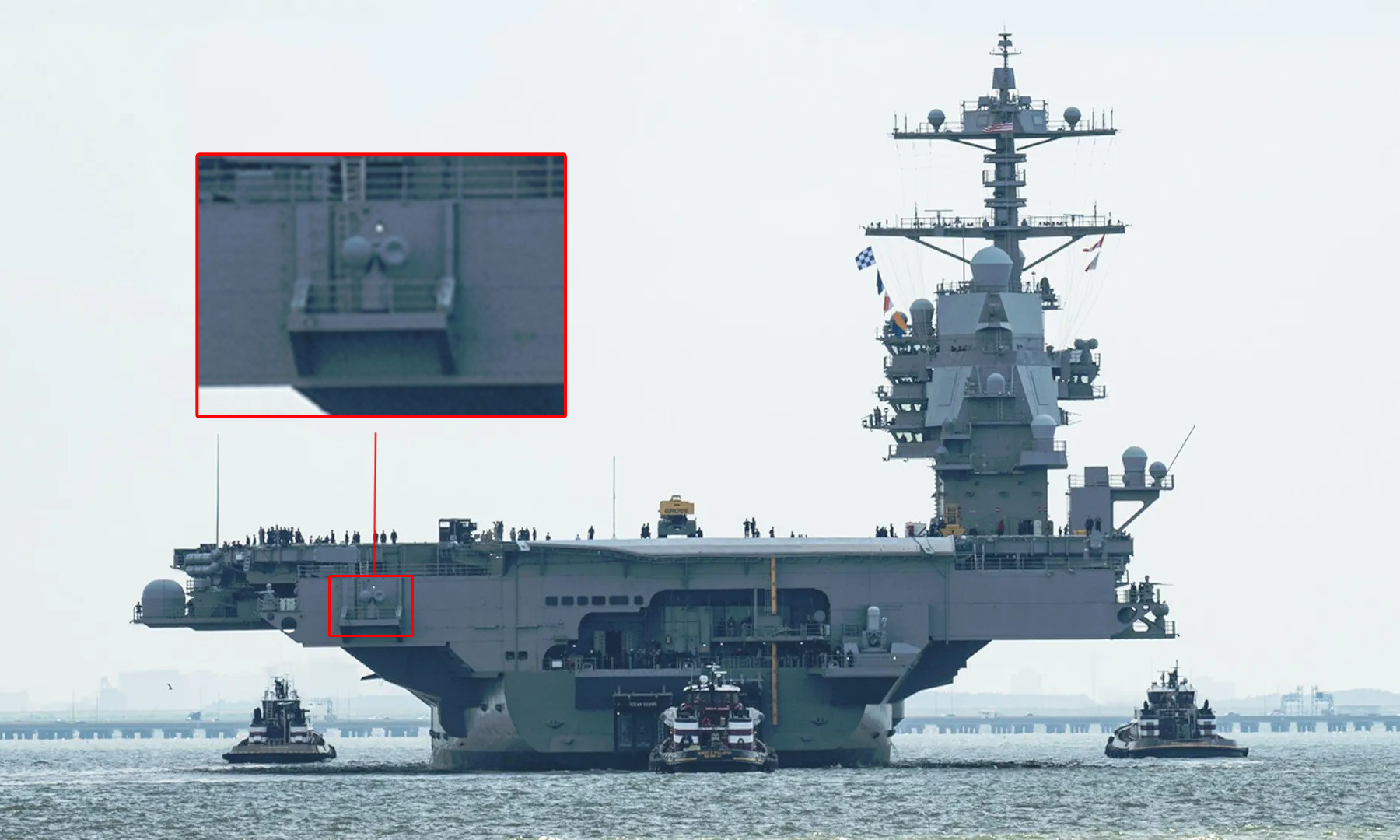 |
The Mk 95 radar on the USS John F. Kennedy as the warship departed Newport News, Virginia on 12/8. Photo: HII
The DBR also handles functions such as air traffic control, reducing the number of separate radars compared to Nimitz-class carriers and allowing for a significant reduction in the size of the command island on Ford-class aircraft carriers.
Despite these benefits, and its deep integration into the design of Ford-class warships, the DBR proved to be an overly complex and unreliable system.
"I think I made a mistake and am responsible for at least one billion USD in cost overruns because I wanted to reduce the number of radars," admitted retired Colonel Tal Manvel, former Director of the US Navy's Future Aircraft Carrier Program, in 2015.
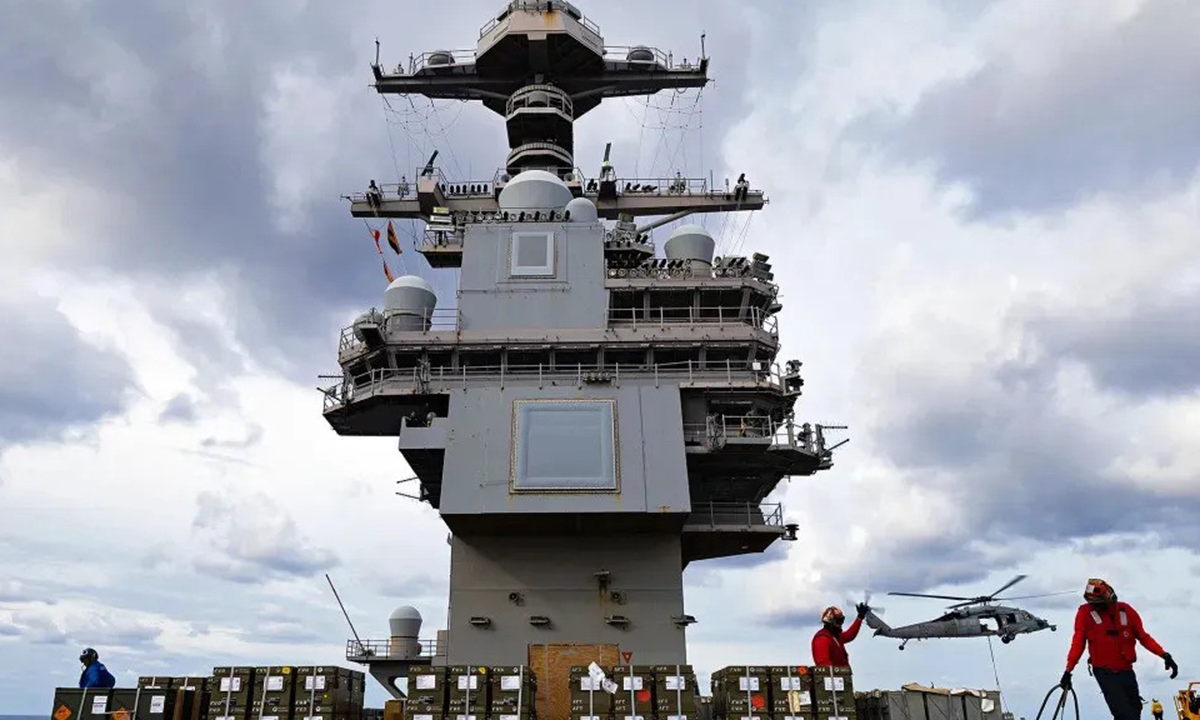 |
Two antenna arrays of the DBR on the USS Gerald R. Ford aircraft carrier. Photo: US Navy
The US Navy subsequently decided to replace the DBR on Ford-class aircraft carriers, primarily with the AN/SPY-6(V)3 radar, which features three antenna arrays instead of six as with the DBR. Additionally, Ford-class warships are being fitted with the AN/SPQ-9B search radar and the Mk 9 Tracking Illuminator System, which integrates the Mk 95 radar, to provide functions originally intended for the DBR.
US industrial group HII announced on 15/8 that its Newport News shipyard had completed all sea trials for the USS John F. Kennedy aircraft carrier. The warship will then undergo US Navy acceptance tests before its commissioning.
Pham Giang (According to War Zone)