Minister of Economy, Trade and Industry Ryosei Akazawa announced on 7/7 that Japan is coordinating with G7 members and other nations to "ban the export of a range of items under sanctions targeting Russia, with jet fuel included in this list".
Akazawa stated the ban applies to aviation fuel exports to Russia via a third country, as well as ship-to-ship transfers at sea. "We will continue to strictly control exports in cooperation with other nations, while monitoring the international situation," he said.
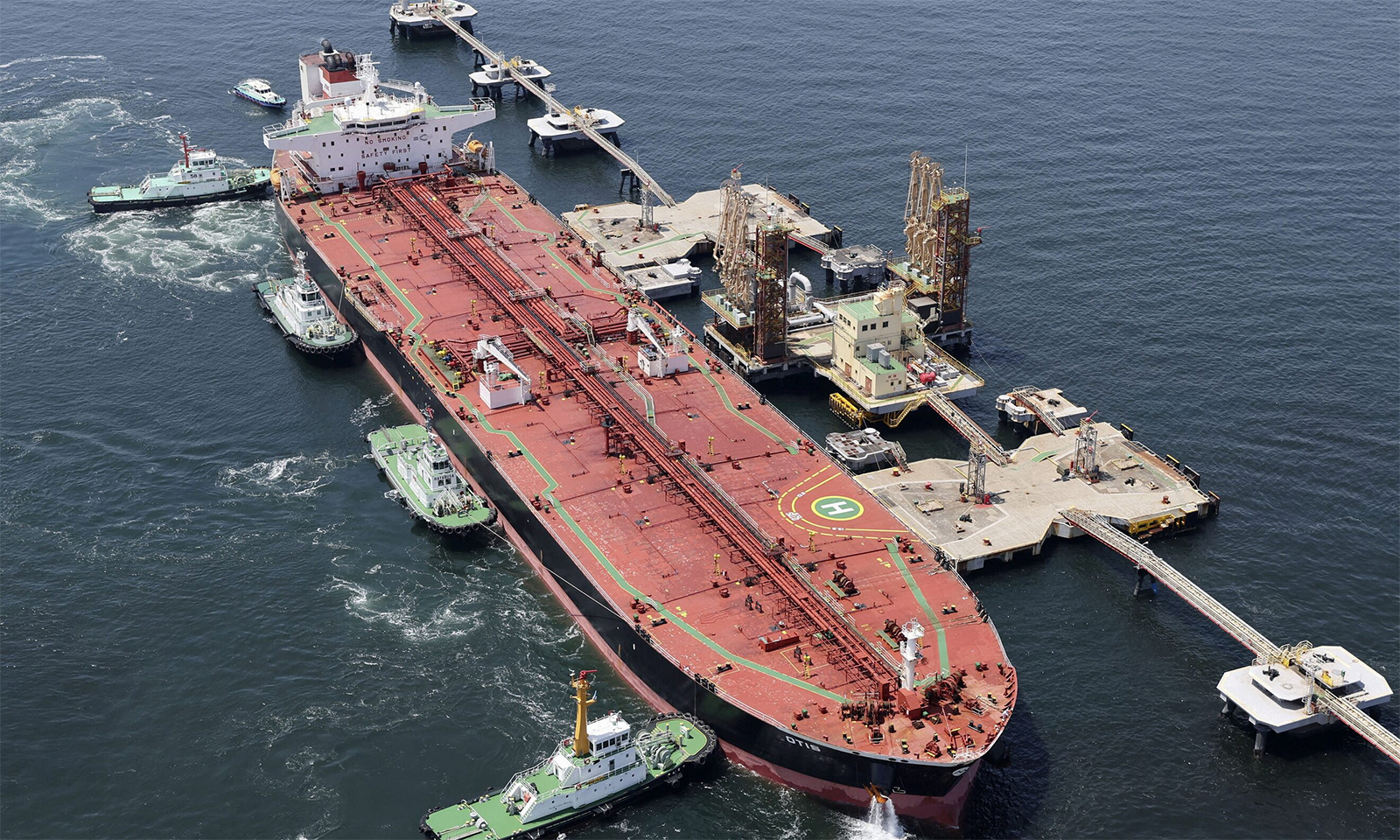 |
An oil tanker docked at a port in Chiba, inside Tokyo Bay, Japan on 26/4. *Reuters*
Minister Akazawa's statement followed a Reuters report on 3/7, which cited three sources familiar with the matter, indicating that at least 200,000 barrels of aviation fuel were expected to be loaded from Chiba port, Japan, in the first half of July, destined for South Korea.
The cargo would then be transferred to another vessel, potentially directly between ships off South Korea's Yeosu port, before proceeding to Russia. The ultimate destination of this aviation fuel remains unclear.
Russia and South Korea have not commented on the information.
A shipment of 22,000 barrels of jet fuel was reportedly transferred from Yeosu, South Korea, to Vladivostok port, Russia, in 2/2022, according to Kpler vessel tracking data.
Russia is facing fuel shortages following Ukrainian attacks on its oil refineries and storage facilities. Russia's jet fuel exports this year have decreased to about 13,000 barrels per day, primarily to Turkey. Last year, this figure was 30,000 barrels per day.
Russian officials banned jet fuel exports starting in June, a shortage that has driven prices to record levels. Additionally, Russia is experiencing a scarcity of regular gasoline, leading to increased imports from Belarus, purchases from India, and requests for assistance from Kazakhstan.
Nguyen Tien (According to Reuters, AFP, AP)