Japanese Defense Minister Shinjiro Koizumi stated on 10/12 that China's insufficient information regarding the Liaoning aircraft carrier strike group's exercise southeast of Okinawa led to a dangerous encounter. Koizumi confirmed China had notified Japan about the drills but criticized the lack of specifics. "China did not provide the Japan Self-Defense Forces (JSDF) with specific information on the scale and area where aircraft from the Liaoning would train. This meant we lacked data to prevent danger," Koizumi said.
Chinese media later released a recording of a liaison officer from the destroyer Nanchang informing the Japanese side about the training. The officer stated, "This is warship number 101 of the Chinese navy; our formation is conducting planned flight training." A liaison officer on the destroyer JS Teruzuki acknowledged, "Chinese warship, this is Japanese navy ship number 116; we have received your information." Japan's Ministry of Defense confirmed that the JS Teruzuki was assigned to monitor the Liaoning strike group.
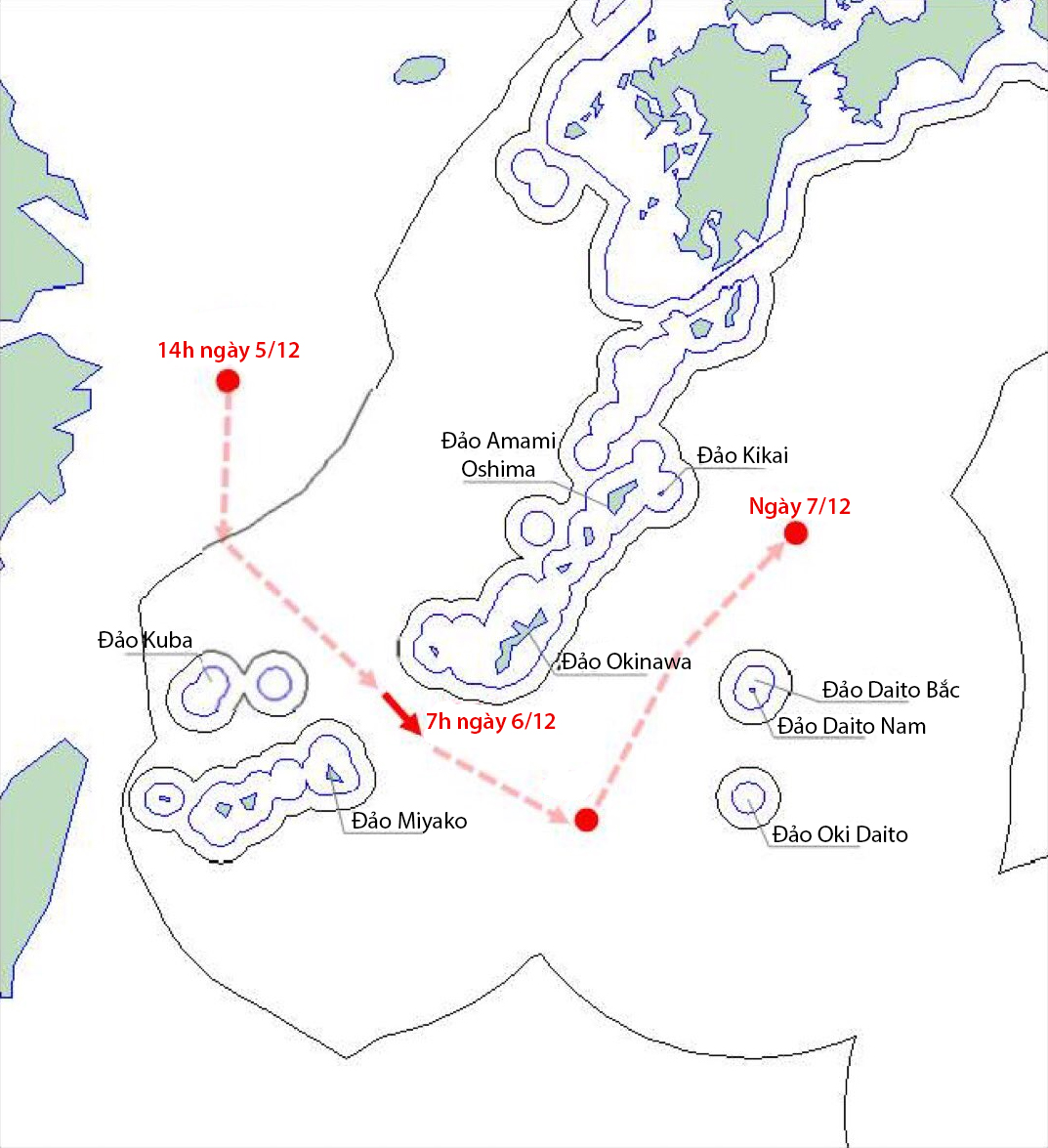 |
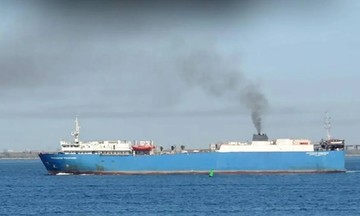
Movement direction and position of the Liaoning aircraft carrier group (red dots) from 5-7/12. Graphics: Japan Ministry of Defense |
Chinese forces contacted Japan by radio twice on 6/12, at 14:10 and 14:28. They announced that training would start at 15:00, last approximately 6 hours, and occur primarily south of the Liaoning aircraft carrier. The Teruzuki confirmed receipt of this information.
Despite these communications, when the training commenced, two Japanese F-15J fighter jets approached the Liaoning strike group, encountering J-15 fighter aircraft launching from the carrier. Japan subsequently alleged that the Chinese fighter jets activated their fire control radar and locked onto the F-15Js. China refuted this claim, stating their J-15 fighter aircraft only used their surveillance radar.
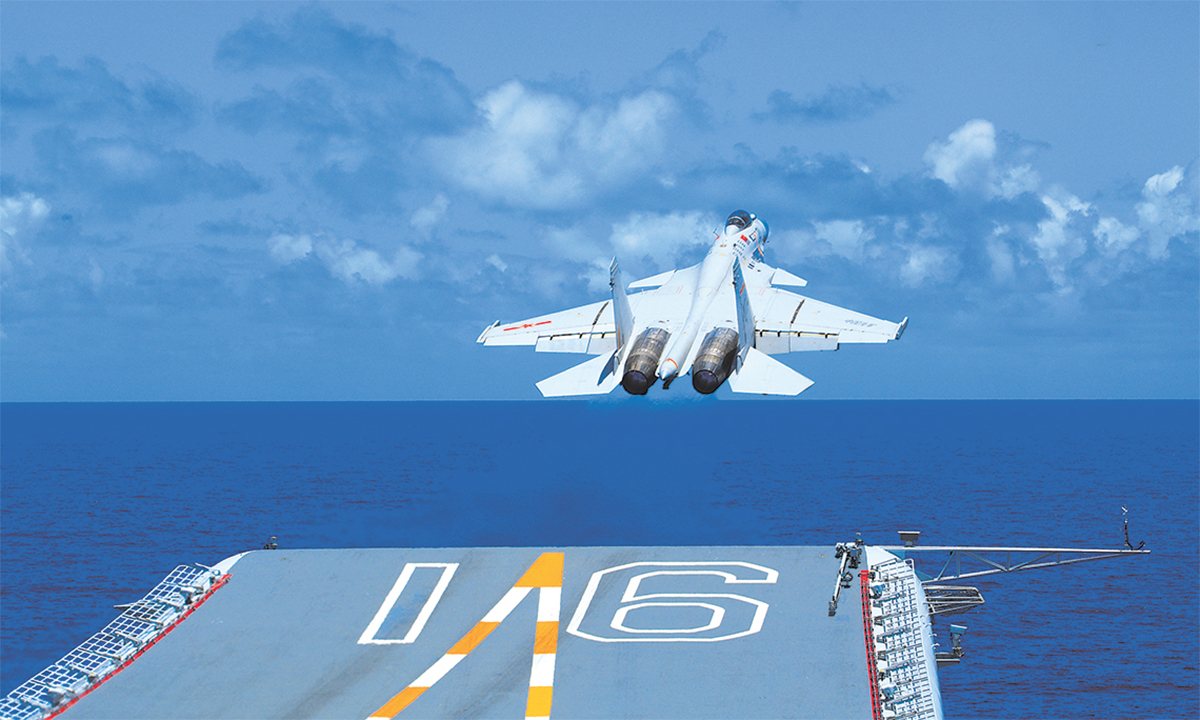 |
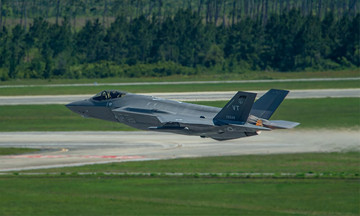
J-15 carrier-based fighter jet taking off from the Liaoning aircraft carrier in 4/2020. Photo: PLA |
On 10/12, Japan's NHK reported that Chinese fighter jets had locked onto F-15s at distances of 52 and 148 km. Japanese officials are investigating China's intentions in this incident. China's media, however, asserted that Japanese fighter jets "deliberately intruded into the exercise area, thus entering radar coverage and being detected." Chinese aircraft also reportedly received radar signals from the Japanese fighter jets. Japan's Defense Minister did not comment on the recording during his press conference.
This encounter near Okinawa occurred amid escalating tensions between China and Japan. These tensions intensified following remarks by Prime Minister Sanae Takaichi last month concerning Taiwan. While the Japanese Prime Minister later softened her tone to de-escalate, China rejected this and continued to demand a retraction of her statements.
Nguyen Tien (According to Kyodo, SCMP, AFP, CCTV)