Japanese officials reported six hospitalizations last weekend at the Hadaka Matsuri, a nude festival held at Saidaiji Temple in Okayama city, western Japan. The incident sparked debate as almost every year, people are injured at the 500-year-old festival, where thousands of men, nearly naked in loincloths, jostle to snatch sacred charms.
The accident occurred shortly after 10 PM on 21/2/2024, when the temple extinguished the lights in the main hall and threw two wooden shingi charms into the darkness. When the lights returned, the crowd surged forward, searching for the charms to become the "lucky person for the whole year". No one knew the exact location of the two charms, which could only be located by their fragrant wooden scent.
An estimated 10,000 men in loincloths were present in the main hall that evening, competing for the wooden charms. Six people were pulled from the crowd after collapsing during the scramble.
One witness described the scene as "people falling like an avalanche". Emergency services used defibrillators and performed cardiopulmonary resuscitation before transporting the victims to the hospital. Three people have since been discharged, while three others remain in a coma.
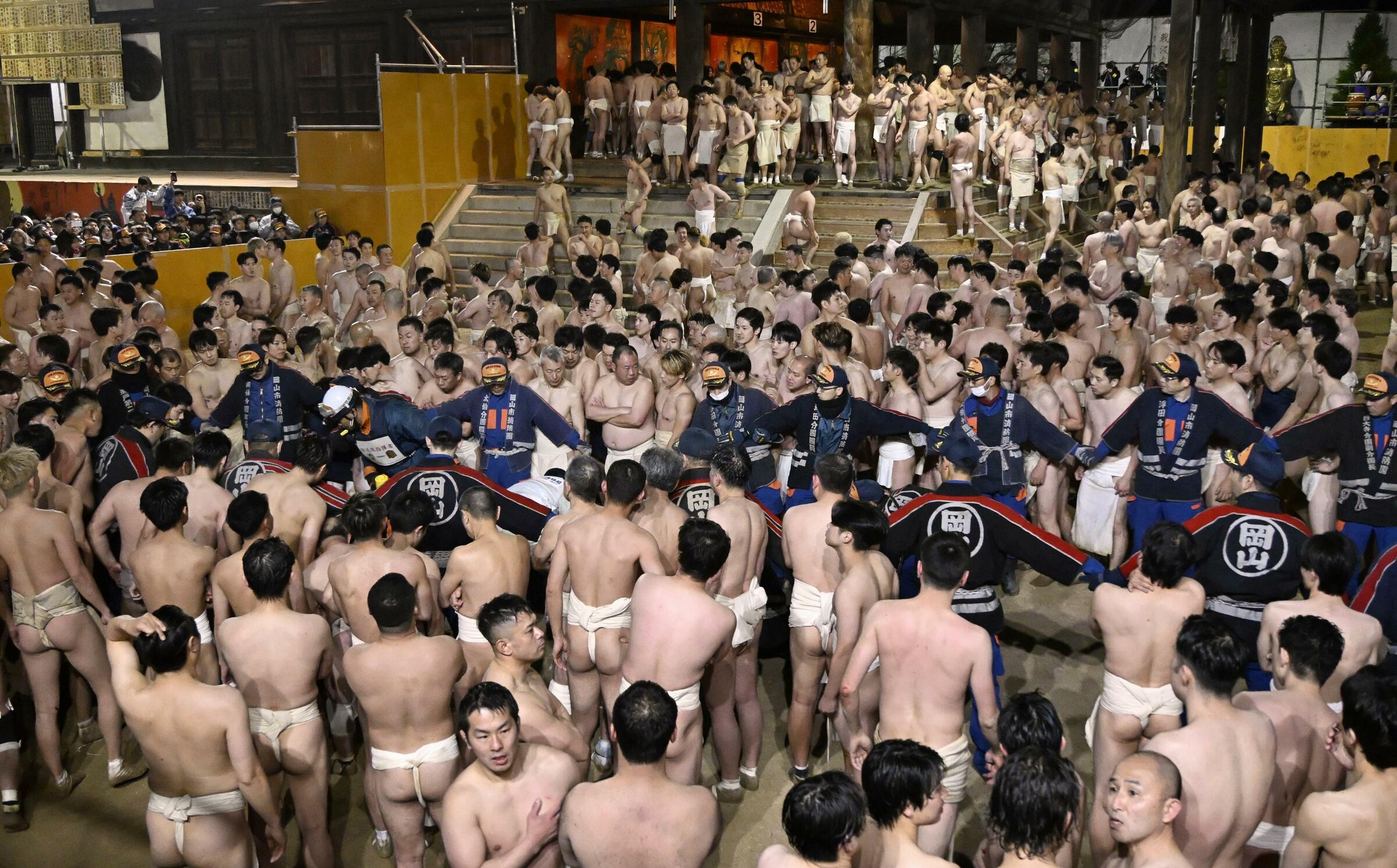 |
Festival participants in loincloths prepare to compete for charms at Saidaiji Temple, Okayama, 2/2024. Photo: Reuters |
The organizers acknowledged that three people falling into a coma was unprecedented and could jeopardize the future of the event, which is one of Japan's three large and famous nude festivals held at the beginning of the year. They announced they would review and consider modifying safety regulations, adding that investigating the cause of the accident was their top priority.
An anonymous organizing committee member stated the festival might be forced to cancel in the coming years. The organizers declined further comment but mentioned they had conducted alcohol checks, as some participants drink to ward off the cold.
According to SCMP, a scholar indicated that Japanese people are risk-averse, so the accident might compel organizers to limit the number of participants or enhance safety measures.
On social media, Japanese citizens are divided between preserving tradition and tightening safety.
"I cannot understand the organizers' thinking in continuing the festival despite previous fatalities," one person commented on Fuji News. In 2007, the festival recorded one fatality, prompting officials to add supplementary safety regulations, including a ban on wearing jewelry.
"Whether it's a local festival or a religious ritual, this is an important occasion for energetic young people to relieve stress. I don't want to see them disappear; I think the organization methods need to be reviewed," another person expressed.
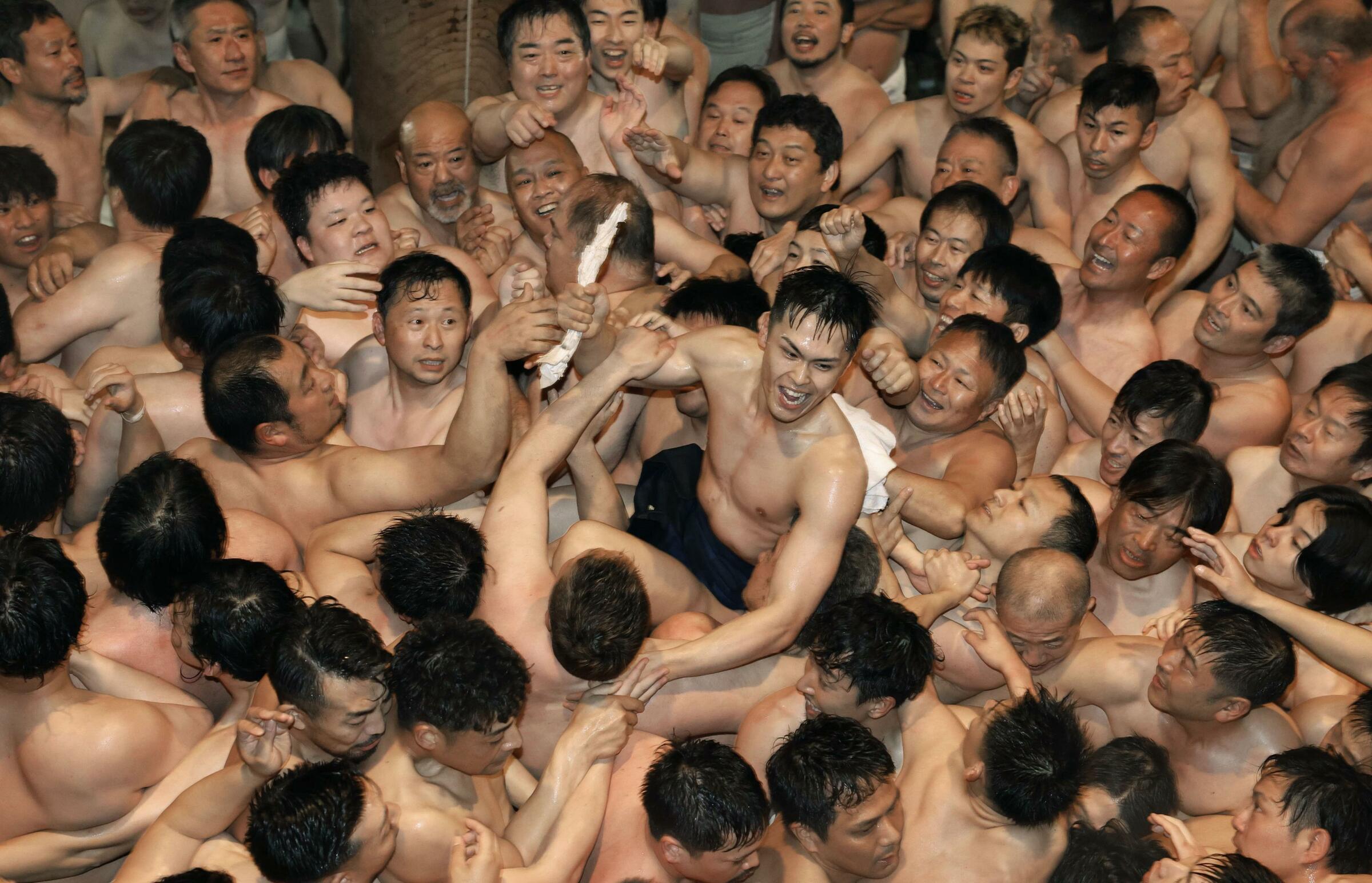 |
Crowd scrambling for sacred charms at the nude festival at Saidaiji Temple, Okayama, 2/2024. Photo: Reuters |
"The festival is a familiar 'rendezvous point' for the local area. People participate knowing it's dangerous. It's a fierce battle, but also an important event that enlivens the region. I worry this will affect future festivals," an Okayama resident remarked.
The nude festival at Saidaiji Temple, Okayama, officially named Saidaiji Eyo, originated in 1510. Men who purchase loincloths and socks at the temple can participate, with the only condition being to keep their minds and bodies pure, aligning with the religious significance of the ritual.
Saidaiji Eyo is one of the three largest nude festivals in Japan, alongside festivals at Kokusekiji Temple, Iwate prefecture, and Kuronuma Shrine, Fukushima prefecture, which have existed for over 1,000 years.
The last official nude festival at Kokusekiji Temple, Iwate prefecture, was held in 2024. Organizers decided to discontinue it because the temple's community of followers had dwindled to only 9 households, insufficient personnel to organize, leading to widespread regret. In Japan, Buddhist monks and nuns are permitted to marry and have children. Many Japanese Buddhist temples are currently managed by families of head priests, inherited through generations.
Duc Trung (According to SCMP, Mainichi, Sanyo News)