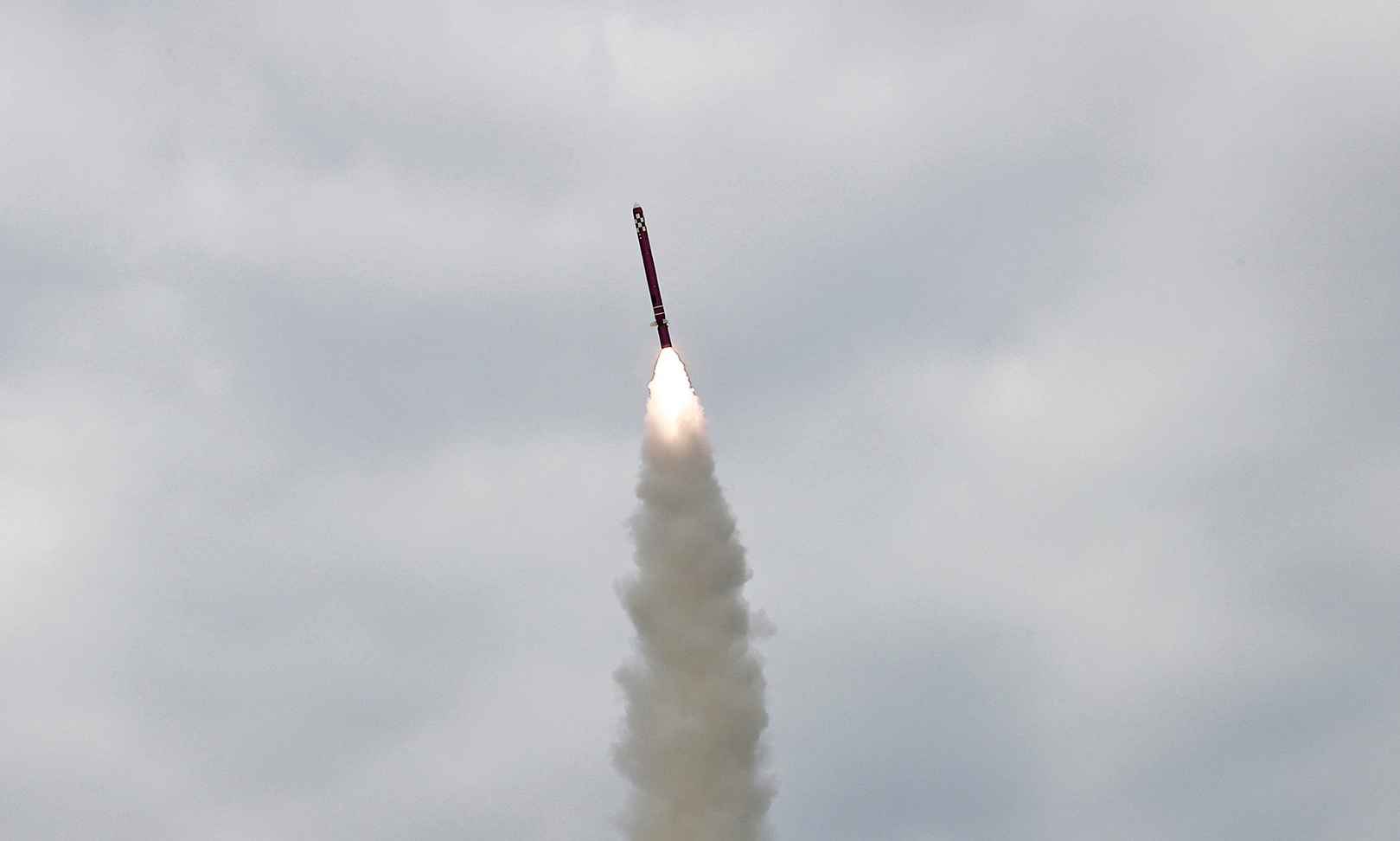
"They have developed missiles that can threaten Europe and our bases abroad. And they are working to build missiles that will soon reach the US," President Donald Trump stated regarding Iran during his State of the Union address to Congress on 24/2.
Trump did not provide specific details or evidence about these Iranian missiles but offered an explanation for the significant US military buildup around Iran.
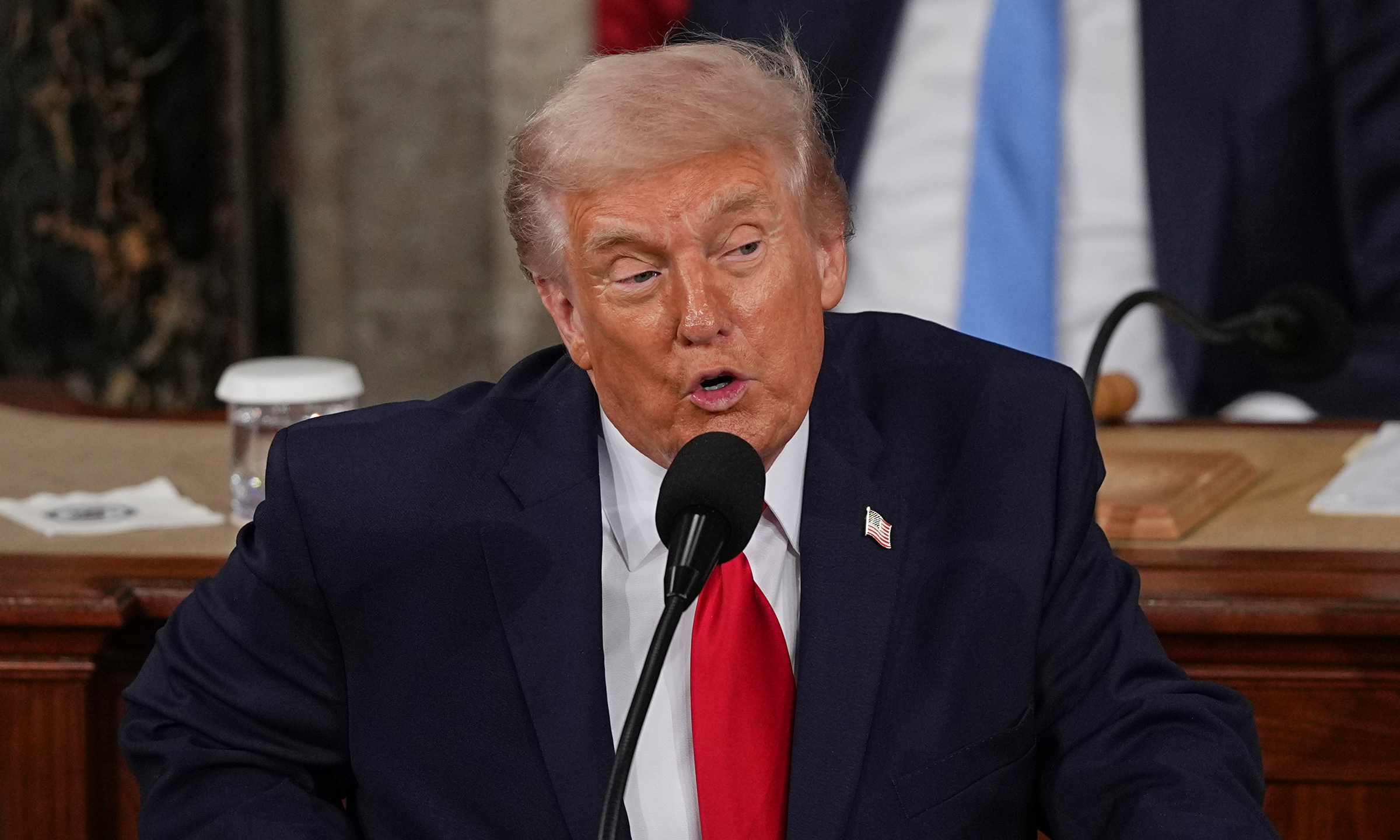 |
US President Donald Trump delivers his State of the Union address to Congress on 24/2. Photo: AP |
"They want a deal, but we have not yet received a commitment that they will never possess nuclear weapons," Trump said, in a brief mention of Iran.
The US President reiterated his desire to end Iran's nuclear program through diplomacy, while emphasizing that Tehran would never be allowed to possess atomic weapons. He also highlighted US military strength.
"No nation should doubt the resolve of the American people," President Trump stated. "We have the strongest military on Earth."
Iran has repeatedly declared that it does not seek to possess atomic bombs. "Iran will never develop nuclear weapons under any circumstances," Iran's foreign minister emphasized on 24/2.
According to the US Congressional Research Service, Iran possesses short and medium-range ballistic missiles capable of striking targets up to 3,000 km away, sufficient to reach many areas in the Middle East and parts of Europe.
The US Defense Intelligence Agency assessed in 2025 that Iran could develop intercontinental ballistic missiles capable of operation within the next 10 years if it "decides to pursue this capability," though it did not specify whether Tehran had made such a decision.
The Center for Strategic and International Studies (CSIS) reported that Iran had approximately 3,000 ballistic missiles before the conflict with Israel erupted in June 2025, with nearly two-thirds having a range exceeding 1,600 km.
Iran's longest-range missile can hit targets up to 2,000 km away, according to CSIS. The distance from the continental US to Iran's westernmost point is about 10,000 km.
Reuters news agency reported that Iran has long maintained a self-imposed policy of not developing and producing missiles with a range exceeding 2,000 km, considering this sufficient to reach Israeli territory and ensure deterrence to protect the country.
However, General Mohammad Jafar Asadi, deputy commander of Iran's Khatam al-Anbiya Central Command, stated in October 2025 that the country could increase its missile range "to the necessary level," seemingly indicating a removal of the self-imposed limit.
During last year's conflict, Israel attacked missile launchers deployed in western Iran, forcing Tehran to use units stationed in the east for retaliation, which required missiles with a range greater than 2,000 km.
Israeli Prime Minister Benjamin Netanyahu said in October 2025 that Iran was building missiles with a flight range of 8,000 km, nearing major US cities.
Iranian media announced on 5/2 that Khorramshahr-4, one of the country's modern ballistic missile models, had been deployed at an underground base of Iran's Islamic Revolutionary Guard Corps (IRGC).
Khorramshahr-4 is advertised as having a 2,000 km range and carrying a 1,500 kg warhead, possessing the ability to penetrate sophisticated air defense systems.
By Pham Giang (Based on reports from NBC News, AFP, Reuters)