Nepal Prime Minister Balendra Shah has called for urgent global climate action following a devastating flash flood that originated from a glacier collapse near the China-Nepal border. The disaster, which he directly linked to climate change, claimed at least 939 lives and left nearly 4,500 people missing.
"The flood on the Bhote Koshi river in Rasuwa was not a normal flood. This is one of the region's major disasters, triggered by an avalanche and ice collapse in the Himalaya region," Shah stated in a social media post on the evening of 31/8. He emphasized the escalating risks faced by the Himalaya due to climate change, stressing the need for constant vigilance in the region.
While the precise cause of the ice collapse remains unclear, scientists worldwide agree that climate change is accelerating glacier melt, increasing the likelihood of such catastrophic events. The Himalaya, often called the "roof of the world" and the planet's highest mountain range, is experiencing an accelerated melting rate as global temperatures continue to rise.
Despite contributing very little to global warming gases, primarily emitted by industrialized and wealthy nations, Nepal bears a heavy burden from climate change impacts. Shah highlighted the imperative for Nepal to raise this issue on the international stage. "It is time for us to speak out strongly to the international community about the disasters we are suffering due to climate change," he urged.
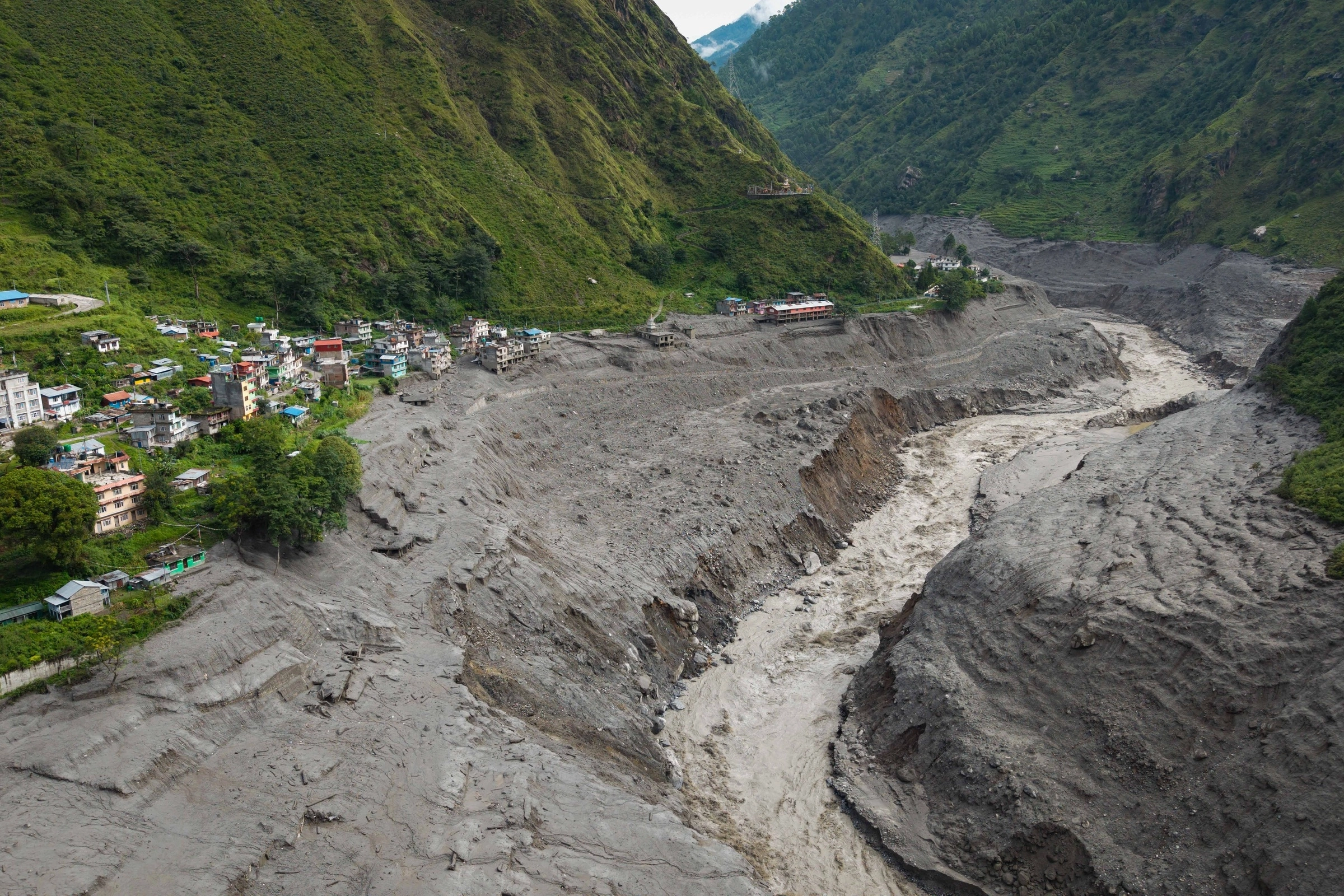 |
Syabrubesi village in Rasuwa district, Nepal, along the Trishuli River after a flash flood near the Nepal-China border, 31/8. *Photo: AFP* |
The glaciers of the Himalaya and Hindu Kush mountain ranges are a critical water source for approximately 240 million people living in mountainous areas. Furthermore, they sustain an additional 1.65 billion people residing in downstream river basins across South and Southeast Asia.
International leaders have also echoed these concerns. United Nations Secretary-General Antonio Guterres, during a 2023 visit to Nepal, warned about the rapid glacier melt in the Himalaya, stating that "the roof of the world is collapsing." Following the flash flood disaster on 26/8, United Nations climate chief Simon Stiell described it as a "devastating reminder of the vulnerability of these mountain environments."
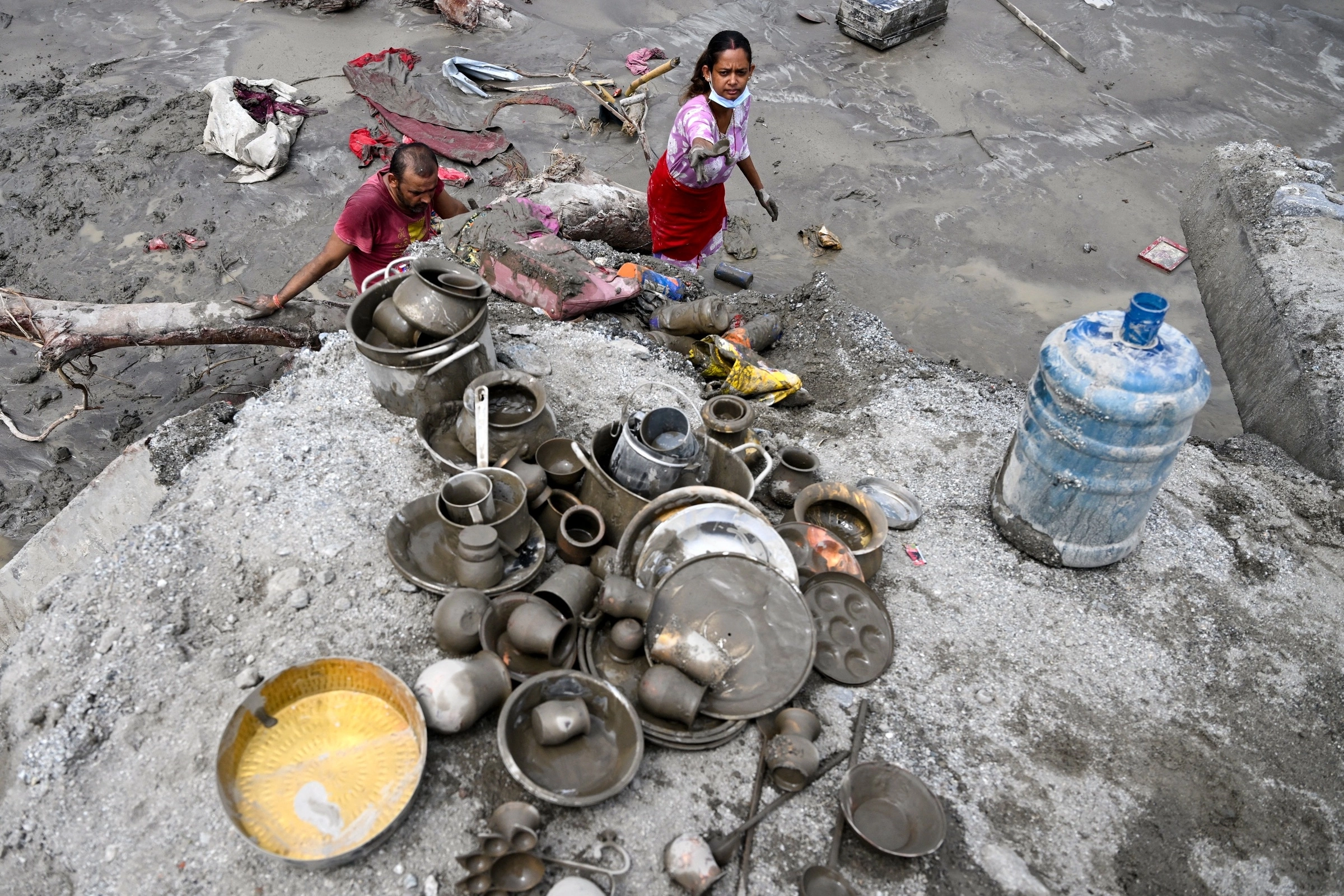 |
Residents salvaging belongings from mud after a flash flood in Devighat, Nuwakot district, Nepal, 31/8. *Photo: AFP* |
Nepal's economy, already facing significant pressures, now confronts additional challenges due to limited resources for responding to large-scale disasters. The Nepal government estimates that reconstruction costs could run into billions of USD.
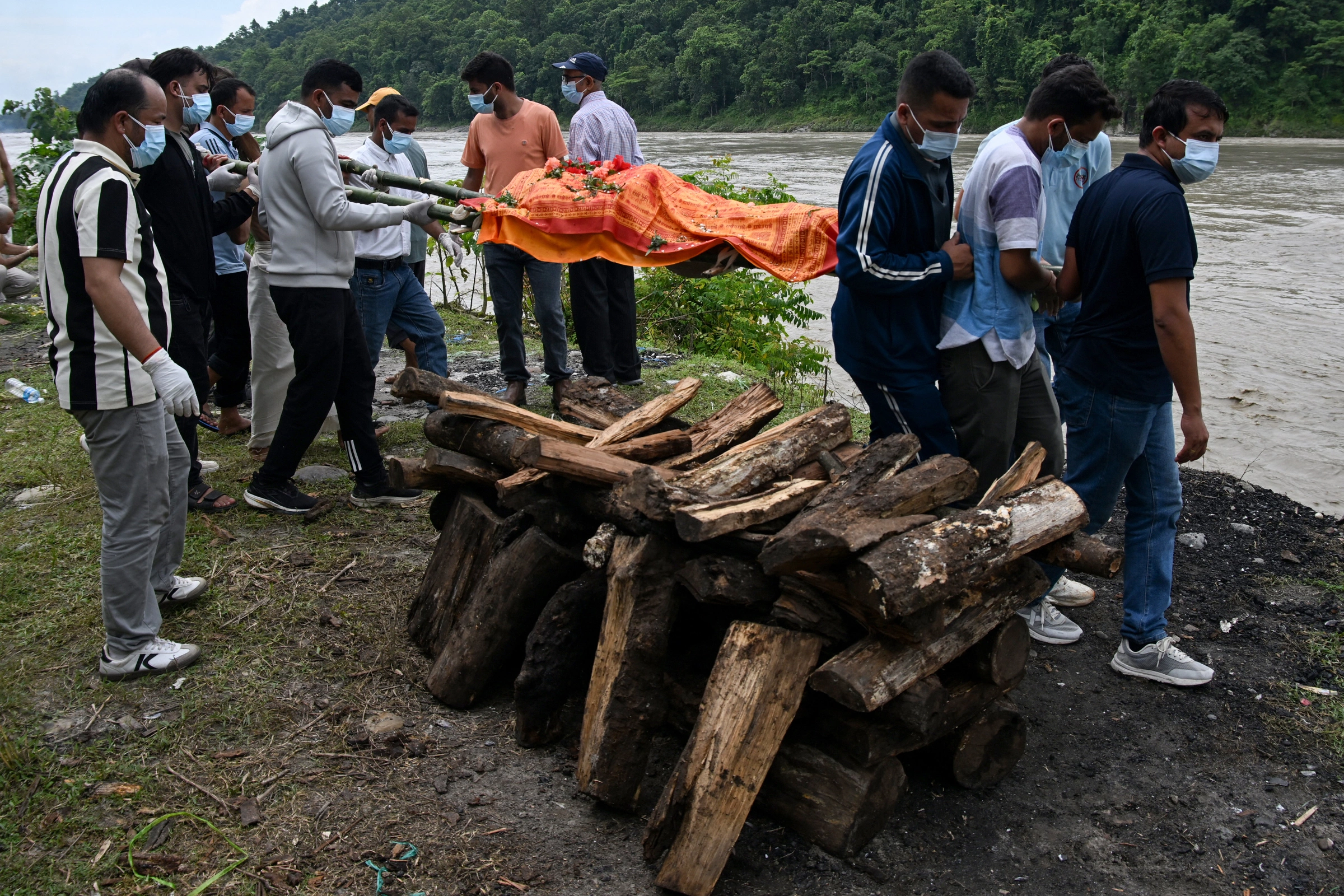 |
Relatives and friends cremate the body of victim Ayush Khadka after a flash flood in Chitwan district, Nepal, 31/8. *Photo: AFP* |
By Hong Hanh (AFP, The Hindu)