Rescue operations are continuing with support from foreign teams in the hydropower tunnels, Shanti Mahat, spokesperson for Nepal's National Disaster Risk Reduction and Management Authority (NDRRMA), said today. "They continue their work despite many difficulties. A significant amount of accumulated debris and liquid mud remains".
In some cases, finding an entrance has been a challenge, and even when found, the tunnels could have collapsed or be blocked inside.
Rescue workers recovered at least 3 bodies from two tunnels on 31/8 and penetrated hundreds of meters into other tunnels, but were forced to stop due to mud and earth obstructions.
"We have accessed all the tunnels, but advancing further inside is very difficult due to rocks and liquid mud", Energy Minister Biraj Bhakta Shrestha told reporters on 1/9.
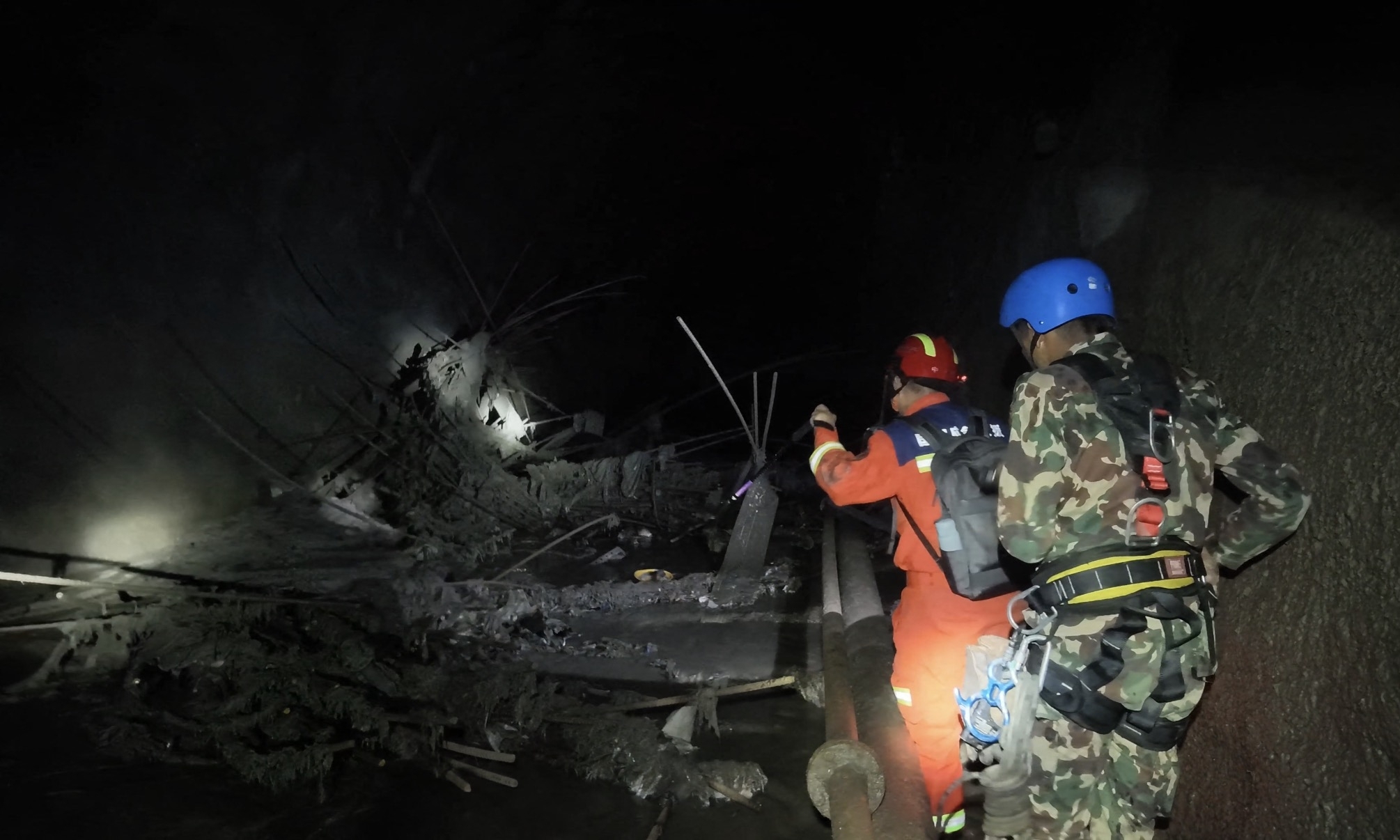 |
Chinese and Nepal rescue forces collaborate on a search and rescue operation in a tunnel near Bidur town, Nuwakot district, Nepal, on 30/8. *Photo: AFP* |
The Nepal government initially stated that they believed over 100 workers might still be alive inside multiple tunnels. Those trapped are among 639 hydropower workers missing since a flash flood struck the border region between Nepal and China on 26/8.
The Nepal Electricity Authority reported that 11 hydropower plants and one solar power plant, with a total capacity of 431,1 megawatts, have ceased operations, accounting for about 10% of the country's existing power generation capacity. Additionally, 15 other power projects under construction, with a total designed capacity of up to 470 megawatts, also suffered damage.
After many days of searching at shelters and morgues, relatives of some missing individuals have lost hope and begun to perform rituals, burning straw effigies in accordance with Hindu custom.
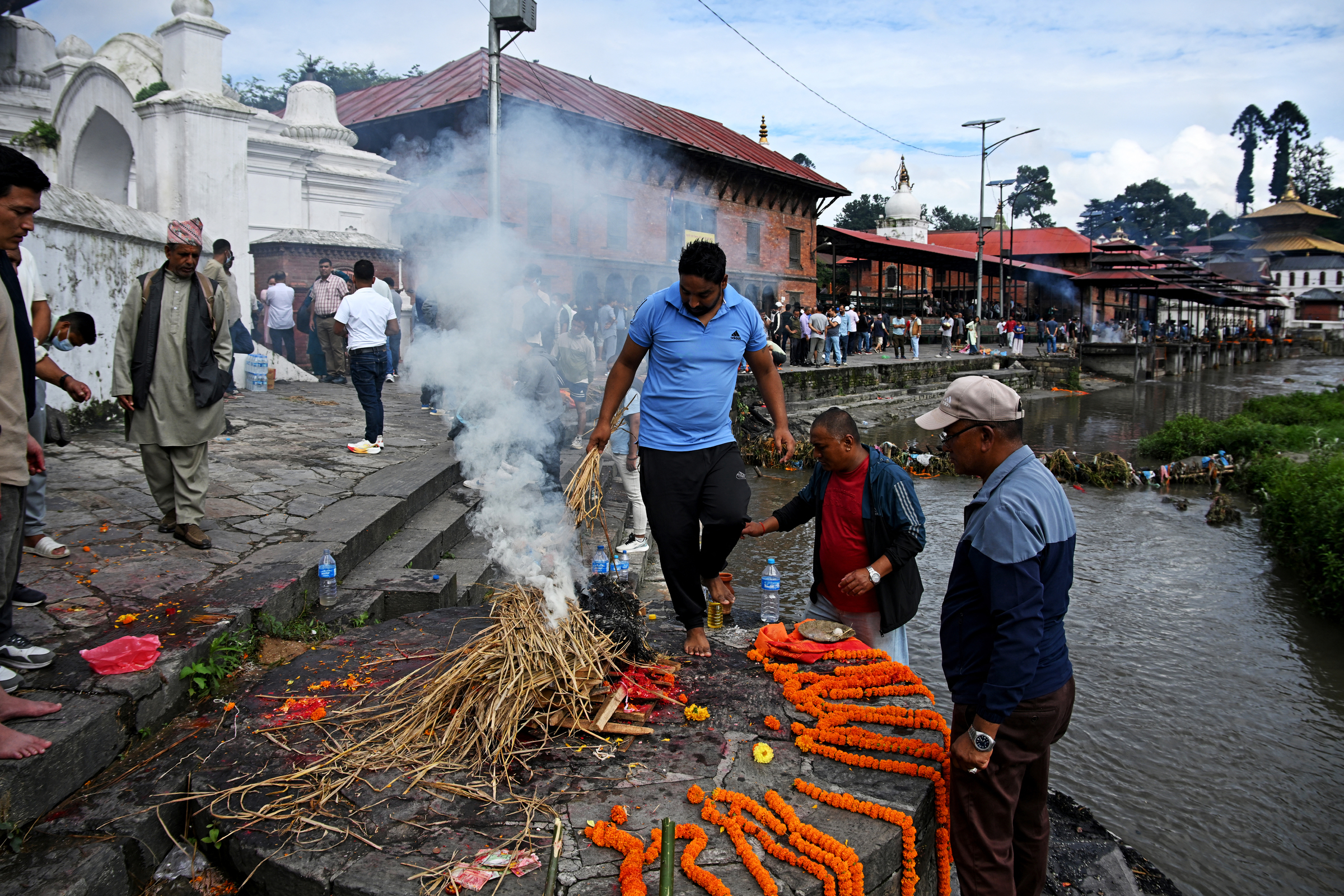 |
Relatives of victims missing in the Nepal flash flood cremate effigies in Hindu rites during symbolic funerals at Pashupatinath temple in Kathmandu on 2/9. *Photo: AFP* |
"We must do this to release his soul, so he may find peace and tranquility wherever he is", Dolma Newar Tamang said at her husband's funeral.
When the disaster occurred, her husband was on his way to China. "I saw the news and immediately called him", she recounted. "I called repeatedly, but he didn't answer".
Due to overwhelmed morgues in Nepal, authorities were compelled to conduct mass burials for hundreds of unidentified bodies after collecting DNA samples.
Nepal reported finding 1,114 bodies as of 2/9, while 3,916 people remain missing. Chinese state media recorded 16 people dead and 546 missing in China. Thus, the total number of dead and missing on both sides of the border stands at 1,130 and 4,462, respectively.
Over 800 foreigners from over 30 countries are among the missing. They include tourists trekking in the Himalayas and Hindu pilgrims en route to the sacred Mount Kailash in Tibet.
By Vu Hoang (AFP, Reuters, AP)