On 9/4, US President Donald Trump's administration filed documents with the federal Court of Appeals in Washington, requesting to overturn a ruling by district court judge Richard Leon regarding the ballroom construction project in the White House's East Wing.
On 31/3, Judge Leon granted a request from the National Trust for Historic Preservation (NTHP), issuing a temporary injunction to halt construction of the ballroom project. The judge concluded that the Trump administration's destruction of the East Wing in 10/2025 was unlawful, and construction of the replacement ballroom could only resume with congressional approval.
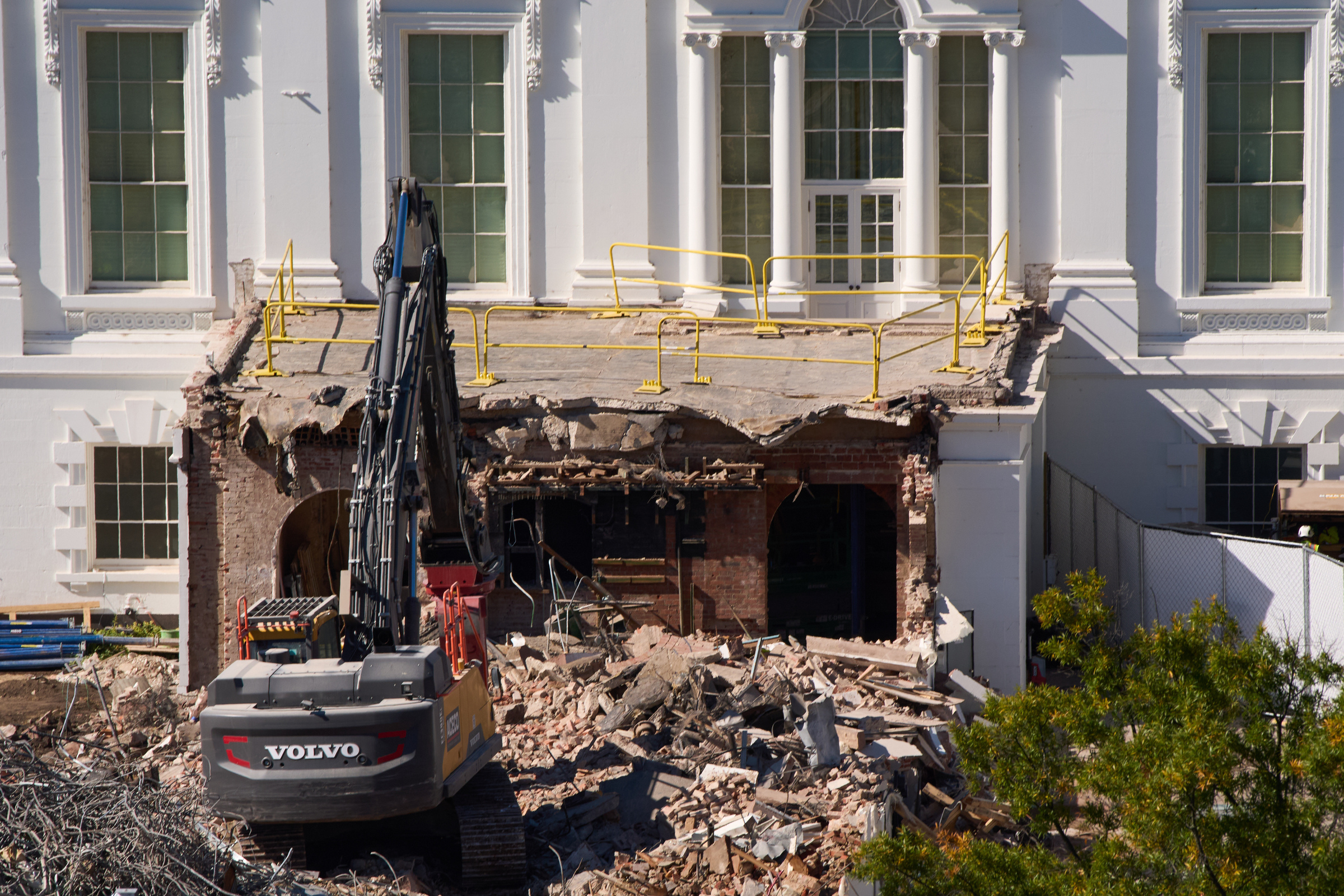 |
An excavator demolishes the White House East Wing for ballroom construction on 23/10/2025. Photo: AP |
The White House has asked the appellate court to stay Judge Leon's ruling pending further proceedings, while also leaving open the possibility of appealing to the Supreme Court if the desired outcome is not achieved.
According to the White House's appeal, the construction halt could endanger those living and working on the grounds, including the US President. The administration also warned that suspending construction would create "a large hole" adjacent to the President's working area, posing potential risks to national security.
The Trump administration argued that this is "an essential project to ensure the safety and security of the White House and the President, his family, and staff".
Documents submitted to the federal appellate court also detailed various security measures already implemented or underway at the construction site. These include missile-resistant steel columns and beams, anti-drone materials, and bullet- and blast-resistant glass. Additionally, items such as shelters, medical facilities, protection systems, and top-secret military installations are under construction or being prepared for installation.
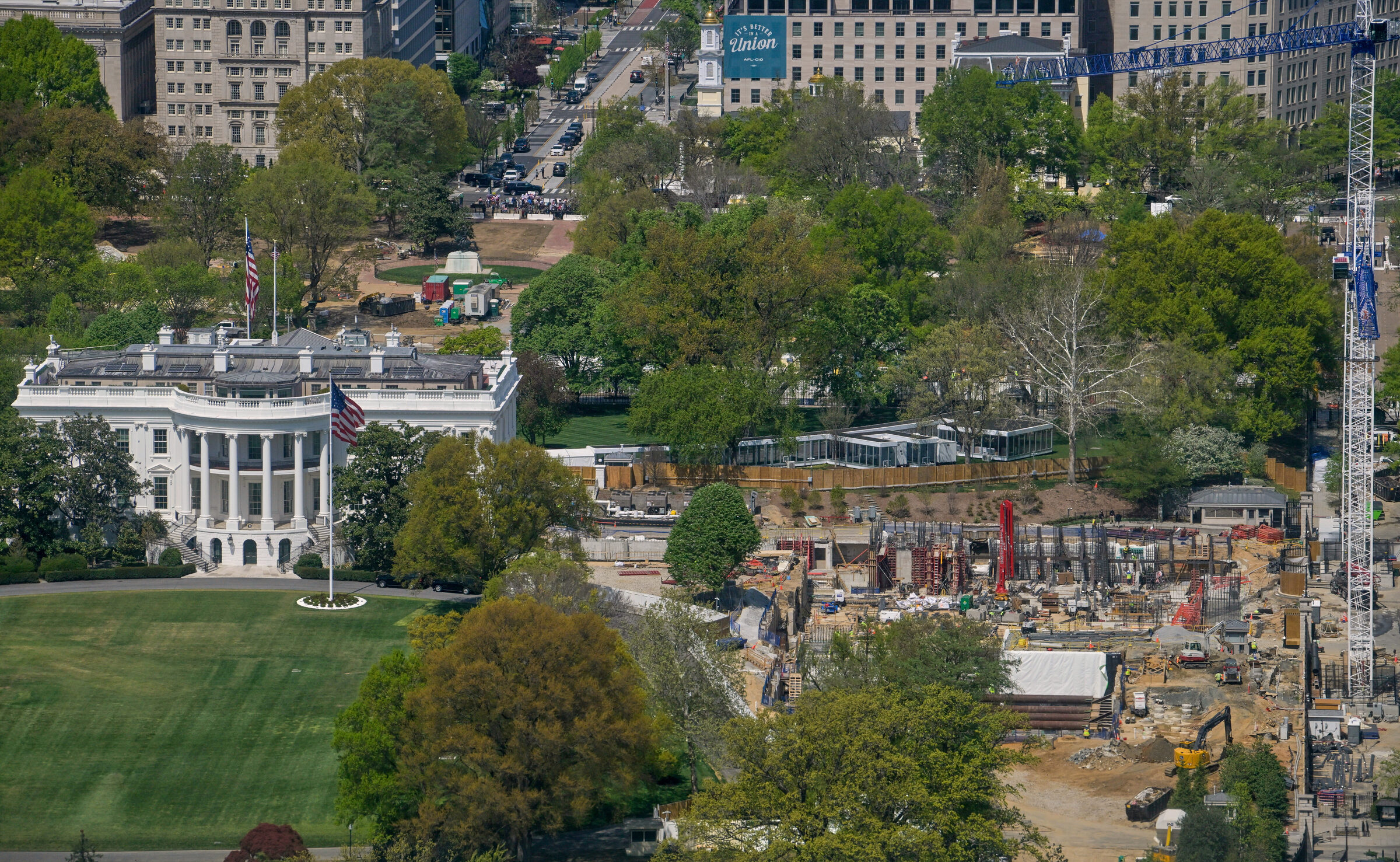 |
Construction of the ballroom in the White House East Wing continued on 9/4, before the injunction took effect. Photo: AP |
The Trump administration asserted that the new overall design of the East Wing will serve important security objectives. These include protecting the US President, his family, and staff, as well as maintaining continuous operations and communication systems against threats like drones, ballistic missiles, gunfire, and biological agents.
"President Trump clearly has the legal authority to modernize, renovate, and decorate the White House. His predecessors have done the same," said White House spokesperson Davis Ingle.
Judge Leon allowed a temporary stay of the construction halt ruling until 14/4 to permit the administration to appeal, while also allowing "essential" security-related work to continue. The Trump administration argues that this exception means the entire project should proceed, as all components have security implications.
However, according to the NTHP, the administration's arguments are "exaggerated". In its filing to the appellate court, the organization stated that the construction site has "not prevented" the President from continuing to reside at the White House, host events, receive international guests, or hold cabinet meetings since the East Wing's demolition.
The organization further analyzed that the administration previously considered the ballroom project and the underground components as two separate parts. However, following the federal court's 31/3 ruling, these two parts "suddenly became inseparable".
The White House East Wing was constructed in 1902 and expanded under President Franklin Roosevelt. The ballroom project in the East Wing is considered one of the major initiatives during Trump's term, aiming to create a large-scale event space to replace temporary outdoor structures.
Despite this, the project has faced controversy regarding oversight and transparency, particularly concerning funding sources from large corporations. Lawyers for the plaintiffs argue that mobilizing private funding necessitates clear congressional approval.