Iran possesses greater human resources and equipment now than during the 12-day conflict with Israel. President Masoud Pezeshkian emphasized this in an interview with Iranian media on 27/12/2024, stating, "If the adversary chooses confrontation, they will naturally face a more decisive response."
Pezeshkian views the current situation as a "comprehensive war" involving the US, Israel, and Europe. He criticized these nations for not desiring a stable Iran, assessing the challenges Tehran faces as far more complex than the Iran-Iraq war from 1980-1988.
He elaborated on the distinction, explaining, "The situation during the war with Iraq was very clear: they launched missiles, and we responded. However, the current adversaries surround Iran on all fronts, exerting pressure and cornering us, creating economic, cultural, political, and security issues."
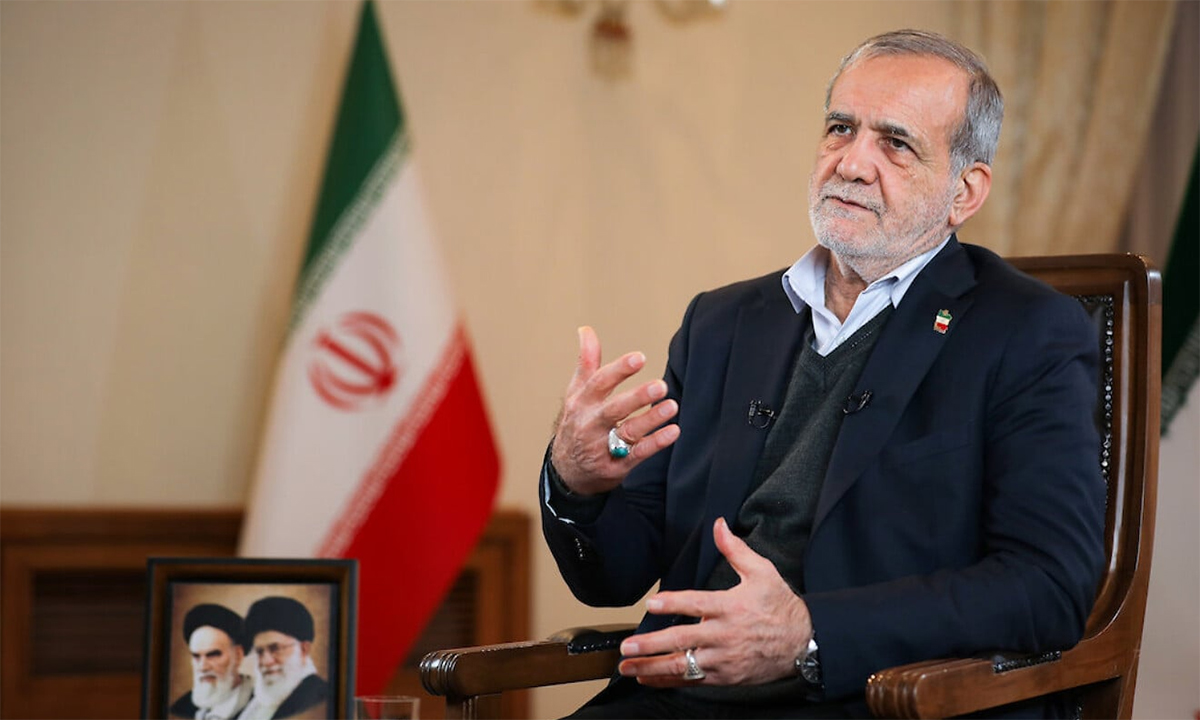 |
Iranian President Masoud Pezeshkian in a photo released on 27/12/2024. *Photo: Khamenei.ir*
The US, Israel, and European countries have not yet commented on these statements.
President Pezeshkian's remarks came before Israeli Prime Minister Benjamin Netanyahu's visit to the US, where he was scheduled to meet President Donald Trump. The situation in Iran appeared to be a significant topic in the discussions between the US and Israeli leaders.
According to US media, Prime Minister Netanyahu might inform President Trump about potential future attack options against Iran. Israeli officials previously told the US that they suspected Iran's missile drills could be a "cover for an operation to attack Israel".
The conflict between Tel Aviv and Tehran erupted on 13/6/2024 when the Israeli military launched preemptive airstrikes on military targets and nuclear facilities in Iran. Israel cited the prevention of the adversary from developing nuclear weapons as the reason for the attacks. Both sides then continuously exchanged attacks before reaching a ceasefire agreement brokered by the US.
During the conflict, Iran launched a total of about 550 missiles and 1,000 suicide unmanned aerial vehicles (UAVs) into Israeli territory. Tel Aviv stated that most missiles were intercepted, but 36 munitions landed in densely populated areas, causing 28 fatalities.
A research group at Oregon State University in the US published an analysis in July 2024, indicating that 6 Iranian ballistic missiles likely struck 5 Israeli military bases during the conflict. The Telegraph reported that these 6 missiles were not among the 36 munitions the Israeli military acknowledged had breached defenses. The targeted locations were in northern, central, and southern Israel, including the crucial Tel Nof airbase, an intelligence center, and a logistics facility.
The conflict resulted in over 1,000 fatalities in Iran and at least 28 in Israel.
Iranian Foreign Minister Abbas Araghchi declared in November 2024 that the nation's missile capabilities "have far surpassed the 12-day war period". Concurrently, Defense Minister Aziz Nasirzadeh affirmed that Iran's defense industry products have improved in both quality and quantity compared to before the conflict erupted.
Nguyen Tien (According to AP, Al Jazeera, IRNA, Iran International)