"I want to be reimbursed because we are protecting a very wealthy part of the world," President Donald Trump stated in the Oval Office of the White House on 13/7. "We are spending money, so we should be repaid for the cost of protection."
"We do not need it, but from the perspective of protecting allies, it is necessary," he added, asserting that the United States has been "very effective" in safeguarding Israel, Saudi Arabia, Qatar, and the United Arab Emirates (UAE).
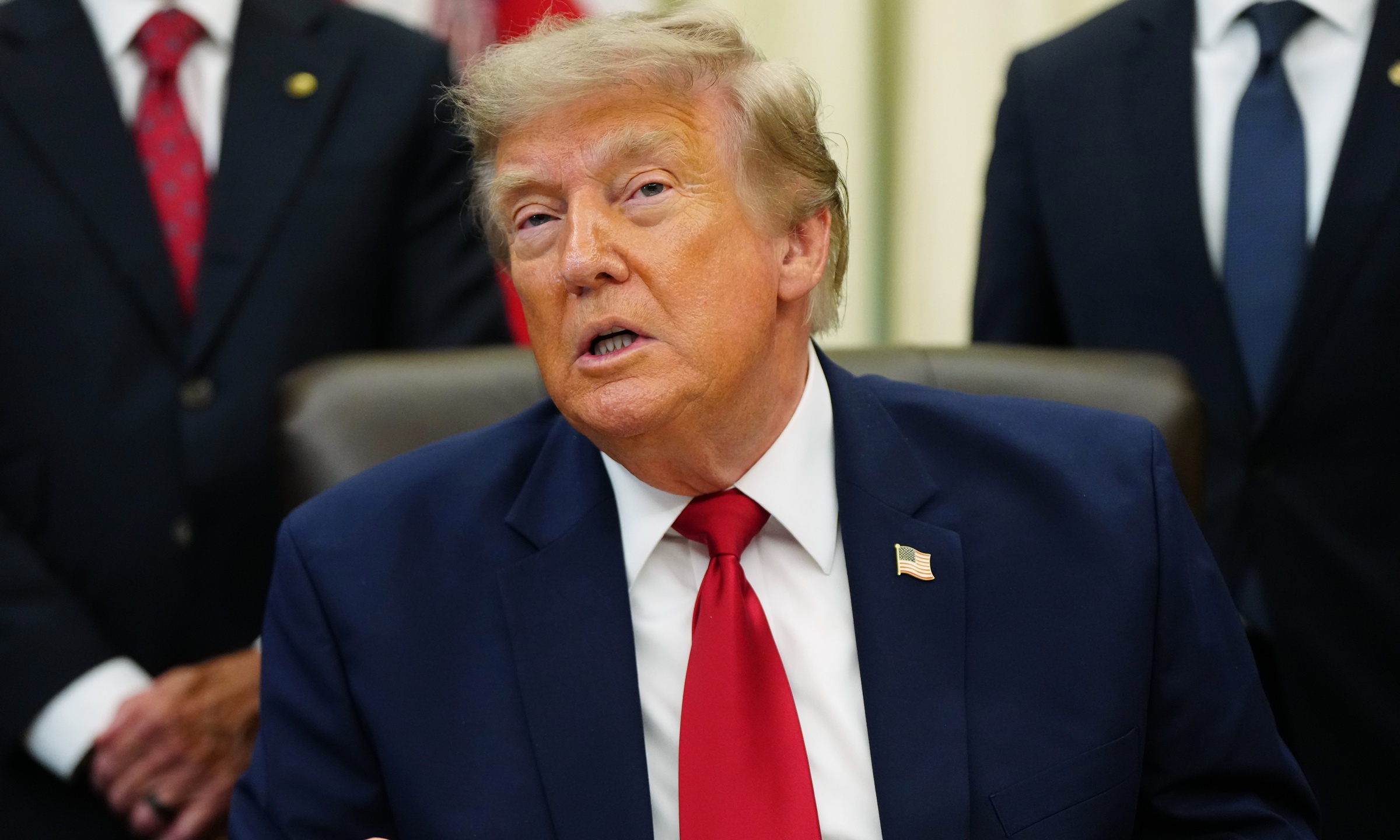 |
President Donald Trump in the Oval Office of the White House on 13/7. Photo: AP |
President Trump's remarks come as concerns over the high cost of maintaining military operations against Iran are increasing in the United States. Previously, the President announced the resumption of the blockade of Iranian ports, and suggested that the United States would provide protection services in the Strait of Hormuz, a vital trade route where Iran has repeatedly attacked cargo ships, for a fee equivalent to 20% of the value of transported goods.
Iranian Foreign Minister Abbas Araghchi immediately rejected President Trump's statement, arguing that Tehran is the guardian of the strait and deserves reimbursement for the costs.
"The US President is absolutely right. Anyone who ensures the security and safety of commercial vessels passing through the Strait of Hormuz should be compensated for this service," he wrote on social media. "Iran has always been the gatekeeper of the strait and will remain so forever."
Araghchi added that Iran would propose a "fair" price, stating that 20% is too expensive.
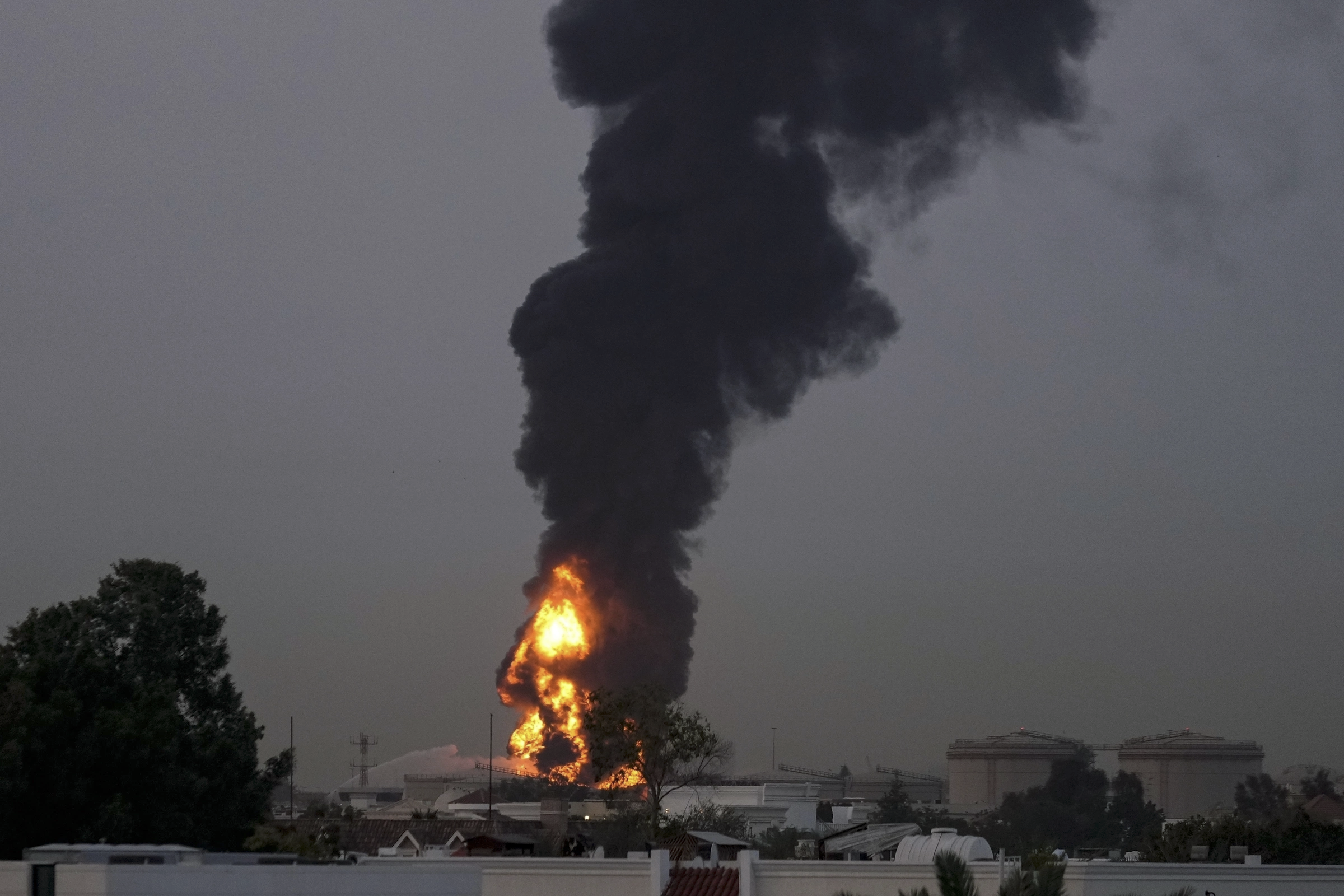 |
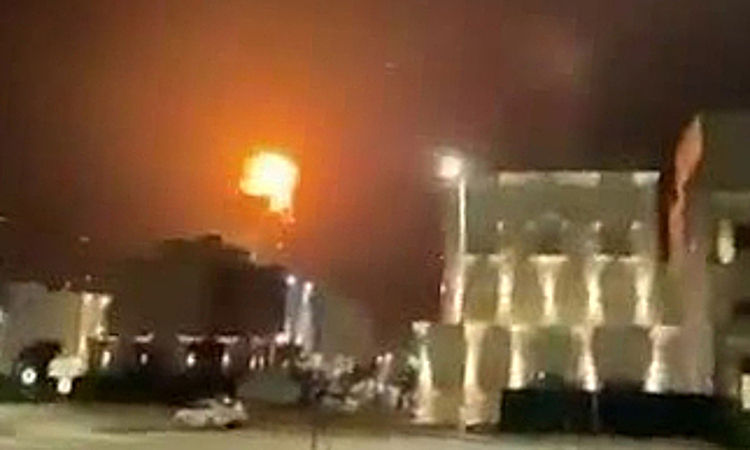
Black smoke rises after a UAV crashed into a fuel tank near Dubai airport, UAE, in March. Photo: AP |
Since the United States and Israel launched an offensive against Iran in late February, Gulf nations, including the UAE, Qatar, Kuwait, Bahrain, and Oman, have faced hundreds of Iranian drone and missile attacks, resulting in civilian casualties and damage to numerous hotels, airports, and critical oil and gas infrastructure.
The World Bank (WB) estimates that the GDP of Gulf economies will grow by only 1,3% this year, a sharp decline from 4,5% in 2025. Iran's blockade of the Strait of Hormuz has choked oil and gas exports, compelling Middle Eastern producers to reduce crude oil output by over 11 million barrels per day in May compared to pre-conflict levels.
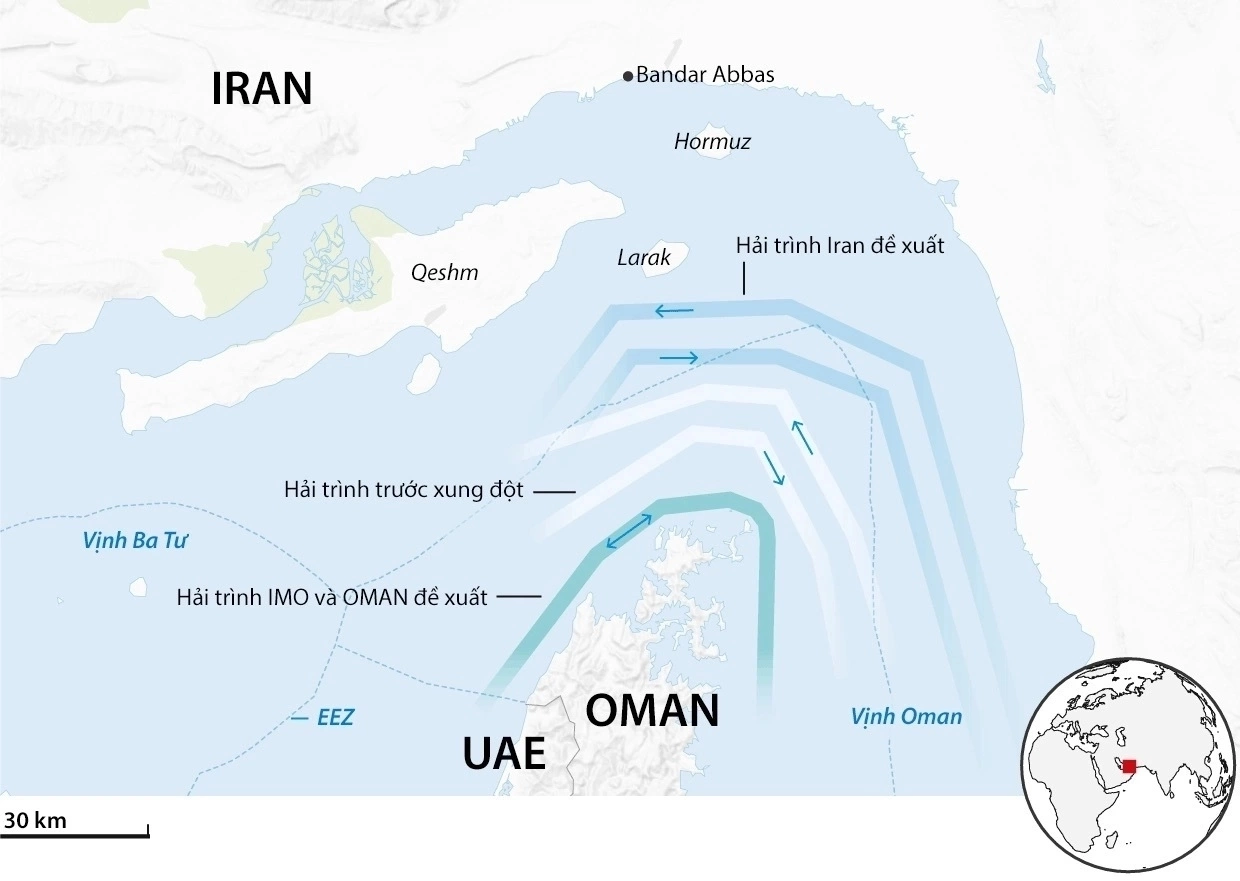 |
Shipping routes through the Strait of Hormuz. Graphic: *Guardian* |
Last week, President Trump decided to end the ceasefire with Iran, citing the country's government for repeatedly attacking commercial vessels transiting the Strait of Hormuz. Since then, the United States has resumed attacks, targeting missile and air defense systems, along with small vessels belonging to the Islamic Revolutionary Guard Corps (IRGC).
The President informed reporters at the White House that an agreement with Iran is still achievable, but emphasized that the United States would ultimately control the "entire" Strait of Hormuz.
By Vu Hoang (According to *CNN*, *WSJ*, *AFP*, *Reuters*)