US President Donald Trump delivered his first state of the union address of his second term on the evening of 24/2. He dedicated significant portions of the speech to highlighting major domestic achievements and advancing a legislative agenda likely to face obstruction from democratic lawmakers in congress.
This move implicitly pushed Speaker of the House Mike Johnson to find ways to pass bills using only republican votes. Johnson has limited time to advance President Trump's agenda, as US voters will elect the entire House of Representatives and a portion of the Senate in november. Historically, the president's party often loses seats during these elections.
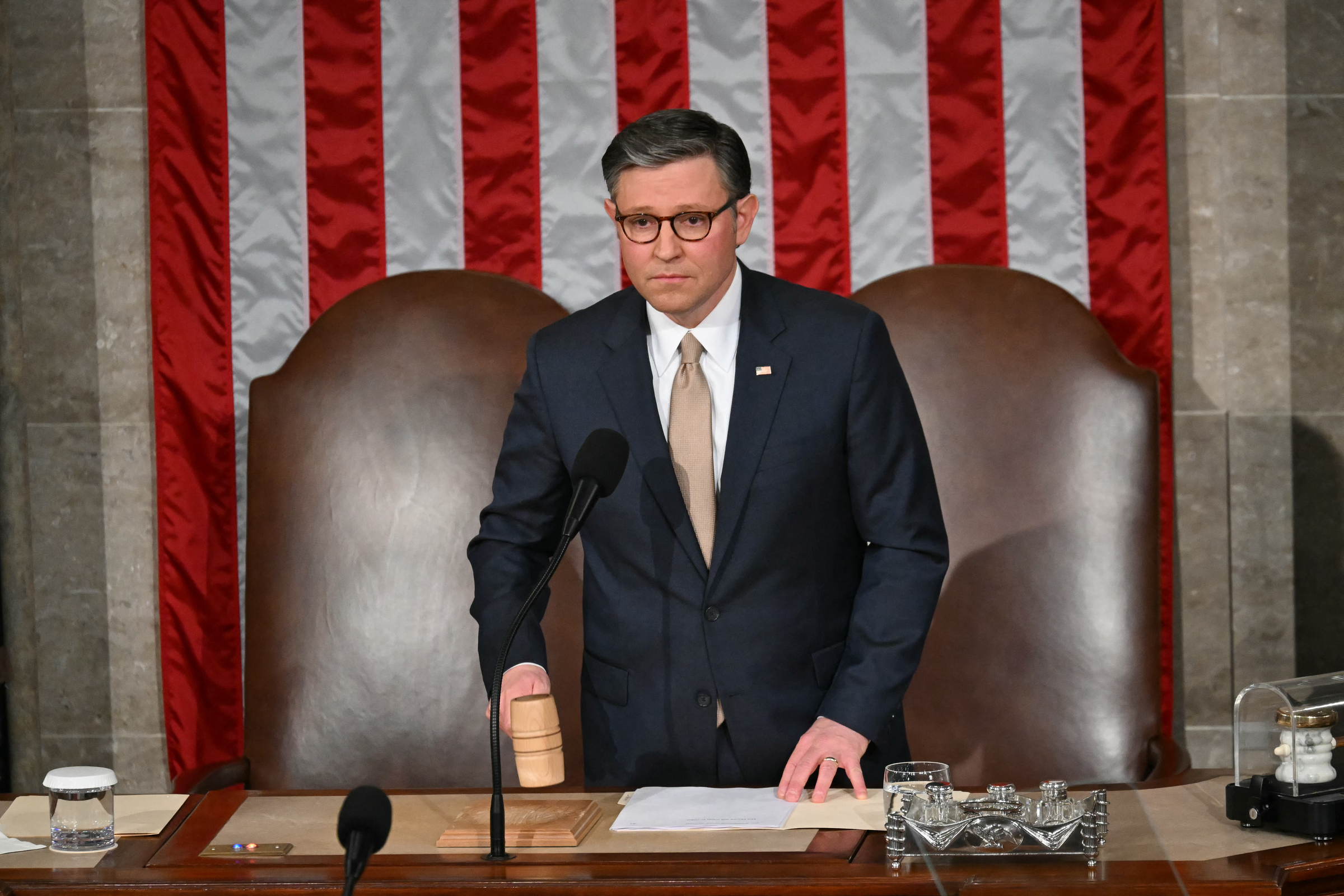 |
Speaker of the House Mike Johnson gavels before President Donald Trump arrived at congress to deliver the state of the union address on 24/2. Photo: AFP |
For a bill to become law, it must pass both the House and the Senate, then be signed by the president. The Republican Party currently holds a majority in both chambers, with 218-214 seats (three vacancies) in the House and 53-47 in the Senate.
Under normal procedures, a bill requires a simple majority in the House and at least 60 out of 100 affirmative votes in the Senate. The Republican Party would need to secure support from at least seven democratic senators, which is nearly impossible. Democrats, conversely, could use a filibuster, or unlimited debate, to indefinitely delay a bill's passage.
To overcome this obstacle, the Republican Party could employ the special "budget reconciliation" process. This allows for the passage of bills related to taxes, spending, and public debt with a simple majority in the Senate. Republican lawmakers used this method in 7/2025 to pass the Optimizing Budget Benefits Act (OBBBA), which established the budgetary framework for President Trump to fulfill his campaign promises.
Before delivering his state of the union address, President Trump told the media that he wanted to implement new tax cuts for individuals and businesses this year, and desired its passage through this special process.
US Treasury Secretary Scott Bessent also suggested that republican lawmakers could use the budget reconciliation process to advance a proposal for financial assistance to retirees.
This situation places a significant burden on Johnson, who struggled to get OBBBA passed in time. The challenges in this midterm election year could be even greater.
With a 218-214 majority, Johnson can only afford one republican representative to "break ranks." Thomas Massie, a fiscally conservative representative who opposed OBBBA, is almost certain to be that one.
The Republican Study Committee in january unveiled a framework for a second budget reconciliation package. This package includes housing and healthcare reforms, and deregulation of the energy sector. However, even Johnson's allies admit this will be a challenging task.
"The numbers dictate everything here," Representative Dusty Johnson said of the second reconciliation package. "The question is whether the bills can secure 218 votes in the House and 51 votes in the Senate."
Representative Brian Fitzpatrick, also an opponent of OBBBA, expressed his skepticism about budget reconciliation bills, preferring bipartisan solutions.
"I have voted against many budget reconciliation bills from both democrats and republicans," Fitzpatrick stated. "I do not favor single-party bills."
The next issue under consideration is tariffs. In his state of the union address, Trump declared "congressional action is not needed" to impose new tariffs. However, his allies, led by Senator Bernie Moreno, are still pushing a plan to use the budget reconciliation mechanism to pass legislation raising tariffs. This aims to bolster Trump's embattled trade program, which the Supreme Court rejected last week.
However, this strategy is unlikely to gain support from moderate republican representatives in the House. They believe tariffs harm their constituents. In early 2, six republican representatives voted in favor of a resolution to repeal tariffs Trump imposed on Canada.
Speaker Johnson also acknowledged to Politico on 18/2 that legislating Trump's tariffs would be a difficult internal republican issue.
"I think it will be a challenge to find consensus for any legislative path related to tariffs," Johnson said.
Democrats will certainly not offer assistance. They have opposed nearly every aspect of Trump's agenda, including tariffs and corporate tax cuts, and have stated they will maintain this stance heading into the midterm elections.
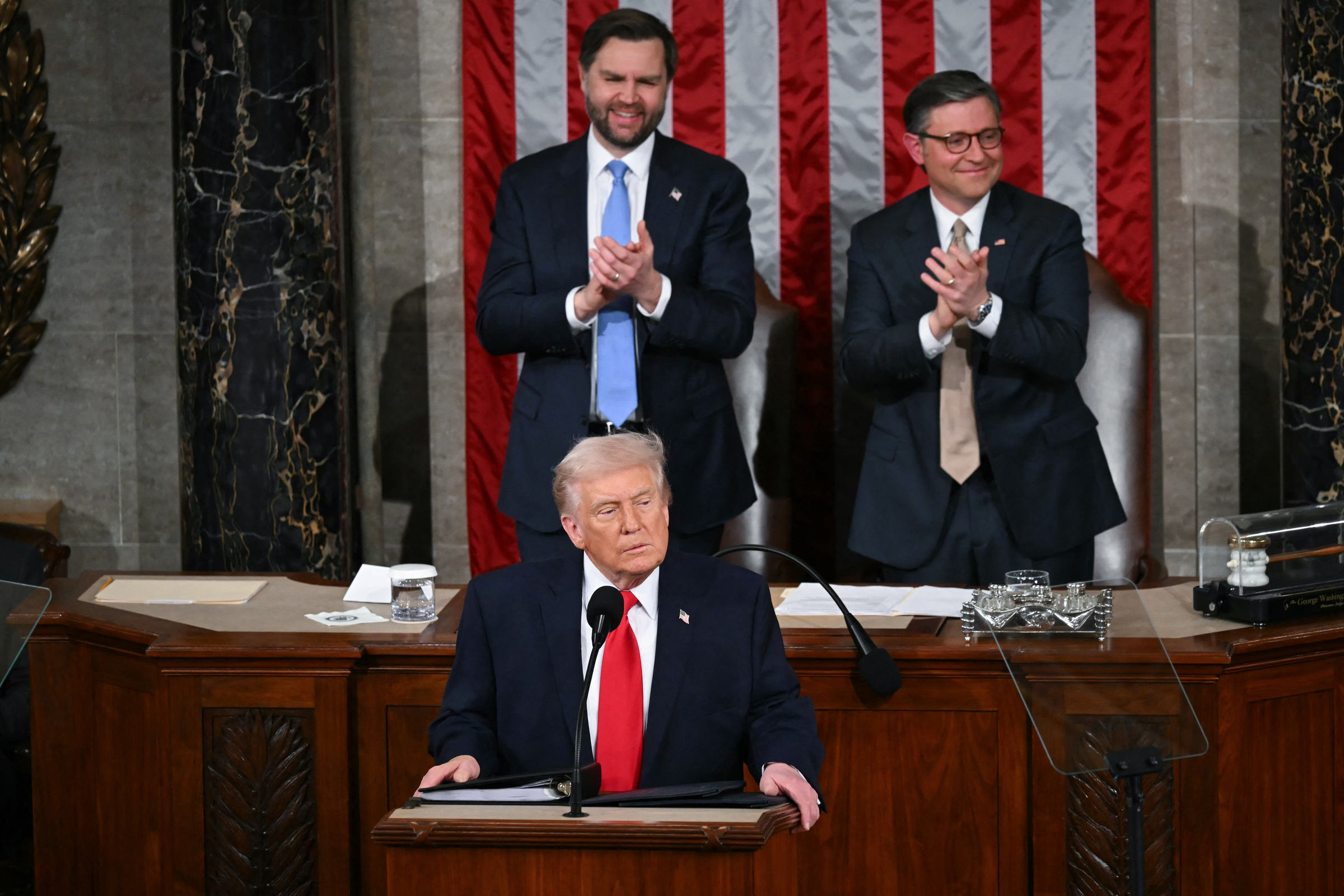 |
Trump delivers the state of the union address. Photo: AFP |
Despite these challenges, some republican representatives believe they can pass important bills, even with a narrow majority. Representative Gabe Evans noted that if House leadership and the White House decide to pursue a budget reconciliation package, its "scope will likely be smaller" to increase its chances of success.
"The Republican Party is a party of independent thinkers. We focus on policy, so there will always be debates. But every time someone doubts 'I don't know if they can do it,' we still do it," Evans said. "That is how we ensure we build good policy, then unite to get it across the finish line."
Nhu Tam (According to AFP, Reuters, The Hill)