In Pyongyang, cars now fill parking lots at many hotels and spill onto the surrounding streets. Vehicles are seen crowding around the Gold Lane bowling alley and the Rakrang market, a food trading hub on the city's outskirts.
This trend is driven by North Korea's policy, enacted two years ago, allowing private car ownership. Individuals with a driver's license are permitted to purchase one oto per household through state-certified dealerships.
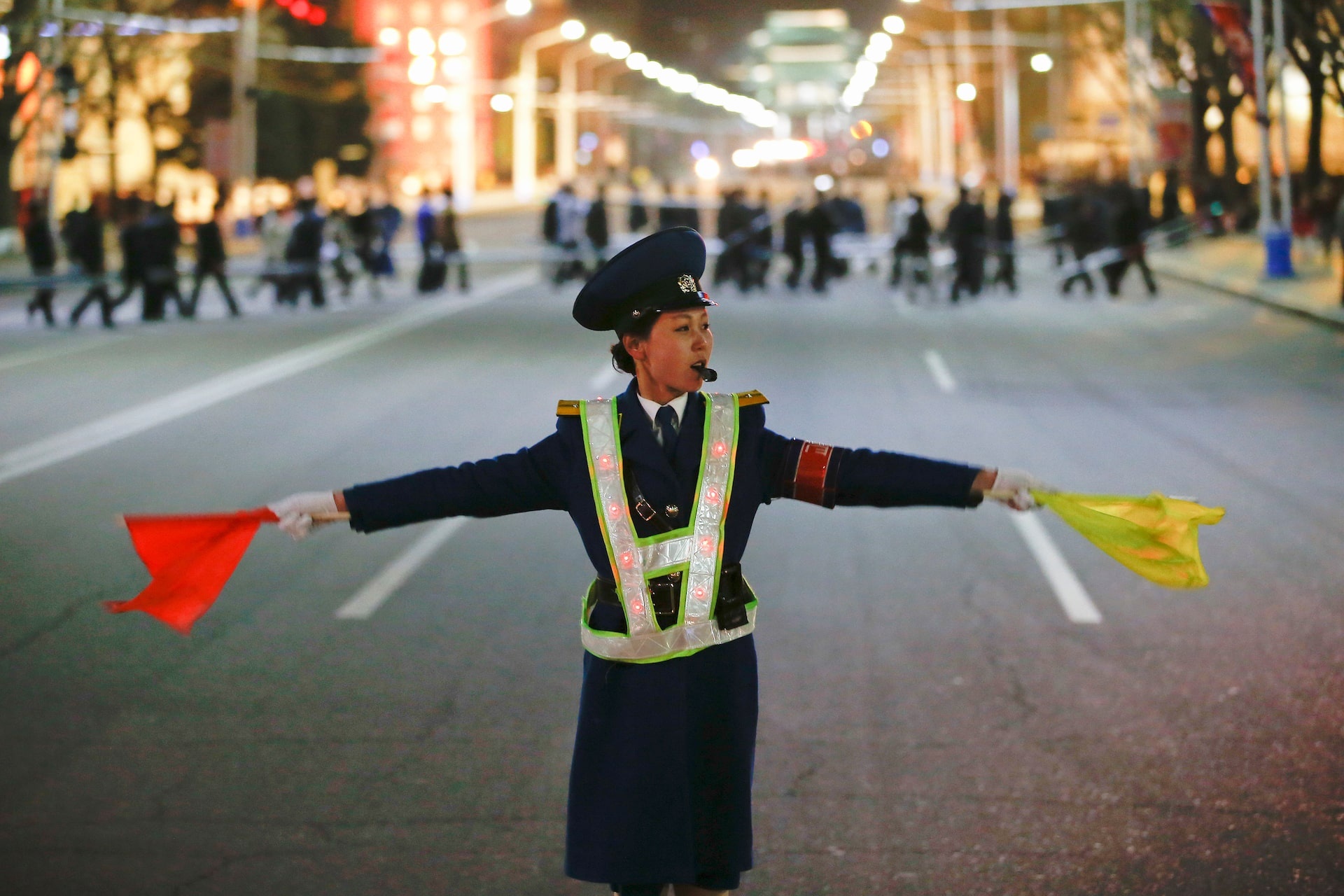 |
Traffic police direct traffic in Pyongyang in 2017. Photo: Reuters
Satellite images and social media content indicate increased traffic flow and the appearance of foreign-branded vehicles in North Korea.
Traditionally, Pyongyang license plates were blue or black, signifying state or military ownership. However, yellow plates, designated for private vehicles, are now becoming common.
Aram Pan, a Singaporean photographer who runs an Instagram account posting news about North Korea, expressed astonishment at the traffic congestion during his 20th visit to Pyongyang in 10/2025.
"The main roads are congested because there are simply too many cars now", he said, adding, "I definitely saw over one hundred yellow-plated vehicles". According to Pan, most of these cars were Chinese brands.
A foreign businessman who frequently visits North Korea noted that parking in central Pyongyang has become difficult. Many areas not designated as parking lots now have attendants collecting fees. In 4, Kim visited a new hospital featuring an underground parking lot, a facility previously uncommon in the North Korean capital.
While electric vehicle charging infrastructure remains limited, charging stations for electric taxis have begun to emerge, according to a businessman and a diplomat.
The exact number of private vehicles on North Korean streets is unclear, but 5-digit license plates have recently appeared. A video and an image posted on Chinese social media in 3 by foreigners in North Korea showed yellow plate registrations exceeding 10,000.
Jung Chang-hyun, a North Korea analyst and director of the Institute for North Korean Economic and Peace Studies in Seoul, estimates that the total number of private cars in North Korea could exceed 20,000 next year.
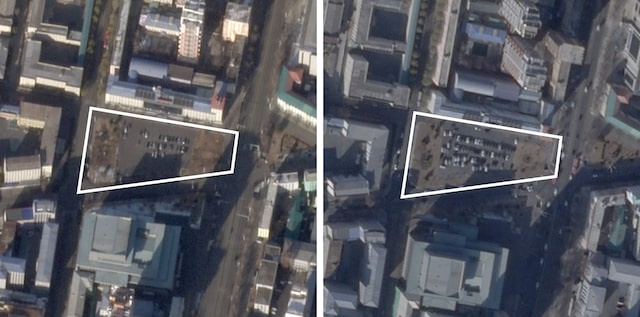 |
Parking lot near Taedonggang hotel in Pyongyang on 5/1/2024 (left) and 28/1 this year (right). Photo: Reuters
North Korea has been prohibited from importing oto under United Nations sanctions since 12/2017. According to Chinese customs data, China exported only two vehicles to North Korea last year, a significant decrease from over 3,200 in the year the ban took effect.
Despite sanctions, the export of car-related goods from China to North Korea has increased sharply compared to pre-pandemic levels. Shipments of new passenger car tires rose to nearly 193,000 in 2025, an 88% increase over the pre-Covid-19 average, while rearview mirror exports nearly quadrupled. Shipments of lubricating oils and greases increased by over 150%.
Cars continue to enter North Korea through unofficial channels along the 1,400 km border with Trung Quoc, despite a recent crackdown on smuggling by China.
Lu Ming, a used car seller in Jilin province, northeast China, stated that each car typically changes hands multiple times before crossing the North Korean border, with experienced smugglers handling the final delivery. Lu acknowledged that some cars he sold reached North Korea but clarified he does not deal directly with importers. Once a car is sold, he no longer controls its resale or end-user.
Videos and photos posted on social media from late 2024 to early 2026 by nearly a dozen residents and visitors in Pyongyang show foreign-branded vehicles at a service center and on the streets. These include models from Chinese automakers such as Changan, Chery, and Geely, as well as European brands like BMW and Audi.
"Previously, you could pinpoint a specific brand as the most popular in North Korea. But recently, the variety of circulating vehicles is so diverse that it is difficult to determine which brand dominates", said Joung Eun-lee, a researcher at the Korea Institute for National Unification.
Car prices range from 5,000 to 30,000 USD for all types of new and used, gasoline and electric models, Joung said, citing information from border traders. Joung shared photos taken from the Chinese side last year, showing over 30 vehicles parked along the North Korean border in Hyesan city, one of many entry points.
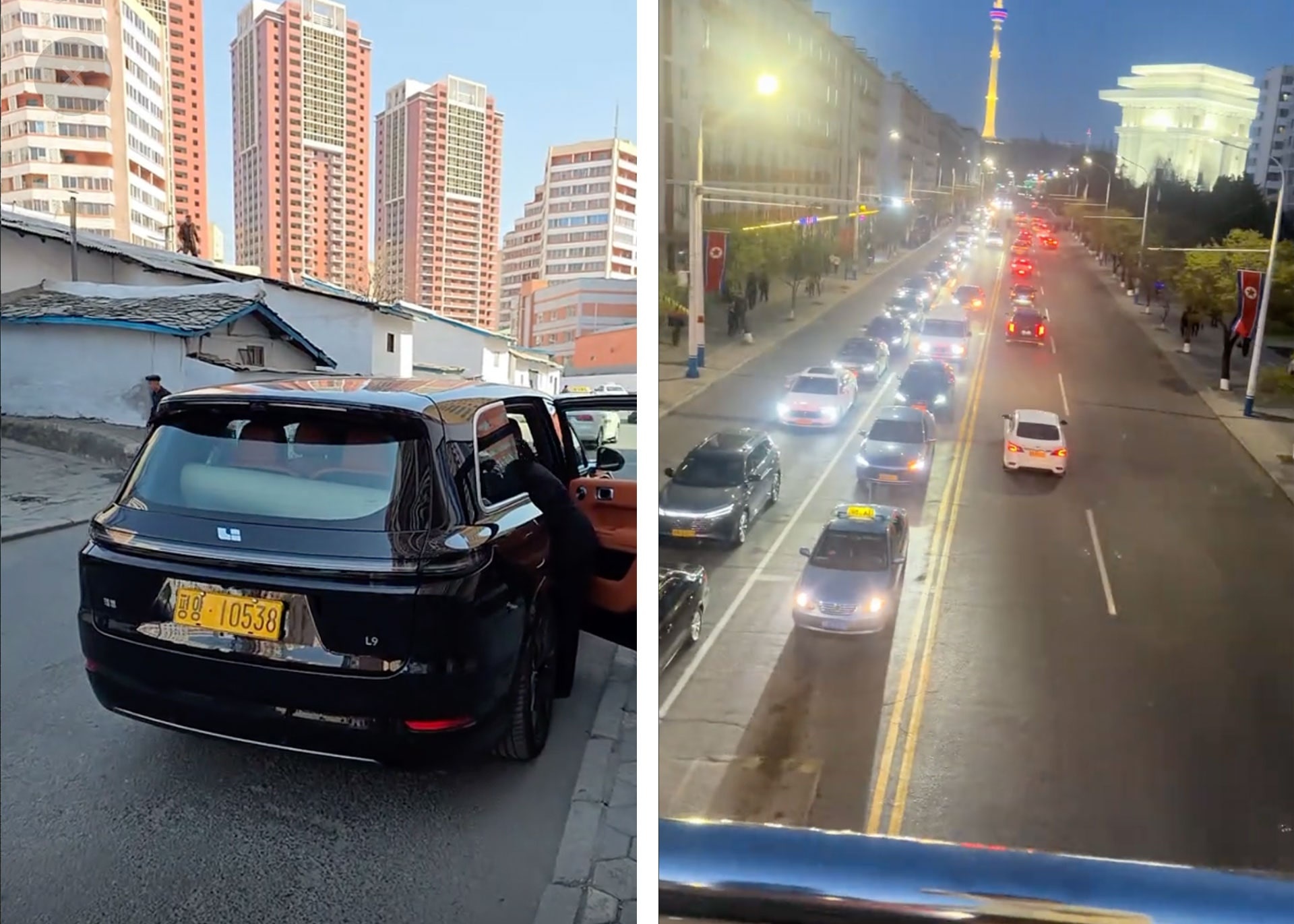 |
A Li Auto L9 SUV with a 5-digit yellow license plate in Pyongyang in 3 (left) and traffic congestion in 4 (right). Photo: Reuters
Representatives from Audi and BMW stated they do not conduct business in North Korea, and their importers and dealers are contractually obligated to comply with sanctions. Changan, Chery, and Geely did not respond to requests for comment.
On Pyongyang's increasingly crowded streets, the cumulative impact of these imported cars is undeniable.
"It's crazy to see how crowded the traffic has become", a foreign businessman remarked. "Yellow plates are everywhere".
The North Korean Embassy in Beijing and its mission to the United Nations in New York did not respond to requests for comment.
The Chinese Foreign Ministry stated that China and North Korea are friendly neighbors and maintain normal trade activities. The agency did not directly address the flow of Chinese-made cars circulating in North Korea but noted that China requires companies to engage in legal trade and comply with regulations.
Hong Hanh (According to Reuters)