On the night of 1/5, a pregnant woman at 29 weeks was admitted to an obstetrics clinic in Cheongju, North Chungcheong province, due to hemorrhage. When the fetal heart rate unexpectedly dropped sharply, the facility immediately called 119, South Korea’s emergency service number, requesting a transfer to a higher-level hospital.
What began as a race against time turned into a desperate search for a receiving facility. Six hospitals successively declined to admit her, citing a lack of specialized doctors and limited treatment capabilities. Approximately three and a half hours after the initial call, a helicopter arrived to transport the pregnant woman to Donga University Hospital in Busan, 280 km away. Upon arrival, the baby had already died.
This incident deeply shocked the South Korean public, exposing critical gaps in the emergency maternal care system of one of Asia’s leading economies.
"I feel a heavy responsibility on my shoulders," stated South Korean Minister of Health Jeong Eun-kyeong, pledging measures to prevent similar incidents from recurring.
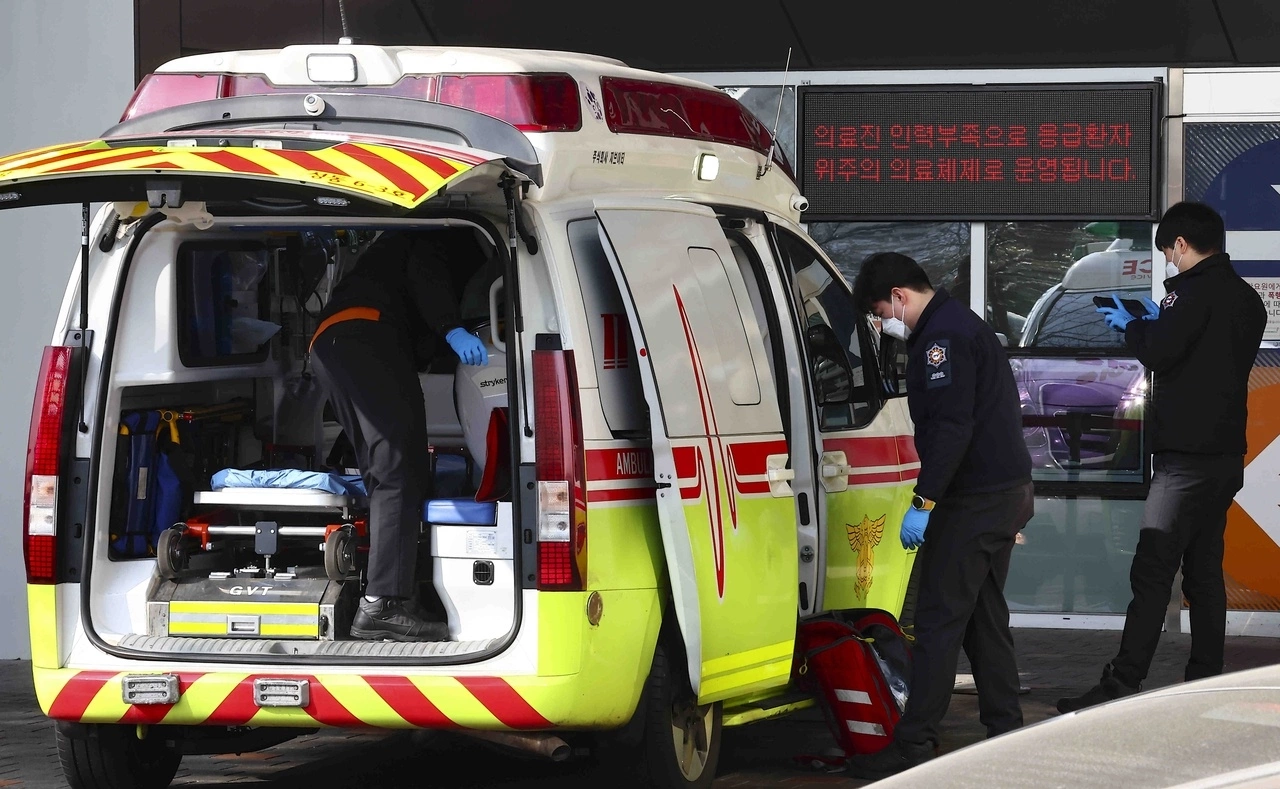 |
Medical staff outside an emergency room at a university hospital in Seoul on 25/2. *Newsis* |
Medical wandering
The Cheongju incident is not an isolated case. In recent years, "medical wandering" has become an increasingly discussed issue in South Korea, referring to patients being turned away by hospitals and having to contact multiple facilities to find one that will admit them. This situation currently causes severe consequences in obstetrics.
On the same day, 1/5, a woman in her 40s, 26 weeks pregnant and suffering from severe hypertension, had to travel nearly 300 km from Sejong to Busan after 52 hospitals refused admission. The journey by ambulance lasted approximately six hours.
In February, in Daegu, a woman pregnant with twins showed signs of premature labor. Seven local hospitals declined to admit her before she was transferred to a hospital near Seoul, more than 230 km away. An emergency C-section delivered the two babies, but only one survived. The other baby died shortly after birth.
According to the Korea Herald, these stories reflect systemic malfunctions in the operation of the emergency network.
A critical bottleneck lies in the patient admission mechanism. In South Korea, ambulances cannot independently take patients to emergency rooms without prior confirmation of acceptance from a hospital, forcing 119 personnel to contact each facility individually. When numerous hospitals decline, the "golden hour" for handling emergencies often passes.
"The emergency transfer system exists in name only," said MP Lee Joo-young, criticizing the current mechanism as largely ineffective. "The coordination mechanism between localities is not functioning, repeatedly forcing patients to continue searching for suitable reception."
Lee added that without a comprehensive restructuring of responsibilities between the National Fire Agency and the South Korean Ministry of Health, similar incidents will continue.
Obstetric gaps
High-risk births require not only highly skilled obstetricians but also a robust neonatal intensive care system, particularly neonatal intensive care unit (NICU) beds. These resources are primarily concentrated in Seoul and some major cities, while many localities lack both personnel and infrastructure.
Nationwide, the ratio of obstetricians per 1,000 women in South Korea is 0.24, meaning one doctor is responsible for an average of over 4,000 people. In many regions, such as North Gyeongsang and South Chungcheong, this ratio is even lower than the national average, making it difficult for many pregnant women to find adequately equipped local hospitals.
Meanwhile, pressure on the South Korean healthcare system grows. The increasing rate of pregnancies at older ages and a higher number of multiple births contribute to a rising demand for high-risk pregnancy care.
"High-risk pregnancies are increasing, while the supply of specialists is not keeping up," Minister Jeong acknowledged after an emergency meeting with experts.
Beyond the personnel shortage is a trend of risk avoidance. Obstetrics is a field where unexpected complications can arise, even when professional procedures are fully followed. However, in South Korea, if a negative outcome occurs, doctors face not only professional pressure but also the risk of investigation or criminal prosecution.
This leads to a trend that experts call "responsibility-phobia syndrome," where doctors or hospitals tend to avoid admitting high-risk cases to reduce legal exposure.
"Doctors are asked to take on very high-risk treatments, bear heavy legal responsibility, but compensation is relatively low," said Yang Seung-duk, president of the North Chungcheong Provincial Doctors' Association.
According to Yang, this issue extends beyond obstetrics to all essential medical services.
"We need to reduce the burden of risk faced by medical staff and strengthen incentive mechanisms for those working in key medical care areas," Yang stated.
 |
South Korean Minister of Health and Welfare Jeong Eun-kyeong speaks in Seoul on 4/5. *Yonhap* |
Following a series of incidents, the South Korean government is promoting a comprehensive reform package for the maternal and infant care system. The South Korean Ministry of Health announced it will continue discussions with 22 maternal and infant centers nationwide and professional associations to review the entire treatment network and propose effective measures.
A key change focuses on developing a real-time data system, which would instantly show which hospitals have available doctors, NICU beds, and the capacity to admit emergency cases. If effectively implemented, this system could replace the current method of calling each facility individually.
South Korea also pledges to enhance coordination between the obstetrics network and the 119 emergency services, expand support for under-resourced areas, improve compensation for medical staff in essential specialties, and strengthen legal protection for doctors against complications beyond their control.
"We will build a maternal and infant care system so that pregnant women can give birth safely anywhere in the country," Minister Jeong declared.
However, many experts believe that reforming coordination mechanisms addresses only part of the problem. The greater challenge remains personnel, as training a doctor takes many years, while the appeal of obstetrics to young doctors is declining.
By Nhu Tam (According to Korea Herald, Straits Times, Chosun)