Business Insider cited Khyzhak, a soldier with Ukraine's 4th Special Operations Regiment, who stated that the Russian military is using inexpensive Molniya unmanned aerial vehicles (UAVs) to transport suicide first-person view (FPV) drones to the battlefield.
This strategy conserves the FPV drones' batteries, allowing them to search for targets longer than if they flew to the designated area independently. The Molniya UAV itself is also a suicide weapon, capable of launching its own attack. This enables Russian forces to target two objectives simultaneously during a single sortie.
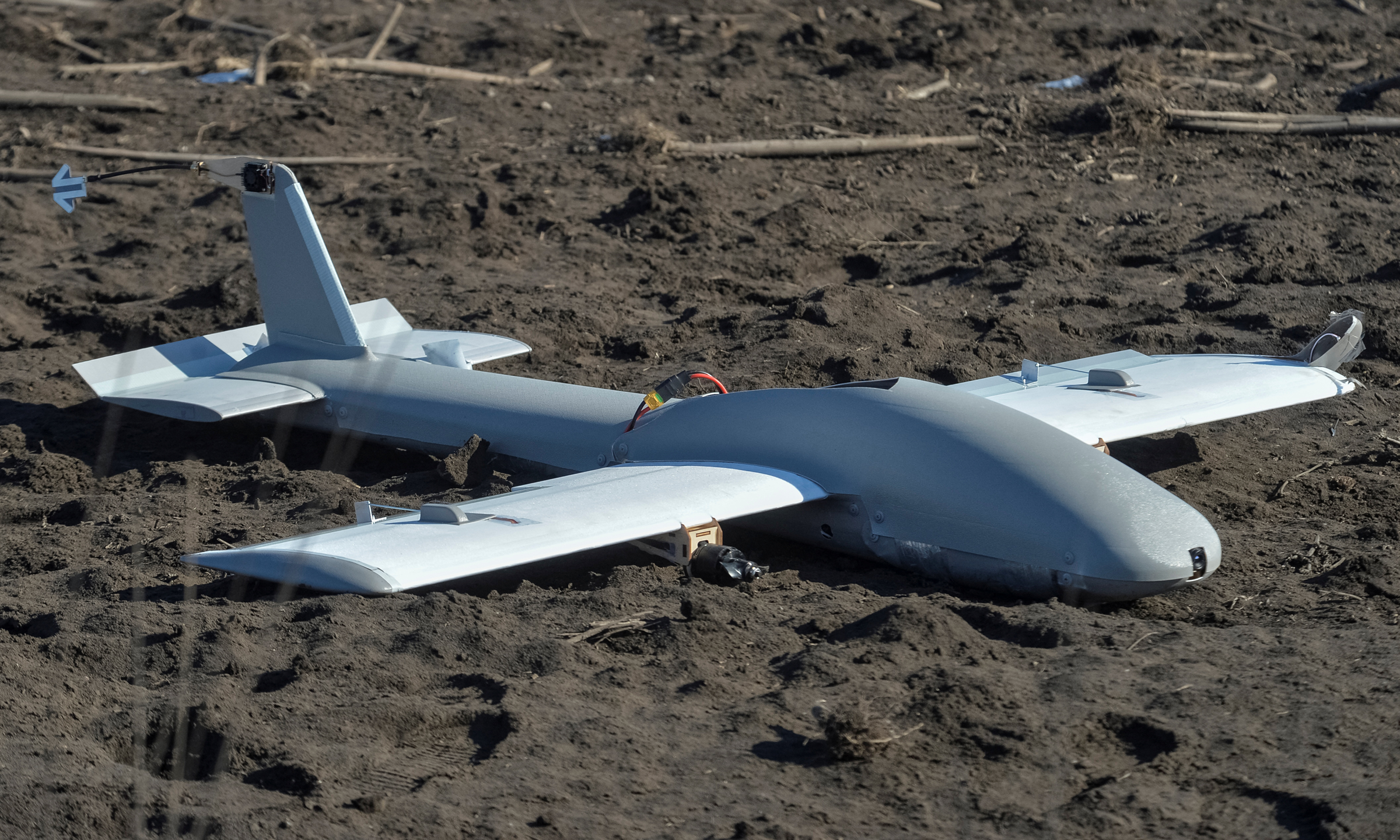 |
The wreckage of a Molniya unmanned aerial vehicle shot down near the front line in Dnipropetrovsk province in february. Reuters |
The wreckage of a Molniya unmanned aerial vehicle shot down near the front line in Dnipropetrovsk province in february. Reuters
Russian soldiers sometimes attach anti-tank mines to the Molniya UAVs to increase their destructive power. "They are inexpensive and available in large numbers, so they can deploy them whenever they want", Khyzhak noted.
A Ukrainian drone unit commander in Kharkov province suggested that Russia is using Molniya unmanned aerial vehicles as "disposable relay vehicles". The aircraft can fly tens of kilometers, after which the FPV drones detach from the mothership to search for targets.
The Ukrainian commander stated that Russian forces began employing this tactic on the Kharkov front a few weeks ago, leveraging the changing situation on the front lines. Another Ukrainian soldier commented that Russia does not possess many Molniya unmanned aerial vehicles and believes this remains an experimental tactic.
Nevertheless, the ability of Russian FPV drones to operate and strike deeper targets is a growing concern for the Ukrainian military. Ukrainian soldiers reported that their forces are also equipped with unmanned aerial vehicles operating on a similar principle, capable of carrying three to four drones, though they declined to disclose details regarding their scale of use.
Russian media in june published photographs of a Molniya unmanned aerial vehicle carrying an FPV drone "piggyback", though it was unclear if these images depicted a combat situation or rear-area testing.
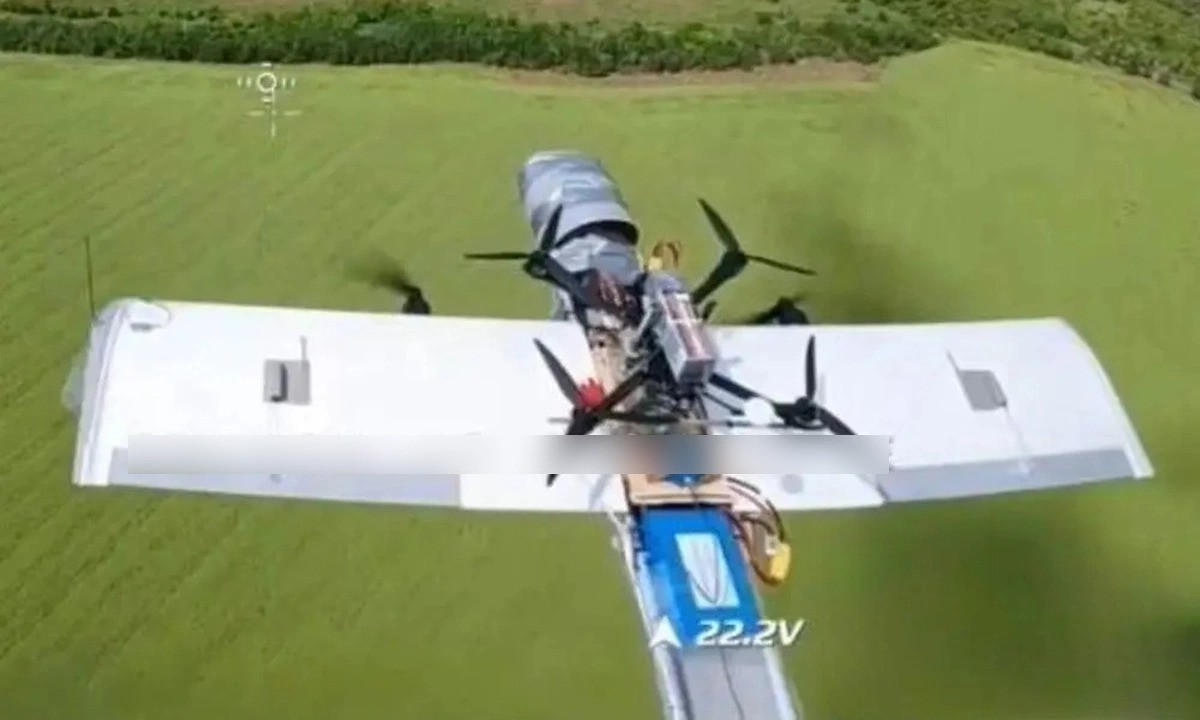 |
A Molniya unmanned aerial vehicle carrying a suicide first-person view drone in a photo published on 5/6. Topcor |
A Molniya unmanned aerial vehicle carrying a suicide first-person view drone in a photo published on 5/6. Topcor
The Molniya (Lightning) is constructed from plywood and foam plastic, and can be assembled on-site in under three hours at a manufacturing cost of approximately 300 USD per unit. The aircraft boasts a flight range of 30 km, a maximum speed of 80 km/h, and an operational time of about 40 minutes.
The deployment of Molniya unmanned aerial vehicles carrying FPV drones is another example of the ingenuity demonstrated by soldiers on both sides of the battlefield, simultaneously reflecting the increasingly critical role of drones in the Ukraine conflict. "The war is constantly evolving. They are continually experimenting with new tactics, and so are we", Khyzhak stated.
By Pham Giang (Source: Business Insider)