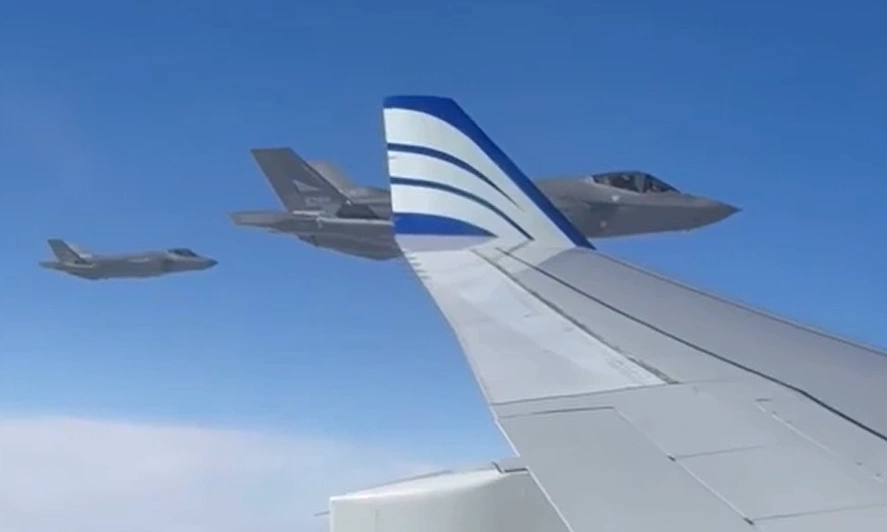
US Central Command (CENTCOM), the agency responsible for US military operations in the Middle East, announced that at 15:00 on 14/7 Eastern US time (early this morning Hanoi time), CENTCOM forces began another wave of attacks on Iran. The objective is to further weaken Tehran's ability to attack cargo ships. The scale of this attack is unknown.
CENTCOM later announced that the US naval blockade of vessels entering and exiting Iranian seaports, as well as its coastal areas, resumed at 16:00 on 14/7 Eastern US time.
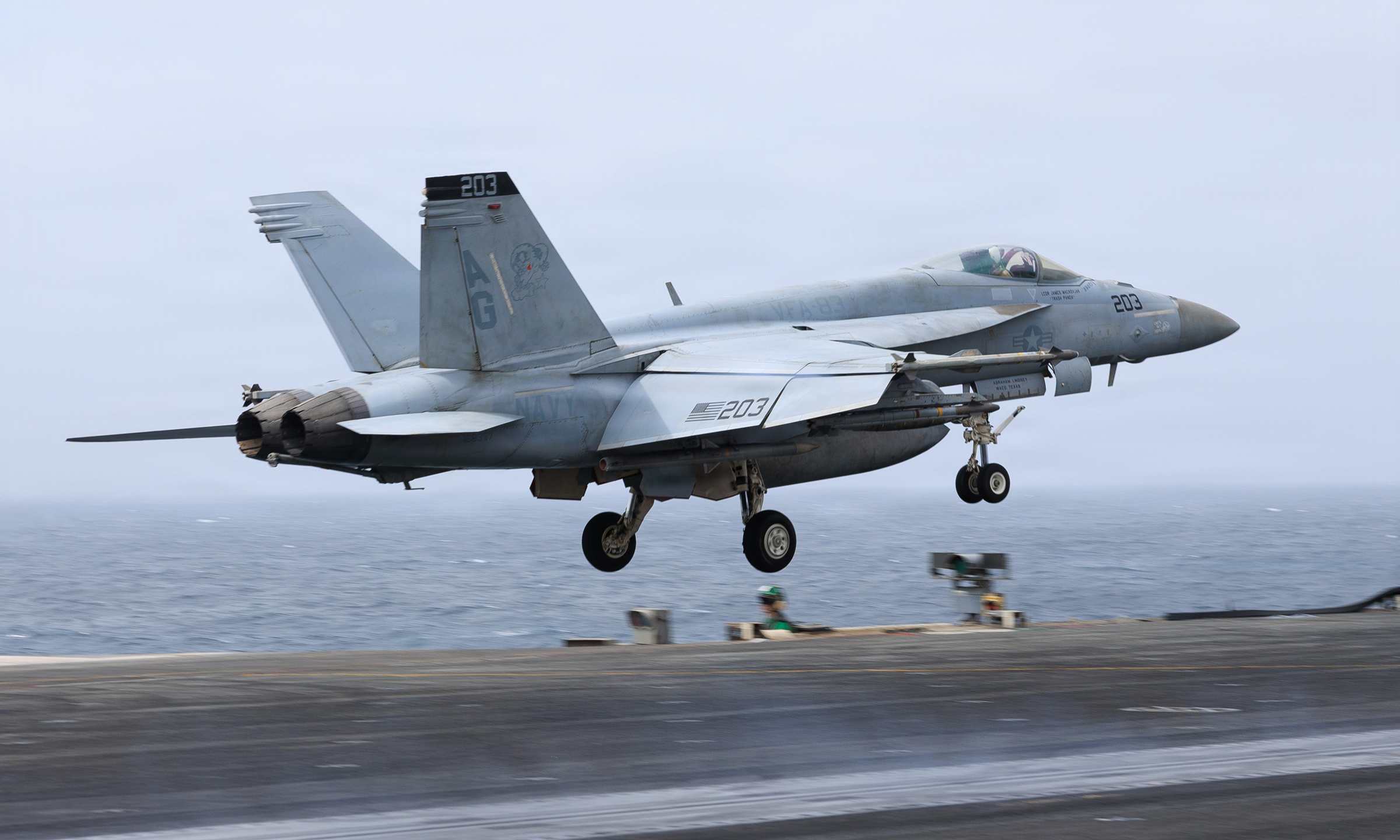 |
US F/A-18E fighter jet in the Arabian Sea on 16/6. Photo: US Navy
"Over 20 US navy warships and hundreds of military aircraft are currently operating across the Middle East," the agency stated.
According to IRNA news agency, the port city of Bandar Abbas and several other locations near Sirik were hit. IRNA later reported that Hengam Island, another island in the Persian Gulf south of Qeshm Island, was also attacked by the US.
The Iranian military stated it launched drones targeting US facilities at Muwaffaq Salti airbase in Azraq, Jordan. The force declared the operation would continue, adding that any attacks on Iranian territory would be retaliated against.
Iranian military launches attack on US base in a video posted on 15/7. Video: Tasnim
The regional situation was calm for about three weeks after the US and Iran signed a memorandum in mid-June. However, tensions escalated when the US, in coordination with Oman and the International Maritime Organization (IMO), established a new route south of the Strait of Hormuz. This route is located entirely within Omani territorial waters, encouraging commercial vessels to choose this option instead of using the northern route through Iranian territorial waters.
The Islamic Revolutionary Guard Corps (IRGC) accused the US of "imposing its will" on the Omani government by seeking to direct more vessels through the Strait of Hormuz via an "illegal maritime route" in the southern area. Cargo ships transiting the strait were attacked, leading to tit-for-tat attacks between Iran and the US.
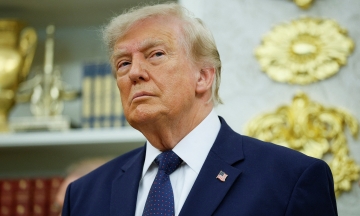
US President Donald Trump declared on 14/7 that the Strait of Hormuz was open to all vessels, except for Iran. "Therefore, we will impose a comprehensive blockade, but only on vessels entering or exiting Iranian ports or carrying anything related to Iranian goods," he stated.
The US leader also announced a change in plans, replacing the collection of "protection fees" from cargo ships transiting the Strait of Hormuz with trade and investment agreements with Gulf allies.
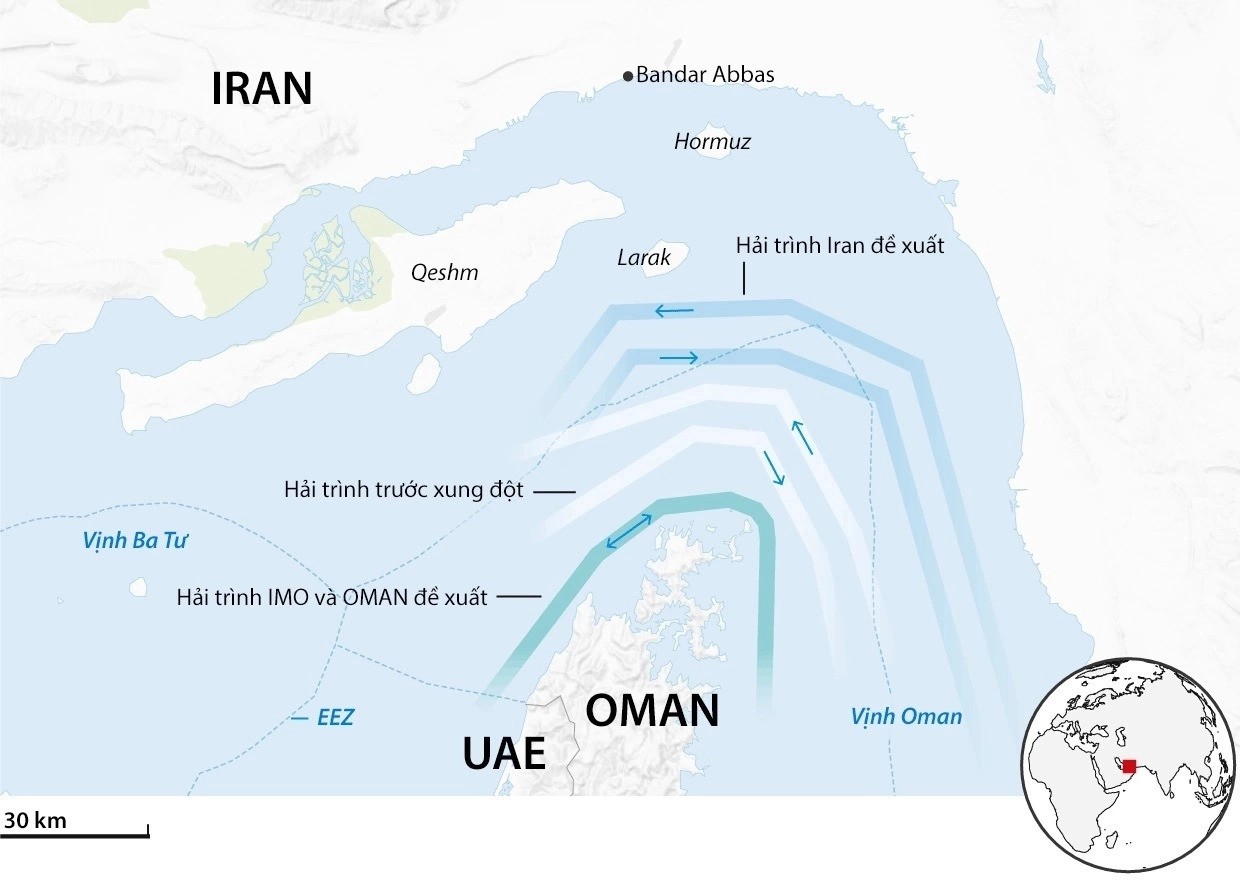 |
Shipping routes through the Strait of Hormuz. Graphic: Guardian
Pham Giang (According to CNN, AFP, Al Jazeera)