Russian state television Rossiya-1 on 28/9 broadcast images of military personnel operating a shoulder-fired anti-aircraft missile named Iva during an exercise by the 51st air defense division in Rostov province.
This system has few similarities with shoulder-fired missiles manufactured and fielded by Russia, according to Thomas Newdick, editor of the US military specialist site War Zone. Russian soldiers refer to it as Iva, a name that does not help identify the weapon's origin.
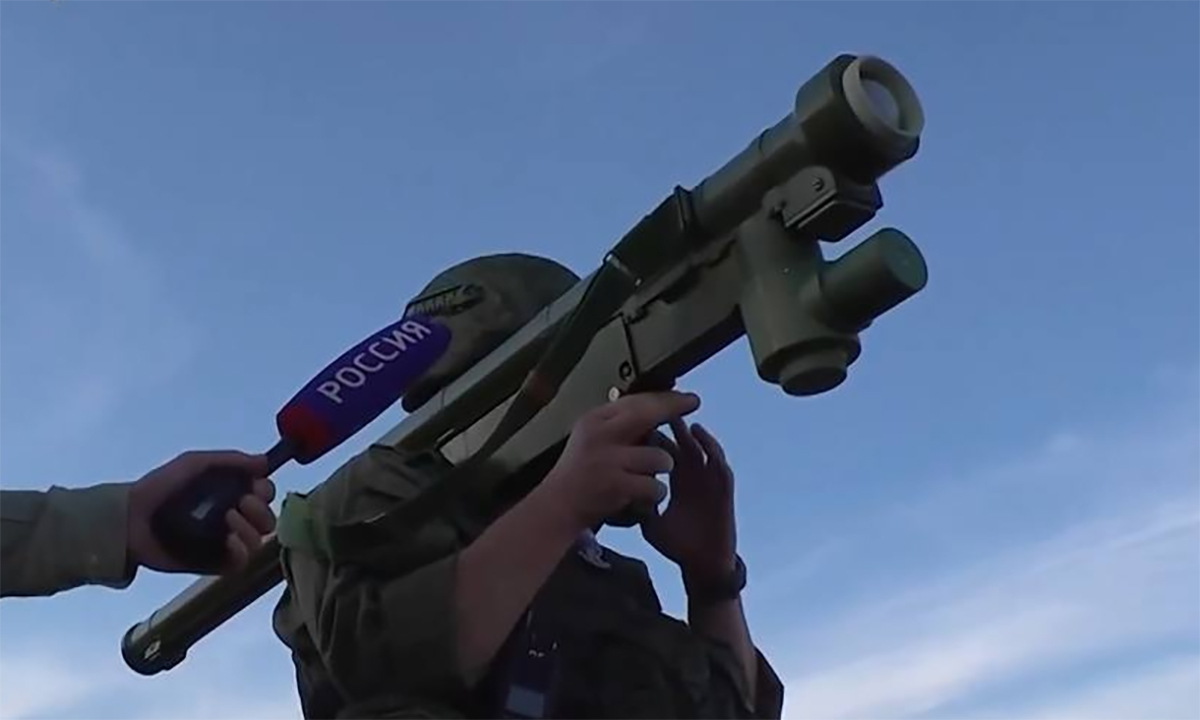 |
A Russian soldier with the Iva shoulder-fired anti-aircraft missile in an image published on 28/9. Photo: Rossiya 1
The Iva missile, whose name means 'willow' in Russian, shares its botanical family with the Verba, Russia's latest 9K333 shoulder-fired anti-aircraft missile.
However, Newdick noted that Iva bears striking similarities to Iran's Misagh-3 system and the QW-18/19 series developed by China. Newdick suggested that Iva might be a Russian-made version or a system developed based on similar Chinese or Iranian designs, rather than a fully imported product. The Misagh system itself is believed to have originated from or been heavily influenced by the QW series design.
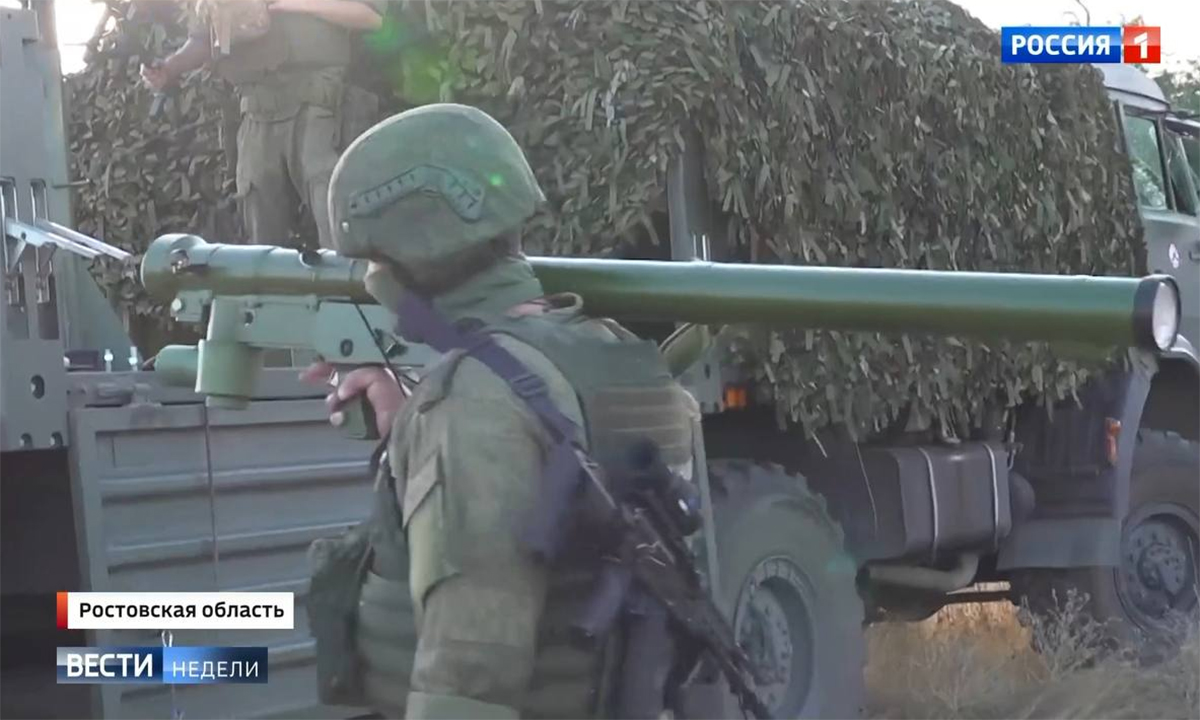 |
A Russian soldier with the Iva shoulder-fired anti-aircraft missile in an image published on 28/9. Photo: Rossiya 1
The Russian news site Podolyaka reported that the combined weight of the launcher tube, missile, and sighting system is approximately 18 kg, enabling operators to use it while on foot or from a moving vehicle.
The Iva projectile features an infrared seeker capable of distinguishing between targets and heat decoys. It boasts a maximum range of 6 km and a flight ceiling of 3,000 meters. The system can engage small unmanned aerial vehicles (UAVs) with very low thermal signatures from a distance of 2-3 km.
Shoulder-fired anti-aircraft missiles equipped with high-sensitivity seekers are effective against low-thermal-signature targets, Podolyaka explained. Russia's Verba complex, for instance, has proven effective against long-range suicide UAVs like Lyuty and FP-1.
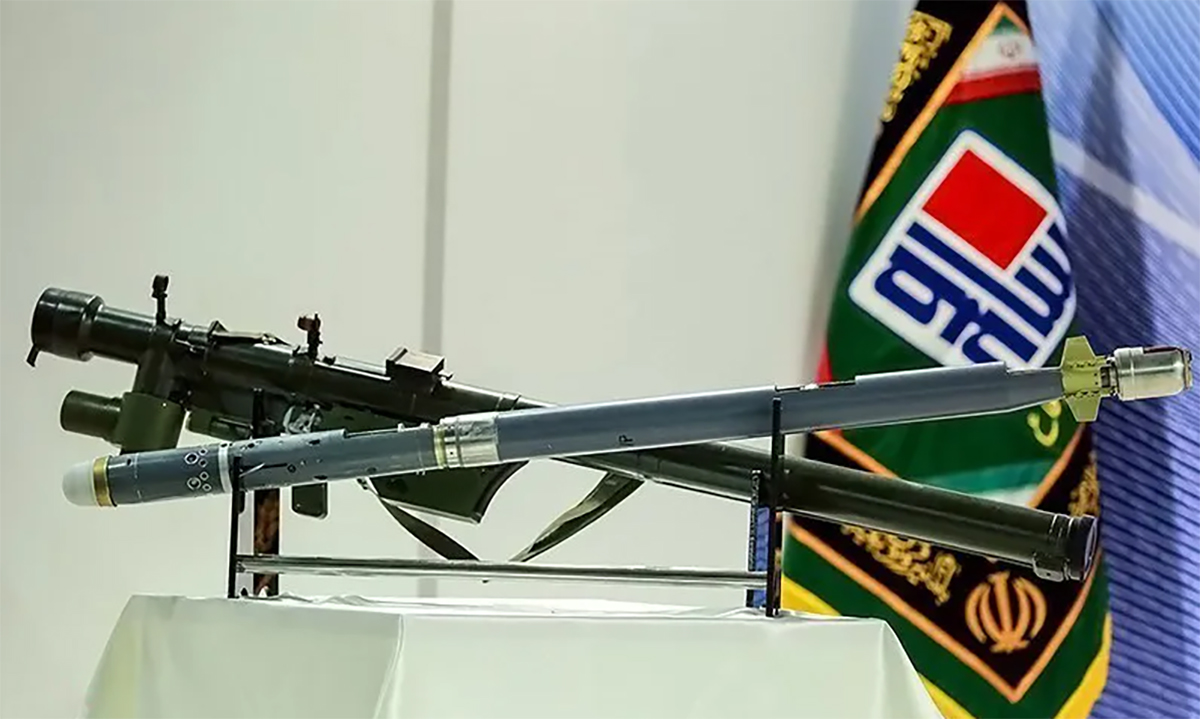 |
Iran's Misagh-3 shoulder-fired anti-aircraft missile. Photo: Tasnim
Newdick emphasized that mobile air defense teams have become a critical component of Russia's multi-layered air defense network, primarily tasked with countering UAVs and other low-flying threats. Shoulder-fired anti-aircraft missiles are ideal for this role because they can be distributed among small combat groups, allowing for rapid repositioning without the need for radar support or large motorized vehicles, unlike traditional air defense units. These units are frequently deployed to protect bases and sensitive installations.
Nguyen Tien (According to War Zone, AP, Rossiya 1)