|
Locations attacked in the Middle East conflict as of 5/3. Graphic: CNN |
On 5/3, CNN released satellite images, captured by Airbus two days prior, depicting the aftermath of an Iranian attack on Jordan's Muwaffaq Salti airbase.
The images show the US-made AN/TPY-2 radar, a component of the terminal high altitude area defense (THAAD) system, at the base was charred. Its components, typically mounted on 5 trailer vehicles, appear to be destroyed or severely damaged.
Two craters, approximately 4 meters deep, are visible on the ground near the radar system, suggesting Iran likely employed multiple strikes to achieve a hit.
 |
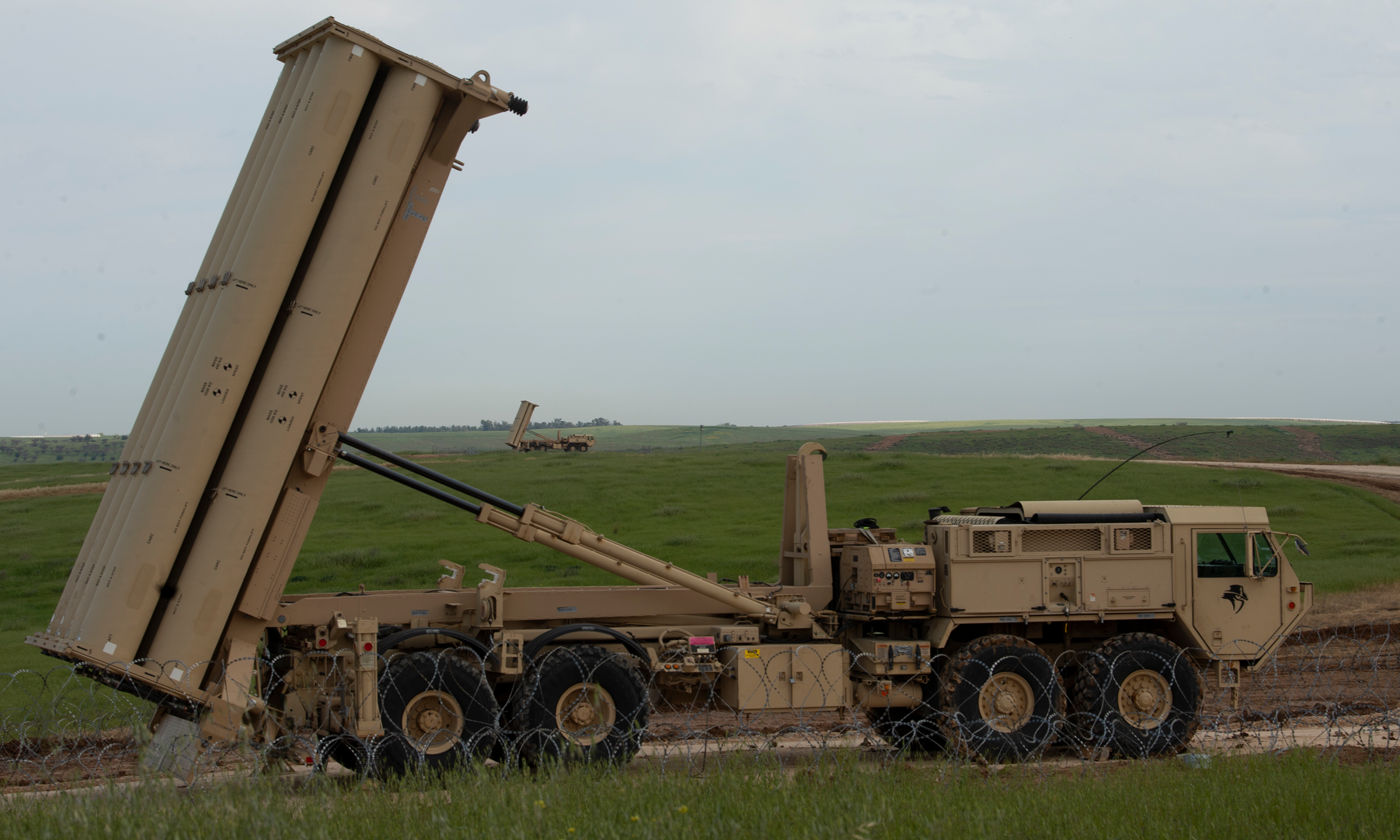
An intact US Army AN/TPY-2 radar on Kwajalein Island in 2012.
N.R. Jenzen-Jones, a munitions expert and director of the research firm ARES, stated that the AN/TPY-2 radar is the "heart" of the THAAD complex, one of the world's best air defense systems.
According to Jenzen-Jones, replacing an AN/TPY-2 radar is challenging and constitutes a major loss for the US military. Each AN/TPY-2 system is valued at nearly half a billion USD.
 |
 |
The system at Muwaffaq Salti base may not be the only THAAD radar hit by Iran.
At least three buildings at a military facility near Al Ruwais and 4 buildings at a facility in Al Sader, both in the United Arab Emirates (UAE), were attacked and damaged between 28/2 and 1/3.
Warehouses storing THAAD radars were among the structures hit. The extent of damage to the equipment inside remains unclear.
 |
 |
The image shows black marks appearing on buildings at the facility near Al Ruwais on 1/3, after the Iranian attack.
Satellite images of the Al Sader facility on 27/2 (left) and 1/3 show black marks appearing on the buildings after the Iranian attack.
It remains unclear whether the THAAD complexes at these two facilities belong to the US or the UAE. The US currently operates 8 THAAD batteries, having sold two systems to the UAE. Saudi Arabia also operates one complex.
Before CNN published the satellite images, Iran's Islamic Revolutionary Guard Corps (IRGC) claimed to have destroyed one radar of the THAAD system in the UAE. The IRGC also announced hitting another THAAD complex in West Asia but did not specify the country.
 |
Satellite images taken by Planet Labs on 3/3 also show a damaged AN/FPS-132 radar at Umm Dahal, Qatar.
The IRGC previously claimed to have "destroyed an AN/FPS-132 radar complex located at a US base in Qatar".
A Pentagon spokesperson told CNN they would "not comment on the status of specific assets in the region for operational security reasons".
 |
An AN/FPS-132 radar deployed by the US on Greenland island, shown in an image from 2017.
This is an active electronically scanned array (AESA) radar with two transmit-receive antenna faces. This design eliminates the rotating mechanism of conventional radars. Each radar face manages a separate airspace sector with a 120-degree azimuth angle, providing a total 240-degree field of view.
The AN/FPS-132 radar has a maximum tracking range of 4,800 km and is likened to a "divine eye" specializing in early warning for ballistic missile attacks.
 |
Pham Giang (Images: Airbus, Planet Labs, US Missile Defense Agency, USSF)