Despite the cold weather in Seoul, long queues form outside many bakeries from early morning for Dujjonku. This cookie is inspired by Dubai-style chocolate, a crispy treat featuring pistachio filling mixed with kadaif strands, which are flour-based threads from the Middle East.
"Initially, I wasn't interested, but after hearing everyone talk about it, I wondered how delicious it could be," said Nam Su-yeon, a 28-year-old office worker. "Curiosity drives you to buy and try it, then you might think another place offers a better version, leading you to seek it out again."
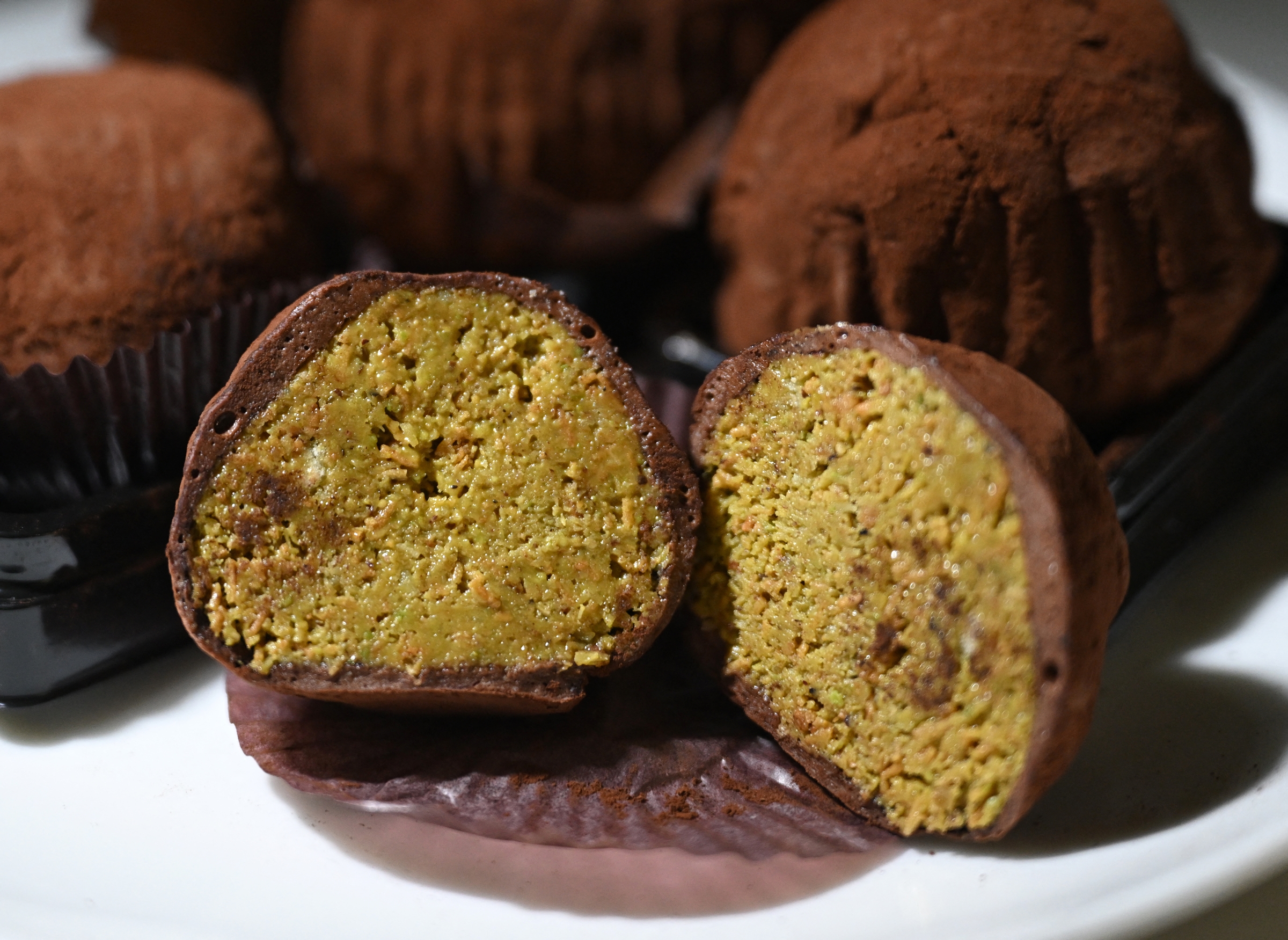 |
Dujjonku, a Dubai-style cookie, displayed in a bakery in Seoul on 20/1. Photo: AFP |
Online searches for the dessert have surged over 20 times in the past three months, according to data from Naver, South Korea's largest search engine. Searches on food delivery applications saw a 1,500-fold increase last month.
A developer even created an online map to track which establishments had stock, as convenience stores consistently sell out.
Jang Won-young, a singer from the girl group IVE, posted a photo of her lips covered in cocoa powder from Dujjonku, initiating the "Dujjonku lips" trend.
"This cookie is certainly a sensation," said Hwang Jae-kyoung, a 34-year-old office worker. "Its popularity is significantly boosted by celebrity endorsements."
To create these cookies, bakers melt marshmallows and combine them with chocolate for the outer shell. The filling consists of pistachio cream mixed with kadaif noodles, and the exterior is dusted with cocoa powder. The cookies are not overly sweet, offering a texture that is both crispy and chewy. Each piece weighs approximately 50 g and sells for 6.500 won (4,4 USD). Bakeries typically limit purchases to a maximum of two cookies per person.
The Korean Red Cross, which has long struggled with blood donor shortages, has even started offering Dujjonku as an incentive, replacing conventional snacks. Consequently, some blood donation centers have reported double their usual number of participants.
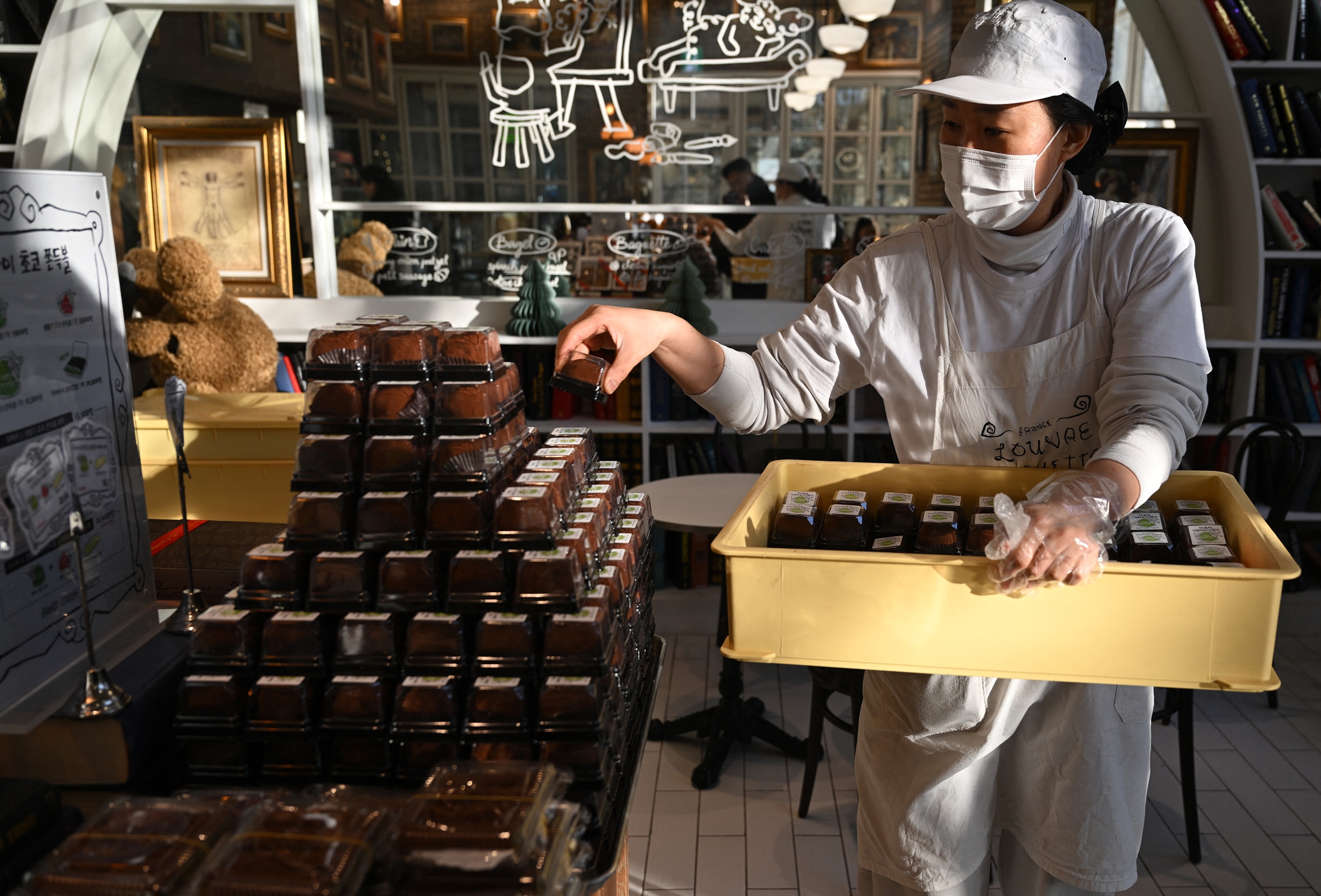 |
Bakery staff in Seoul display Dujjonku on the counter on 20/1. Photo: AFP |
Each cookie provides up to 500 calories, prompting health experts to issue warnings. Guro Hospital, Korea University, has cautioned that this dessert could "immediately disrupt the body's metabolic balance" and "threaten overall health, beyond just causing weight gain."
The craze has also led to a surge in raw material prices. The cost of one kg of unshelled pistachios has quadrupled compared to last month, and the price of kadaif noodles has doubled. Even sushi restaurants and traditional Korean eateries are now offering this popular dessert.
The trend appears to be spreading to neighboring China, where the hashtag "dubaichocolate" has garnered over 329 million views on Xiaohongshu, an Instagram-like platform.
Hong Hanh (According to AFP)