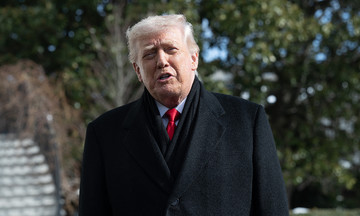
"Many firefighters recounted rescuing survivors, but I am plunged into a dark place mentally because I only managed to bring out bodies," a firefighter, identified as TTT, wrote on social media, referring to the search efforts for victims of the Wang Fuk Court apartment complex fire in Hong Kong.
Hong Kong's most severe fire in over 70 years erupted on 26/11, destroying 7 out of 8 buildings in the Wang Fuk Court complex. The blaze resulted in at least 159 fatalities, including one firefighter, and approximately 30 people remain missing. Members of the Hong Kong fire service have described the harsh conditions they faced while searching for victims within the charred buildings.
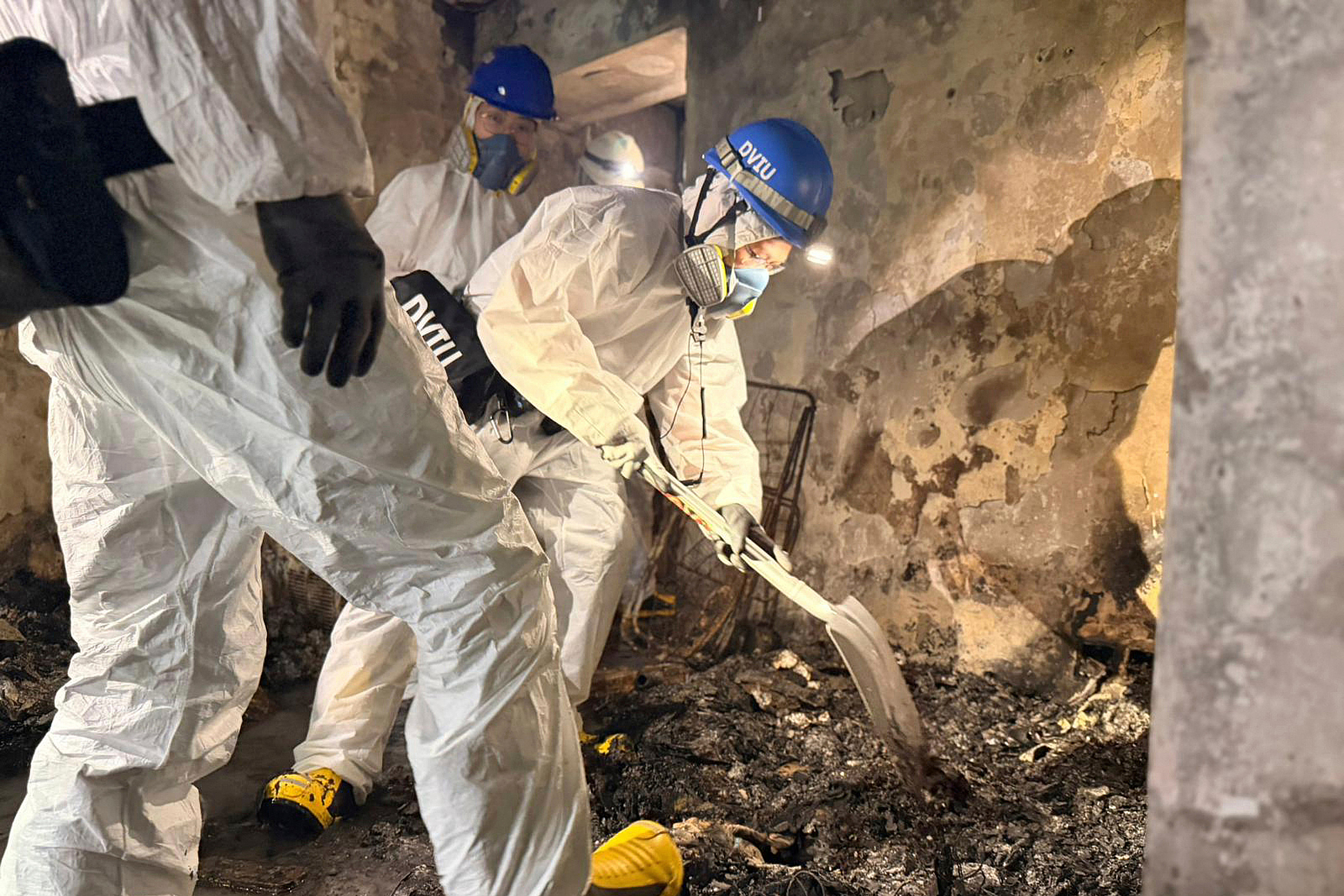 |
A member of the Hong Kong police's Disaster Victim Identification Unit inside an apartment at Wang Fuk Court, Hong Kong, on 30/11. Photo: AP
Another firefighter stated that he and his team had to climb stairs to apartments from the 20th floor upwards to find survivors. They conserved the oxygen in their tanks to maximize search time.
"I put on my mask and turned on the oxygen supply when I reached the 10th floor and above," he wrote. "But no matter how much we conserved, we did not have much time to search on the upper floors."
This individual mentioned that during rescue operations on 27/11, scaffolding collapsed exactly where he had stood moments before. "The situation on the second day after the fire was already this severe; one can imagine the difficulties and dangers my colleagues experienced on the first day," he expressed.
The fire was fully extinguished on 28/11, and the search for survivors concluded. Firefighters continued to investigate inside the apartment complex, while police from the Disaster Victim Identification Unit continued to search for bodies until 3/12.
A firefighter present at the complex on 30/11 said that the higher he climbed in the first building to catch fire, Wang Cheong House, the more bodies he saw.
"I kept thinking, 'If we had arrived sooner, could we have rescued the victims from the fire?' I understand that it would have been extremely difficult," he wrote. "Just by looking at the surroundings, one can imagine how hot the temperature was at that time."
After his shift, he could not sleep soundly for two days, frequently experiencing nightmares as he recalled the sight of bodies scattered throughout the building.
Anthony Lam Chun-man, a former director of a Hong Kong fire agency, explained the difficulties firefighters face when working in suffocating smoky environments and carrying heavy equipment.
"Firefighting equipment weighs about 13-18 kg, including protective suits, boots, helmets, axes, and oxygen tanks," Lam said, adding that they also had to watch out for falling objects in the dense smoke.
"The smoke was so thick that I could not see my fingers even when holding out my hand. Every step required feeling around with my hands," he explained, noting that protective gear could not completely cover firefighters' bodies, leaving areas like the neck exposed to extreme temperatures.
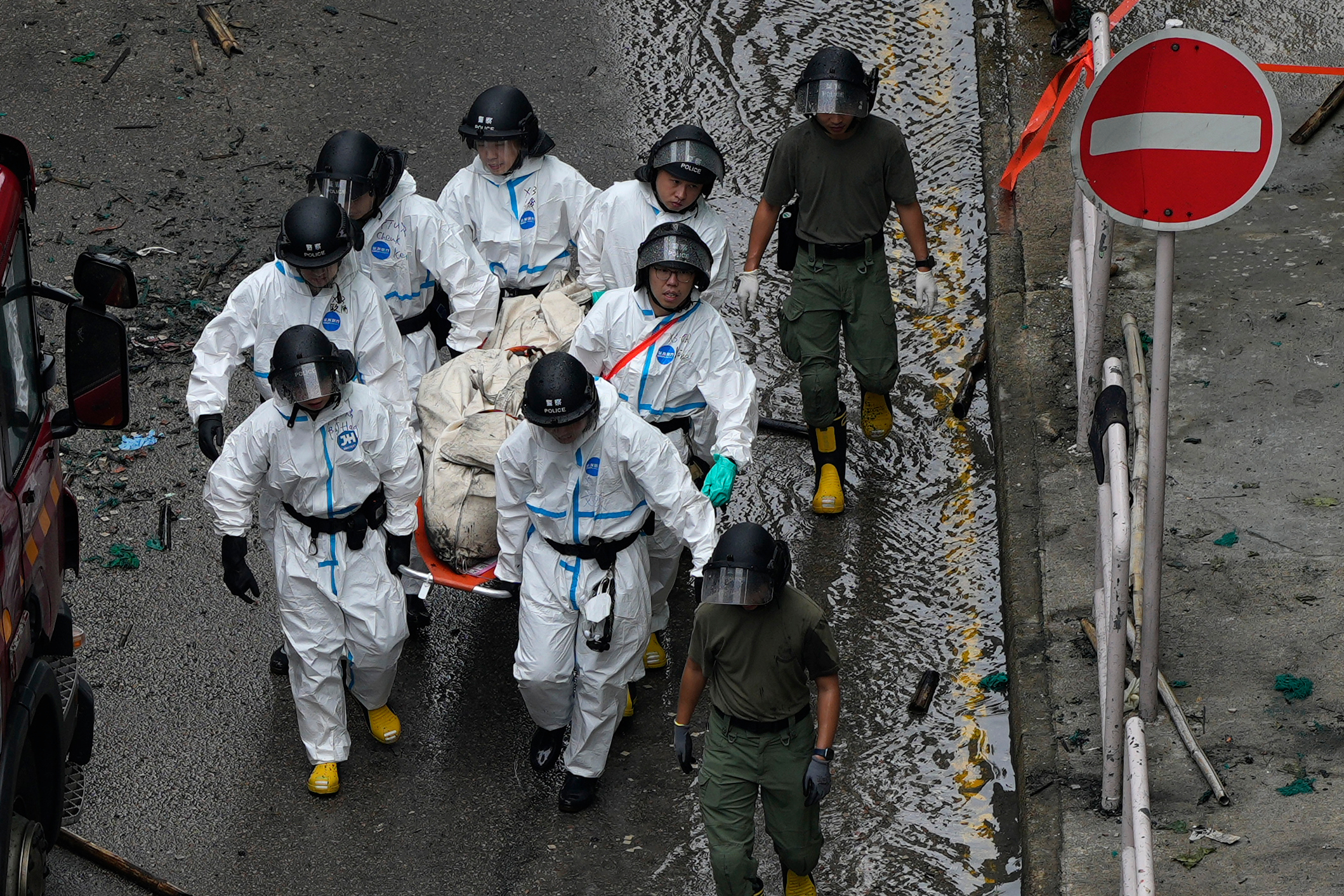 |
Rescue workers carry a body bag from the scene of the fire at the Wang Fuk Court apartment complex, Hong Kong, on 30/11. Photo: AP
Lam previously participated in firefighting efforts at the Blue Box Industrial Building in Aberdeen, Hong Kong, in 1986. That blaze lasted 68 hours and was classified as one of the most severe.
He stated that the firefighting mission at that time was "extremely difficult," involving 12-hour shifts, carrying 18 kg of equipment, and only brief rests before another team took over, after which they would return to duty. However, he noted that stress and anxiety became motivation for firefighters to rescue more survivors.
TTT, who suffered sleepless nights from witnessing too many scattered bodies, realized he "truly loves the job" because what he does is to help people. "For me, this is not an act of heroism, but a responsibility," he expressed.
Hong Hanh (According to SCMP)