Ukrainian President Volodymyr Zelensky stated on 9/12 that the country is ready to hold elections within the next 60-90 days, provided the US and Europe guarantee security. "I am ready for new elections," President Zelensky declared, indicating a change in his previous position.
Zelensky had repeatedly affirmed that elections would only be held after the conflict with Russia ended, and such activities are prohibited under Ukraine's martial law. Analysts suggest that Zelensky's shift in stance appears to be part of Kyiv's negotiation strategy, aimed at persuading Washington to provide additional security assurances.
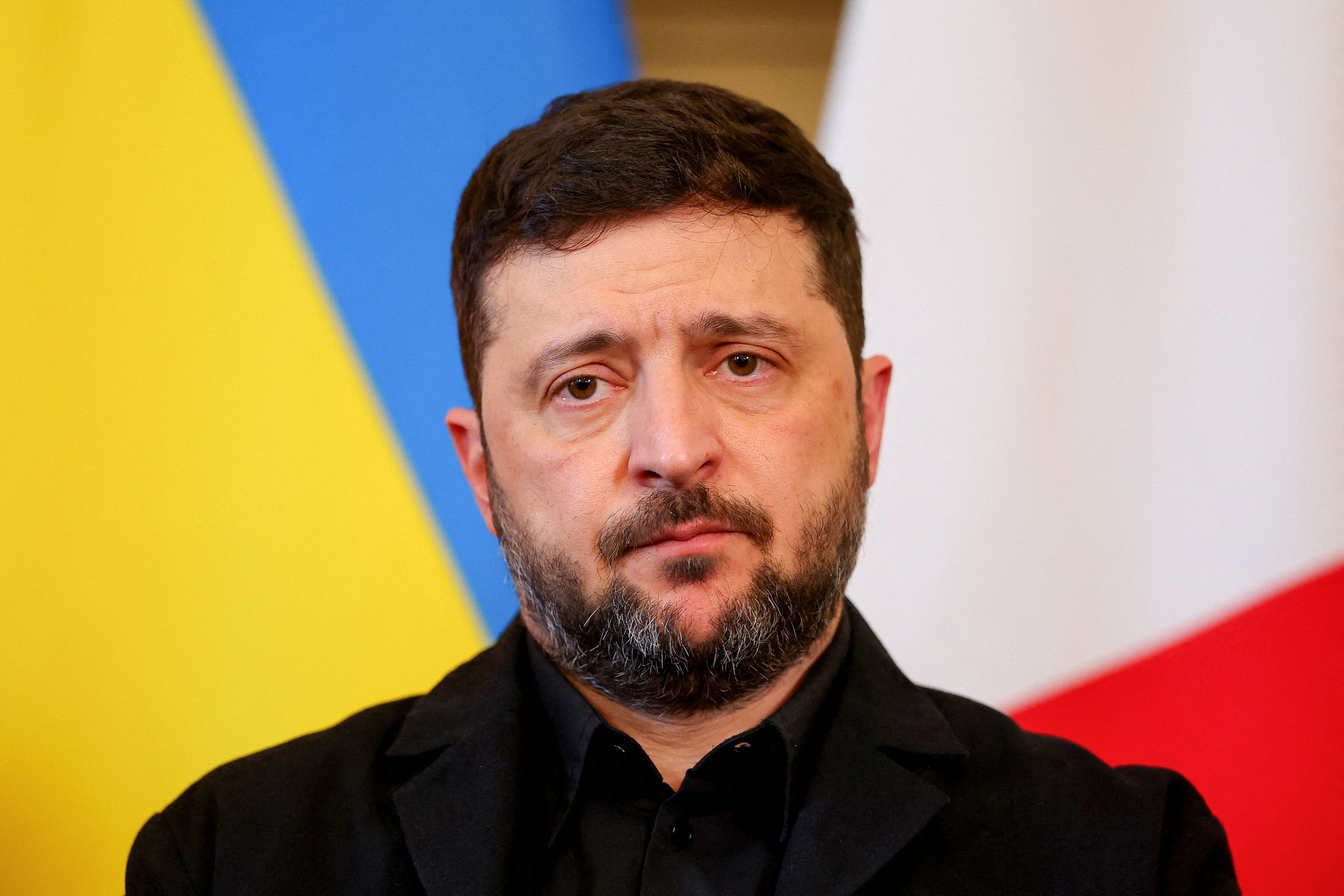 |
Ukrainian President Volodymyr Zelensky in London, UK, on 8/12. Photo: AFP |
In 2019, Zelensky defeated former president Petro Poroshenko, winning a five-year term. During the last two years of his term, Ukraine has been embroiled in conflict with Russia. President Zelensky declared martial law across the entire territory on 25/2/2022, one day after hostilities erupted, and has extended it 17 times. The latest extension is effective from 5/11/2025 to 3/2/2026.
Theoretically, Zelensky's term ends in 5/2024, but Ukraine has not held elections because its laws prohibit doing so during martial law. Furthermore, Ukraine would struggle to ensure a free, fair, and safe electoral process amidst ongoing hostilities.
Ukraine's constitution includes term limits but does not specifically address the presidency during martial law. Consequently, President Zelensky remains in office until the country holds presidential elections, which has sparked debate about his legitimacy.
By announcing his readiness to hold elections, President Zelensky aims to refute accusations that he is "clinging to power," asserting that security is the main reason affecting this process.
"I hear speculation that I am trying to hold onto the presidency. Frankly, that is completely unfounded," the Ukrainian leader said. "But how can elections be held when our military is still under missile attack? How will they vote?"
President Zelensky will propose that Ukraine's parliament amend the legal framework and election laws during martial law, noting that this is "a matter for the Ukrainian people, not for other countries." "With all due respect to our partners, I want to say directly that I am ready for the elections," Zelensky stated.
These statements followed US President Donald Trump's criticism of Zelensky in an interview published by Politico on the same day. The White House chief suggested that Ukraine is "exploiting the conflict" to avoid holding elections.
"They talk about democracy, but at some point, it's no longer a democracy," Trump said.
The US President urged Kyiv to accept a peace plan drafted by Washington. The original version of the plan included 28 points, primarily outlining requirements for Ukraine to fulfill, such as territorial concessions, not joining NATO, holding elections within 100 days, and receiving reliable security guarantees.
"Zelensky's move is a direct response to this pressure," EU Today quoted analysts in Kyiv. "By sending a message of readiness for elections but linking their organization to security guarantees that, in reality, only the US, Europe, and Russia can provide, Zelensky has skillfully pushed Washington to transform statements of democratic support into concrete action."
Commentators in Ukraine also believe that the domestic political risk for President Zelensky is quite low, even if elections are held in the near future. If relevant parties cannot ensure security for elections, he can argue that Ukraine demonstrated goodwill but was obstructed by Russia or that Kyiv's partners were unwilling to create safe conditions.
Conversely, if the parties agree to a temporary ceasefire, allowing candidates to campaign and vote, what has occurred in other conflicts shows that incumbent wartime leaders often have an advantage.
 |
Ukrainian voters cast ballots in Kyiv in 7/2019. Photo: AFP |
A poll released by Kyiv-based Info Sapiens on 9/12 showed that 20,3% of the 1.000 respondents would vote for Zelensky if a presidential election were held at this time.
This percentage, while not high, still indicates Zelensky is the most promising candidate. Former Commander-in-Chief Valerii Zaluzhnyi, currently Ukraine's Ambassador to the UK, ranked second with 19,1% support, an increase of 3 percentage points from the October survey. Military intelligence chief Kyrylo Budanov placed third with 5,1% support.
About 23,6% of survey participants admitted they were undecided or refused to disclose their preferred candidate.
Upon taking office after the 2019 election, President Zelensky enjoyed an approval rating of 80%, which decreased to 37% by 2/2022, just before hostilities erupted. After the Russia-Ukraine conflict began, this figure surged to 90%.
Nhu Tam (According to Kyiv Independent, CNN, EU Today)