


President Donald Trump abruptly announced on 21/1 that he had reached a "future framework agreement" for Greenland with NATO. Following this announcement, most parties involved remained silent on the specific details of the agreement.
When questioned about the terms, NATO Secretary General Mark Rutte merely referenced Trump's social media post, which offered almost no specific details.
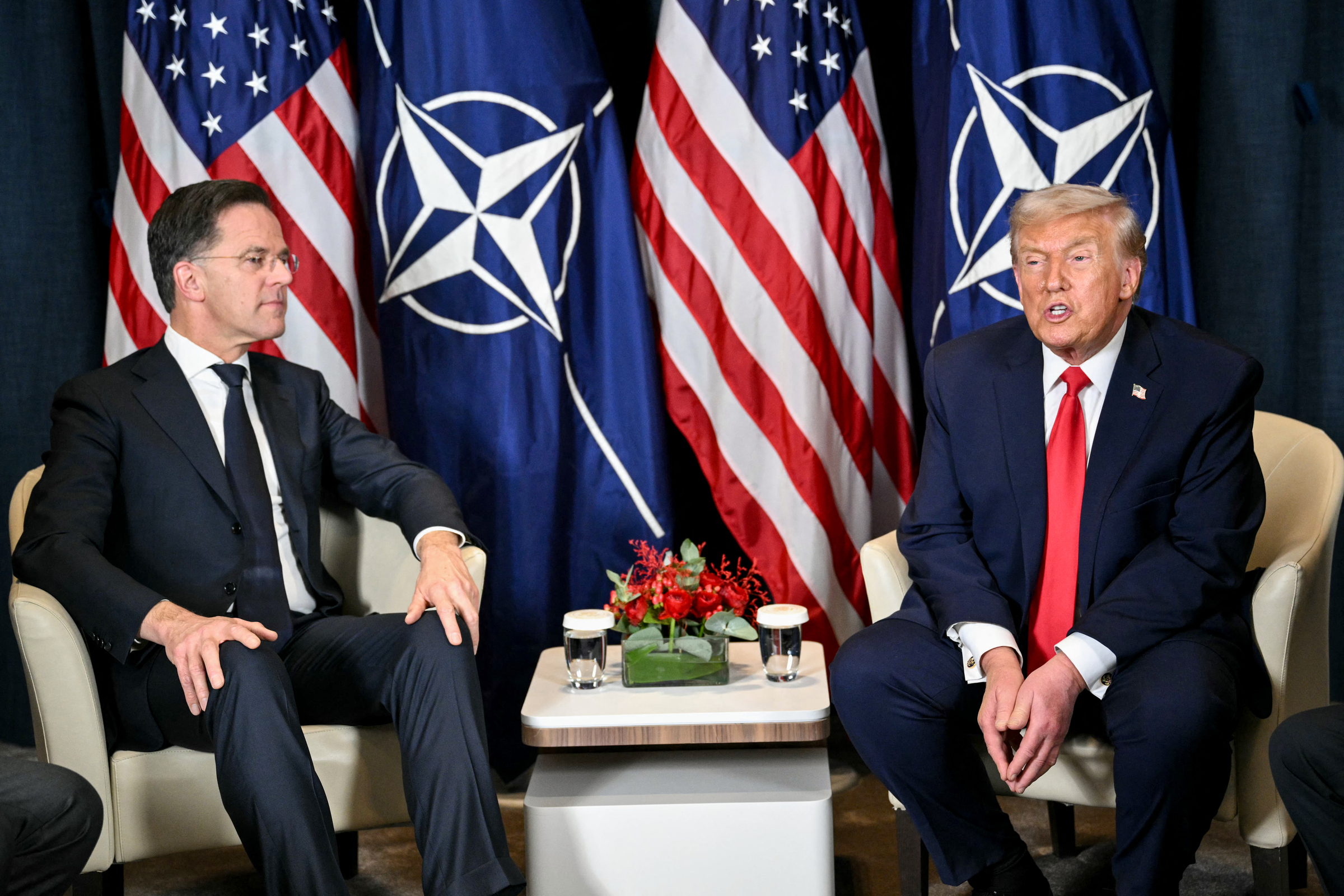 |
US President Donald Trump (right) meets NATO Secretary General Mark Rutte in Davos, Switzerland, on 21/1. Photo: AFP |
When a CNN reporter asked President Trump if the new agreement would allow the US to acquire Greenland, he paused and did not answer directly. "This is a long-term agreement, with permanent value," the President stated.
This response offered insight into the new agreement. Experts suggest that President Trump's evasion of the CNN reporter's core question indicates the agreement likely will not help him achieve his long-held goal of controlling Greenland.
Based on limited information and comments from President Trump and the NATO Secretary General, experts believe the "future framework agreement" will primarily involve updating the Greenland defense treaty signed by the US and Denmark in 1951.
President Trump asserted that the agreement would grant the US "full access" to the island for defense purposes, including enhancing security cooperation, such as deploying an iron dome defense system in Greenland, similar to Israel's system. A NATO spokesperson suggested the updated agreement might contain specific provisions to prevent Russia and China from operating in Greenland, and it appears to include an increased role for NATO on the island.
However, observers note that the US has already secured most of these objectives, or could achieve them without the assertive measures employed by Trump.
Regarding access rights, the 1951 treaty already granted the US "exclusive jurisdiction over its defense areas in Greenland." Provided it did not violate Danish sovereignty, the US was permitted to renovate and develop defense areas, install and maintain equipment, station personnel, ensure security, establish post offices and military stores, and control entry and exit of ships and aircraft.
The agreement also allowed the US free movement between defense areas. It stipulated that Danish law could not prevent key US personnel and their families from entering these areas. Iris Ferguson, former deputy assistant secretary of defense for Arctic affairs under the Joe Biden administration, noted, "The 1951 treaty gave the US enormous flexibility in determining necessary security interests and was always given the green light to implement them. So, in theory, such authorities were already available."
At the peak of the Cold War, the US military stationed over 10,000 troops in Greenland. The island served as a crucial radar station to monitor Soviet missiles flying over the Atlantic and was a testing ground for military outposts capable of withstanding nuclear attacks.
The US maintains a Space Force facility and powerful radar systems in Greenland. However, expanding troop numbers would necessitate costly upgrades to old facilities, along with building new housing and logistical infrastructure during the few short months of warmer weather.
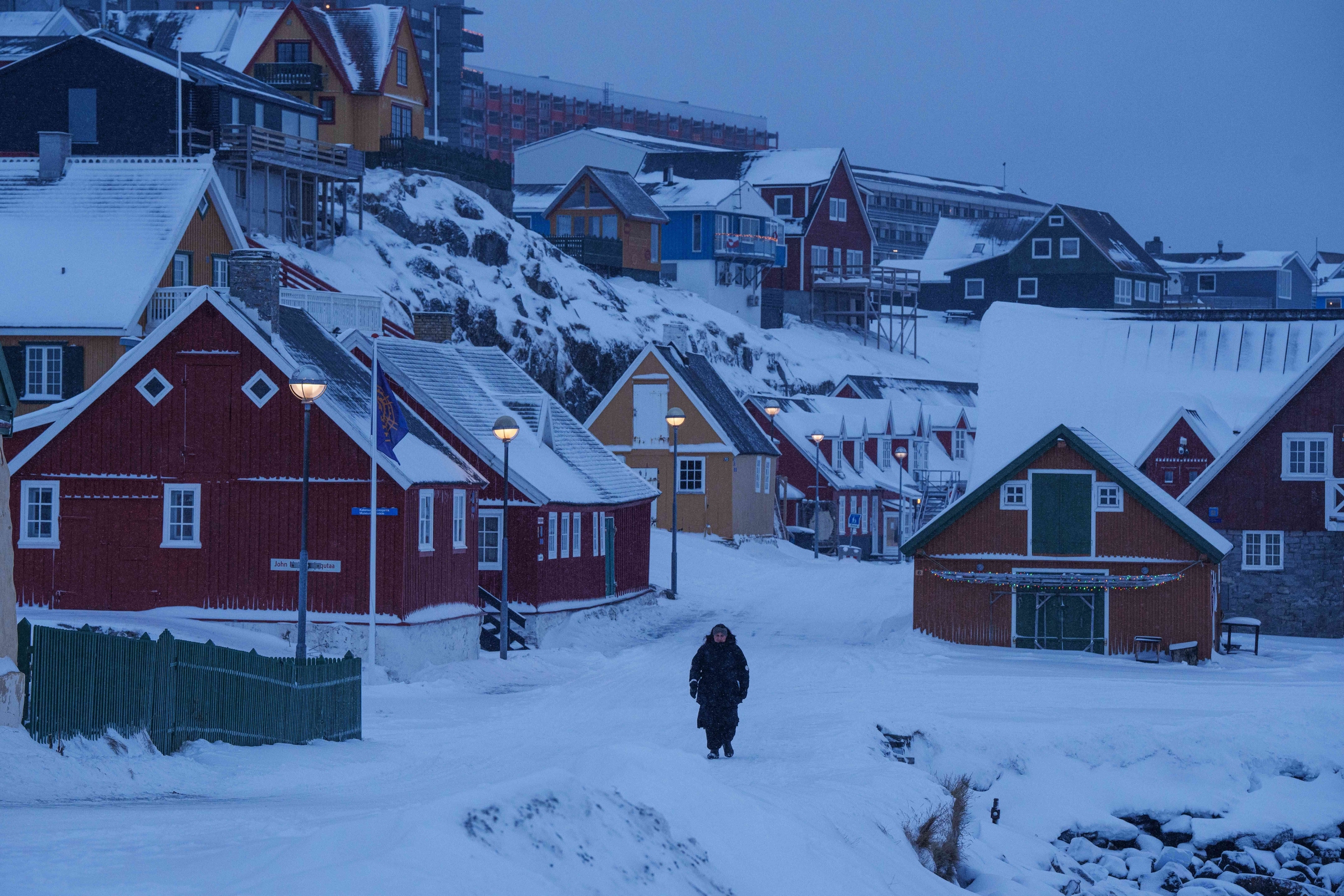 |
A view of Nuuk, Greenland, on 19/1. Photo: AP |
Last month, the US Army Corps of Engineers announced a runway modernization project at Pituffik Space Base, potentially costing USD 25 million. This highlights the expense of constructing new facilities in the harsh Arctic climate.
The legal status of the US military at Pituffik Space Base on Greenland's northwest coast is also firmly established under another treaty, the 1955 Status of Forces Agreement. This treaty allows US forces free entry and exit from Greenland, even though the territory is not legally US territory. Since the late 1980s, however, the US presence at this base has been limited to about 100 soldiers, focusing on early warning and missile defense missions.
Jim Townsend, former deputy assistant secretary of defense for NATO and Europe, commented, "At all our bases around the world, we negotiate sovereign rights. This is not something special that we only get from Greenland. Everything so far is just 'old wine in new bottles'."
Regarding enhanced security cooperation, Greenland, Denmark, and relevant parties have long signaled their readiness to negotiate with the US. Earlier this month, Vivian Motzfeld, Greenland's head of foreign affairs, affirmed their commitment to finding "the right path" to resolve disagreements and strengthen cooperation with the US. Nordic leaders, including the Danish Foreign Minister, affirmed on 6/1 that the 1951 agreement always "left open the opportunity to enhance security cooperation."
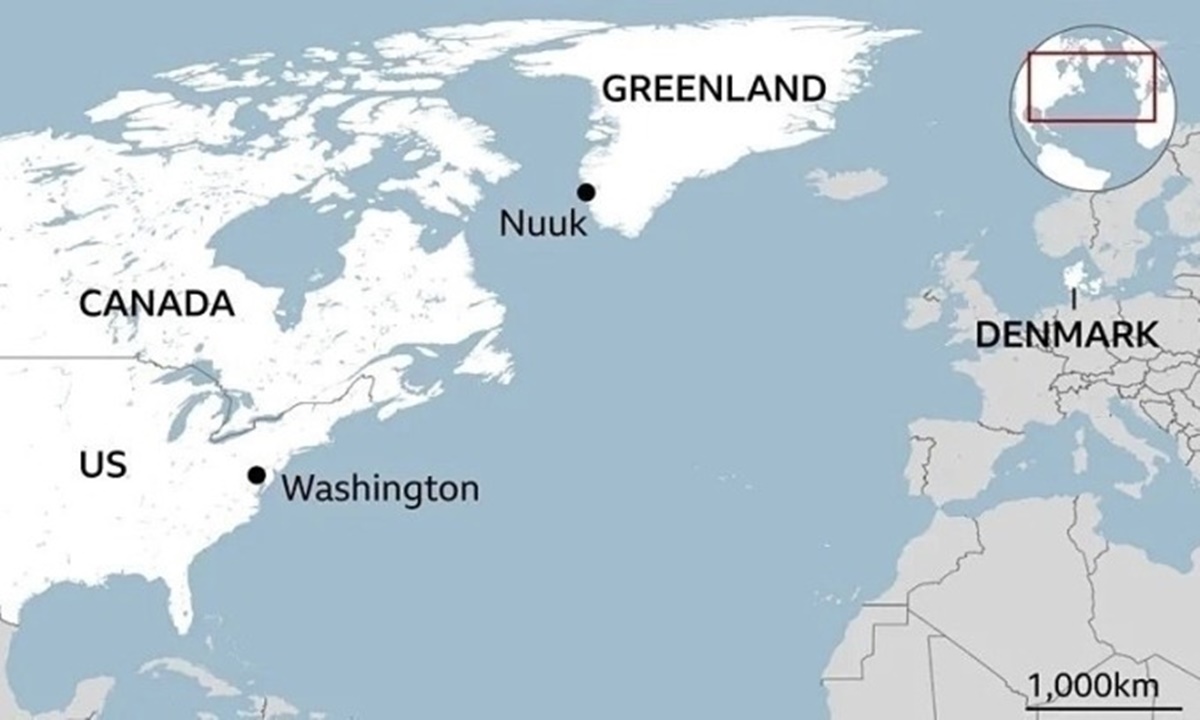 |
Location of Greenland island. Graphic: BBC |
Regarding President Trump's efforts to prevent Russia and China from accessing Greenland, there are no signs that the US will face opposition. As Denmark is a NATO member, there is every reason to believe they would approve this. Last week, Republican Senator Mitch McConnell said he "hadn't heard the administration raise anything we need from Greenland that the people there aren't willing to provide."
Danish Prime Minister Mette Frederiksen met NATO Secretary General Rutte on 23/1, agreeing that the alliance should enhance security cooperation in the Arctic region. Frederiksen will travel to Greenland to discuss with the island's premier.
However, the US President remains an unpredictable factor. Allies admit that just as he quickly withdrew his threat to control Greenland by force, he could easily revert to such threats. Despite preparing for further surprises, many allies could not hide their disappointment with the US President's messages about Greenland.
Bjorn Soder, a member of the Swedish Defense Committee, stated that while NATO has legitimate Arctic security concerns, the US's aggressive initial approach is harming alliance relationships. "The US is making a big mistake by stirring up the Greenland issue," he said. "Our region is very pro-US, but now, even those who used to praise the US have started to change their views."
Vu Hoang (According to CNN, Politico, WSJ)


