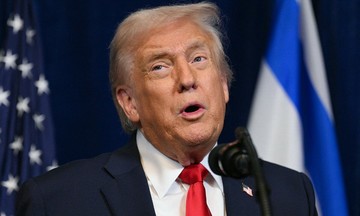
On 31/12/2025, US President Donald Trump announced on social media, "We are withdrawing National Guard units from Chicago, Los Angeles, and Portland, even though crime has sharply decreased in those cities thanks to the presence of this patriotic force."
Trump asserted that these three cities "would have collapsed" without federal intervention. He added, "We will return, possibly in a very different and stronger form, if crime recurs. It's only a matter of time."
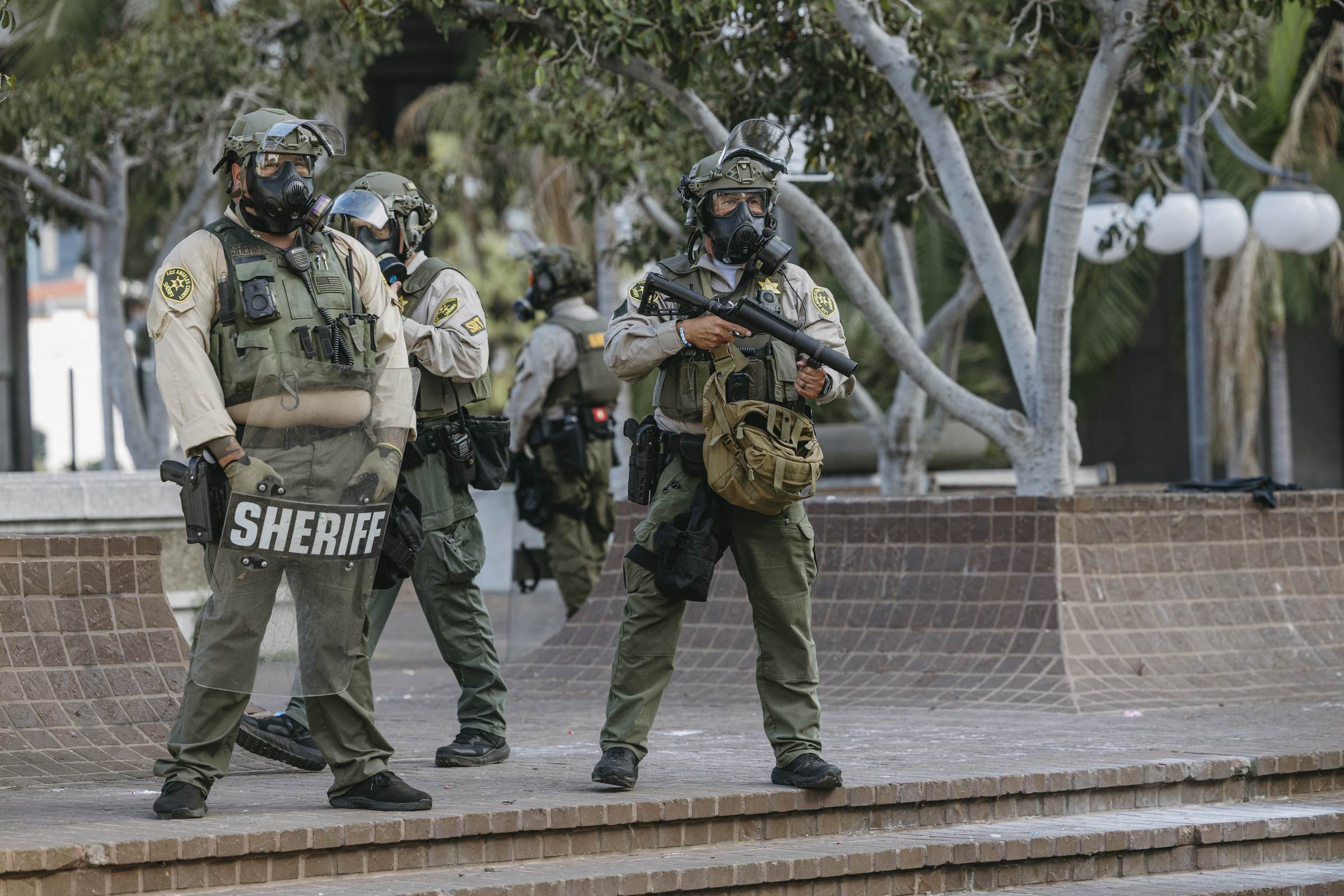 |
Police deployed in Los Angeles, California, on 14/6. *Photo: AFP*
After returning to the White House in January (1/2026), President Trump implemented strong policies to address illegal immigration and crime. He deemed the deployment of the National Guard to cities such as Los Angeles, Chicago, Memphis, Portland, and Washington D.C. essential for protecting federal property and personnel from protesters.
Trump's efforts faced numerous legal challenges. Local governments argued that he exaggerated concerns about violent crime and that federal intervention only worsened the situation. They filed lawsuits in federal court and received favorable rulings from judges, blocking the President's intentions.
The White House maintained that President Trump's decision to deploy the National Guard was legal and necessary, accusing local leaders of "tolerating violence" and "undermining public safety."
The National Guard is the US military's reserve force. Each US state and territory has its own National Guard, directly commanded by its governor, who serves as the state's commander-in-chief of the National Guard. The US National Guard is tasked with responding to domestic emergencies or participating in overseas combat as part of the US Army.
By Nhu Tam (AFP, Reuters)