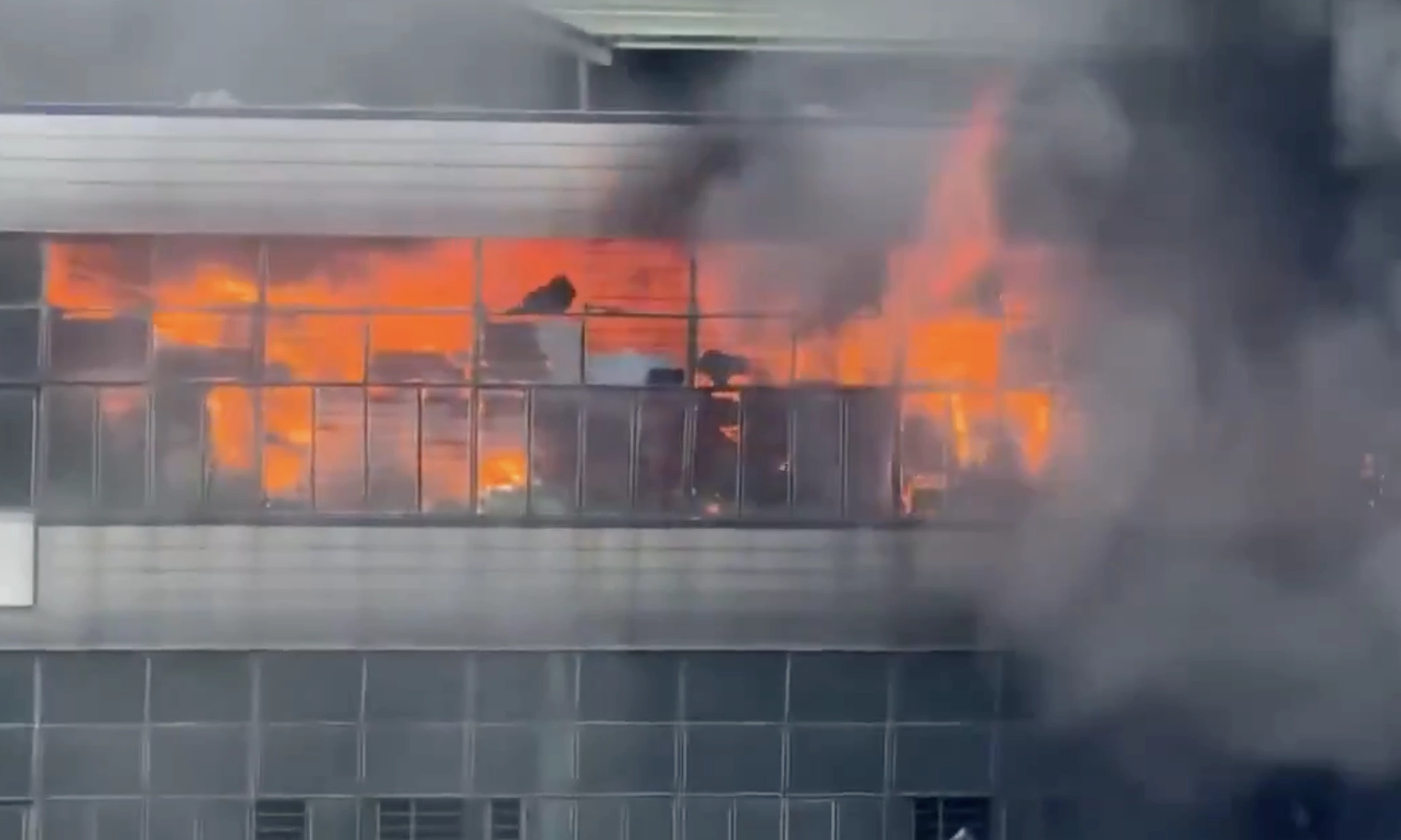
U.S. Central Command (CENTCOM), the agency overseeing U.S. military operations in the Middle East, announced today that "90 Iranian military targets, including air defense systems, coastal surveillance vehicles, missile and unmanned aerial vehicle (UAV) depots, naval assets, and military logistics infrastructure along the country's coast, were struck on 8/7."
CENTCOM had previously announced "intensified strikes" against Iran, carried out under orders from President Donald Trump. "The U.S. is holding Iran accountable for unprovoked aggression against civilian vessels freely navigating this vital international shipping lane," the agency stated, referring to the Strait of Hormuz.
Al Jazeera reported that several cities along Iran's southern coast were targeted, including Bandar Abbas. Explosions also occurred on islands near the Strait of Hormuz, such as Qeshm and Abu Musa, with some appearing to be air defense missiles intercepting targets.
A key difference from the U.S. military strikes conducted on the night of 7/7 was the expanded attack scope to southeastern Iran, with the cities of Iranshahr, Konarak, and Chabahar all being targeted.
According to Al Jazeera, Chabahar was heavily bombed, with targets including residential areas, military facilities, two important piers, and a maritime traffic control center. In Iranshahr, a hospital was reportedly hit by shrapnel from the attack, and an airport facility was also struck.
The U.S. also conducted airstrikes on the city of Bushehr and its surrounding areas in southwestern Iran. This was a notable development, as Bushehr is home to Iran's nuclear power plant. Local officials stated that a U.S. weapon landed near the plant's perimeter, but the reactor core remained undamaged, and radiation levels in the area were normal.
Iran's Ministry of Health reported that the U.S. had attacked a total of 5 provinces across the country over the past two days, resulting in 14 fatalities and 78 injuries.
The renewed conflict occurred after President Trump declared on 8/7 that the ceasefire between the U.S. and Iran had ended, stating that negotiations with Tehran were "just a waste of time." Iran also asserted that key terms of the memorandum signed by both sides in mid-June had become invalid, warning the U.S. of "dangerous consequences" from this action.
On the night of 7/7, the U.S. military also announced strikes on over 80 targets in and near the Strait of Hormuz, citing retaliation for Iranian attacks on cargo ships transiting the waterway. Iran's Islamic Revolutionary Guard Corps (IRGC) subsequently launched missiles and UAVs at U.S. military targets in Kuwait and Bahrain in response.
By Pham Giang (According to Al Jazeera, AFP, Reuters)